• Fri frakt över 249 kr
  • •
  • Snabba leveranser
  • •
  • Billiga böcker
Kundservice

Du är på sajten för privatpersoner.

Företag, bibliotek eller offentlig verksamhet?

Du handlar på classic.bokus.com, där alla dina funktioner finns intakta.
Till classic.bokus.com
Bokus logotyp. Gå till startsidan.
  • Erbjudanden
  • Nyheter
  • Student
  • Topplistor
  • Barn & ungdom
  • Bokus Play
  • E-böcker
  • Pocketböcker
  • Spel & pussel

10% rabatt på allt med kod: NYSTART10 →

Sidfot

Mina sidor

    Hjälp

    • Kundservice
    • Vanliga frågor och svar
    • Frakt och leverans
    • Retur vid ångerrätt
    • Reklamera vara
    • Betalning
    • Köpvillkor
    • Allmänna villkor
    • Information om webbplatsens tillgänglighet

    Om Bokus

    • Om oss
    • Pressrum
    • För studenter
    • För företag
    • För bibliotek och offentlig verksamhet
    • För leverantörer
    • Hållbarhet

    Populärt

    • Aktuella erbjudanden
    • Presentkort
    • Studentlitteratur
    • Nya böcker
    • Topplistor
    • Signerade böcker
    • Engelska böcker

    Inspiration

    • Boktips
    • BookTok
    • Populära bokserier
    • Barnbokskaraktärer
    • Populära författare
    Logotyp för Bokus
    Följ oss på Facebook (extern länk)Följ oss på Instagram (extern länk)Följ oss på YouTube (extern länk)Följ oss på TikTok (extern länk)
    bokus @ CookiesAnpassa cookiesIntegritetspolicyKöpvillkor
    Till Citymail hemsida (extern länk)Till Budbee hemsida (extern länk)Till Postnord hemsida (extern länk)Till Schenker hemsida (extern länk)Till Early Bird hemsida (extern länk)Till Walleys hemsida (extern länk)
    1. Hälsa och familj
    2. Hälsa
    3. Motion och kost

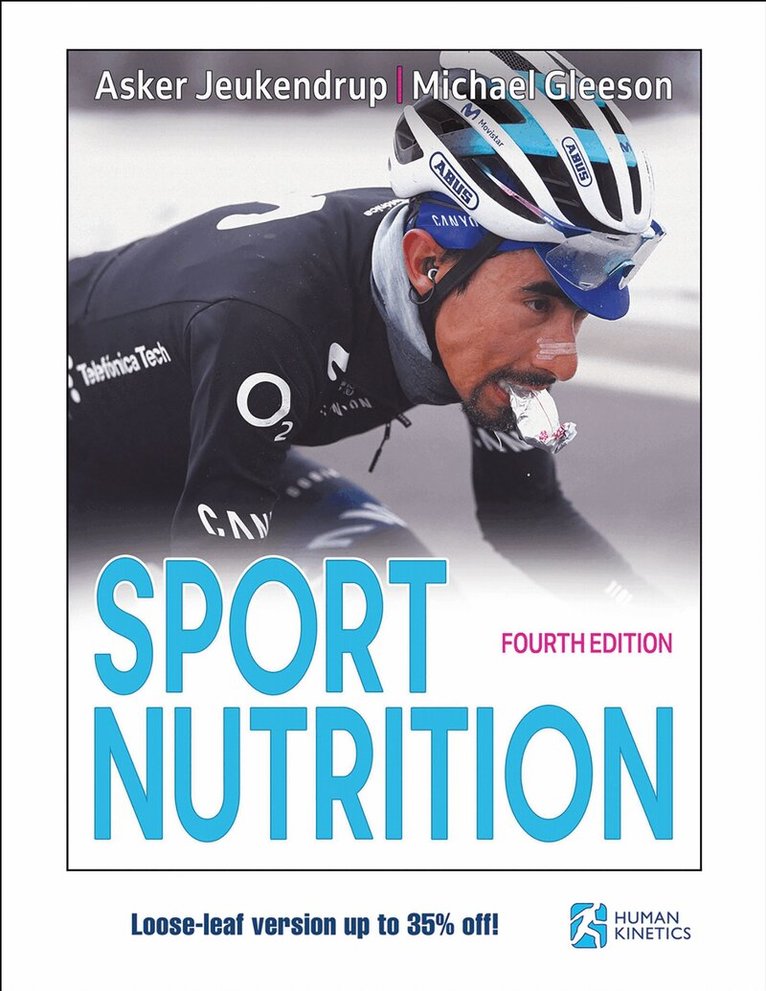
    Sport Nutrition

    AvAsker Jeukendrup,Michael Gleeson

    Engelska, 2024

    1 009 kr

    Beställningsvara. Skickas inom 5-8 vardagar. Fri frakt över 249 kr.

    Fler format och utgåvor

    Häftad

    1 534 kr

    Beskrivning

    For students planning to work in a sport- or exercise-related career, it is crucial to understand the essential role nutrition plays in health, adaptations to physical activity and exercise, weight maintenance, and sports and exercise performance. Sport Nutrition, Fourth Edition With HK Propel Access, presents the principles and rationale for current nutrition guidelines for athletes and provides an in-depth look at the science behind sport nutrition.Using a physiological basis, Sport Nutrition aims to explain the role of nutrition in enhancing exercise performance. It moves from general principles of nutrition and nutrient requirements to estimating and fulfilling energy needs with the appropriate combinations of macronutrients and micronutrients. Supplements are addressed from a scientific standpoint, followed by the influence of nutrition on training adaptations, body composition, weight management, and eating disorders. Information on personalized nutrition covers periodized nutrition, sex differences, and special populations (young athletes, older athletes, and diabetic athletes) and offers practical examples from specific sports.The fourth edition is greatly enhanced with a new full-color format showcasing 40 new infographics and 50 additional figures and illustrations. These visual elements provide a more engaging experience, allowing students to fully comprehend important concepts, methods, and research findings. This edition features online access to references, appendixes, and glossary terms and definitions, providing useful explanations and at-a-glance information. New topics in this edition include the following: How to recognize good versus bad information about sport nutrition The role of gut microbiota and how this microbiome is affected by diet and exercise The function of macronutrients and micronutrients in relation to exercise performance and recovery Guidelines to limit gastrointestinal problems during exercise Electrolyte replacement during exercise in the heat The effects of exercise and nutrition on immune function and health outcomes, as learned from the COVID-19 pandemic Low energy availability and the causes and consequences of relative energy deficiency in sport (REDs) More than a simple prescription of recommendations, Sport Nutrition, Fourth Edition, offers a systematic presentation of the science supporting current nutrition guidelines. It is an ideal book to provide a comprehensive understanding of nutrition as it relates to sport, exercise performance, training, and recovery.Note: A code for accessing HKPropel is included with this ebook.

    Produktinformation

    • Utgivningsdatum:2024-06-05
    • Mått:216 x 279 x 38 mm
    • Vikt:1 882 g
    • Format:Övrigt
    • Språk:Engelska
    • Antal sidor:704
    • Upplaga:4
    • Förlag:Human Kinetics Publishers
    • ISBN:9781718221710

    Utforska kategorier

    • Motion och kost inom Hälsa och familj

    Mer om författaren

    Asker Jeukendrup, PhD, is a visiting professor at Loughborough University in the United Kingdom, the director of the Mysportscience performance consulting firm, and cofounder and co-CEO of CORE Nutrition Planning and of Neversecond. After obtaining his degrees at Maastricht University in the Netherlands, he spent a year at the University of Texas at Austin before accepting a position at the University of Birmingham in the United Kingdom. At the University of Birmingham, he served for 12 years as the director of the Human Performance Laboratory, heading up the exercise metabolism research group. His research focused on the metabolic responses to exercise, the regulation of carbohydrate and fat metabolism during exercise, adaptations to training, and the influence of nutrition on metabolism and exercise nutrition. He is considered a leading expert in the areas of sport nutrition, training and overtraining, and recovery.Jeukendrup received several awards for his achievements, including the Danone Chair at the University of Brussels in 2005. In 2011 he accepted a position as global senior director of exercise physiology at the Gatorade Sports Science Institute, defining strategies for research, education, and sport science services for the largest sport nutrition company in the world. He is a registered sport and exercise nutritionist, having worked with many elite athletes and clubs, including the Rabobank, Lotto Soudal, and Lotto Jumbo professional cycling teams; Chelsea Football Club; FC Barcelona; FC Red Bull Salzburg; UK Athletics; the British Olympic Association; African runners; and several Olympic and world champions. He is currently nutrition performance manager for the Dutch Olympic Committee and head of performance nutrition for the Lotto Jumbo professional cycling team.Jeukendrup has published extensively in sport nutrition. He is a fellow of the American College of Sports Medicine and the European College of Sport Science. In his leisure time, he enjoys running, cycling, and competing in triathlons. To date, he has completed 21 Ironman races, including 6 Ironman Hawaii competitions.Michael Gleeson, PhD, is a professor emeritus of exercise biochemistry in the School of Sport, Exercise, and Health Sciences at Loughborough University in Leicestershire, United Kingdom. Gleeson is considered a world authority on exercise biochemistry, immunology, and nutrition, and he has worked with numerous world-class athletes and professional football (soccer) clubs. He has taught sport nutrition at the university level. He has written several books, 30 book chapters, and over 250 scientific articles in scientific and medical journals, and he has coauthored textbooks on exercise metabolism, exercise immunology, and sport nutrition.Gleeson has been both president and vice president of the International Society of Exercise and Immunology. He is a fellow of the European College of Sport Science and the British Association of Sport and Exercise Sciences. He is also a member of the American College of Sports Medicine and the Physiological Society.Following his retirement in 2016, he turned his attention to how ordinary people can achieve optimal health and live healthier for longer. In 2020 he released a series of healthy lifestyle guidebooks about the benefits of being active and eating and sleeping well, advice about natural means to reverse type 2 diabetes without medication, and how to use multiple diets for effective and safe weight loss. Based on his extensive experience and love of football, and following his work as a coauthor of the UEFA expert group statement on nutrition in elite football, he authored a 2022 book on nutrition for top performance in football. He enjoys playing tennis, hill walking, and watching football and films.

    Innehållsförteckning

    • Chapter 1. Nutrients and Recommended IntakesFunction of NutrientsCarbohydrateFatProteinWaterAlcoholVitamins, Minerals, and Trace ElementsPhytonutrientsRecommended Intakes of NutrientsDevelopment of Recommended IntakesCurrent Recommended IntakesAnalyzing Dietary IntakesThe Importance of Nutrition in SportKey PointsReview QuestionsRecommended ReadingsChapter 2. Healthy EatingHealth Effects of Consuming Excess NutrientsPractical Guidelines for a Balanced, Healthy DietRecommendations for a Healthy Diet and LifestyleNutrition Facts LabelsThe Sport Nutrition PyramidNutrient Content and Health Claims on Food PackagingProcessed Foods and AdditivesFat SubstitutesMisinformation in Sport Nutrition and Recognizing Good and Bad InformationKey PointsReview QuestionsRecommended ReadingsChapter 3. Fuel Sources for Muscle and Exercise MetabolismSubcellular Skeletal Muscle StructureForce Generation in Skeletal MuscleFiber TypesEnergy for Muscle Force GenerationFuel Stores in Skeletal MuscleRegulation of Energy MetabolismMetabolic Responses to ExerciseMetabolic Adaptations to Exercise TrainingKey PointsReview QuestionsRecommended ReadingsChapter 4. EnergyEnergetic EfficiencyMeasuring the Energy Content of FoodMeasuring Energy ExpenditureComponents of Energy ExpenditureEnergy BalanceKey PointsReview QuestionsRecommended ReadingsChapter 5. Gastric Emptying, Digestion, and AbsorptionAnatomy of the Gastrointestinal TractRegulation of the Gastrointestinal TractDigestionAbsorptionGut MicrobiotaMaintaining Gut HealthRegulation of Gastric EmptyingPotential Role of Gut Microbiota in Athlete Health and PerformanceGastrointestinal Problems During and After ExerciseKey PointsReview QuestionsRecommended ReadingsChapter 6. CarbohydrateHistoryRole of CarbohydrateRecommendations for Carbohydrate IntakeCarbohydrate Intake in the Days Before CompetitionCarbohydrate Intake in the Hours Before ExerciseCarbohydrate Intake 30 to 60 Minutes Before ExerciseCarbohydrate Intake During ExerciseCarbohydrate Intake After ExerciseKey PointsReview QuestionsRecommended ReadingsChapter 7. FatFat Metabolism During ExerciseLimits to Fat OxidationFat as a Fuel During ExerciseRegulation of Carbohydrate and Fat MetabolismFat Supplementation and ExerciseEffects of Diet on Fat Metabolism and PerformanceKey PointsReview QuestionsRecommended ReadingsChapter 8. Protein and Amino AcidsAmino AcidsTechniques to Study Protein and Amino Acid MetabolismProtein Requirements for ExerciseTraining and Protein MetabolismEffect of Protein Intake on Muscle Protein SynthesisAmino Acids as Ergogenic AidsProtein Intake and Health RisksKey PointsReview QuestionsRecommended ReadingsChapter 9. Fluid and ElectrolytesThermoregulation and Exercise in the HeatEffects of Dehydration on Exercise PerformanceMechanisms of Heat IllnessEffects of Fluid Intake on Exercise PerformanceElectrolyte Losses and Replacement During ExerciseDaily Water BalanceFluid Requirements for AthletesKey PointsReview QuestionsRecommended ReadingsChapter 10. Vitamins and MineralsWater-Soluble and Fat-Soluble VitaminsRecommended Intakes of VitaminsRecommended Intakes of Vitamins for AthletesMacrominerals and MicromineralsRecommended Intakes of MineralsCritical Micronutrient FunctionsAssessing Micronutrient StatusExercise and Micronutrient RequirementsErgogenic Effect of Micronutrient SupplementationSummary of Recommendations for Micronutrient Intake in AthletesKey PointsReview QuestionsRecommended ReadingsChapter 11. Nutrition SupplementsRelative Importance of Supplements to a Normal DietNonregulation of Nutrition SupplementsCritical Evaluation of Nutrition Supplement StudiesAndrostenedioneAshwagandhaBee PollenBeetroot Juice and Other Sources of Dietary NitrateΒ-Alanine and CarnosineΒ-Hydroxy Β-MethylbutyrateBoronCaffeineCannabidiolCarnitineCherry JuiceCholineChromiumCoenzyme Q10CordycepsCreatineDehydroepiandrosteroneFish Oil and Omega-3 Fatty AcidsGinsengGlandularsGlycerolGreen TeaInosineKetone SaltsLactate Salts and PolylactateLecithinMedium-Chain TriacylglycerolPangamic AcidPhosphatidylserinePhosphorus and Phosphate SaltsPolyphenolsPyruvate and DihydroxyacetoneSodium BicarbonateSodium CitrateSodium NitrateVanadiumWheat Germ OilAdditive Effects of Combining Different SupplementsContamination of Nutrition SupplementsKey PointsReview QuestionsRecommended ReadingsChapter 12. Nutrition and Training AdaptationsTraining AdaptationsSignal Transduction PathwaysStarting a Signaling CascadeSecondary SignalsNutrition and Effects on Training AdaptationsOverreaching and the Overtraining SyndromeNutrition and Effects on SleepNutrition and Effects on RehabilitationKey PointsReview QuestionsRecommended ReadingsChapter 13. Nutrition and Immune Function in AthletesFunctions of the Immune System and Its Cellular ComponentsGeneral Mechanisms of the Immune ResponseCauses of Illness in AthletesEffects of Exercise and Other Lifestyle Factors on the Immune SystemNutritional Manipulations to Decrease Immunodepression in AthletesNutrition for the Athlete During a Period of IllnessConclusions and RecommendationsKey PointsReview QuestionsRecommended ReadingsChapter 14. Body CompositionOptimal Body Weight and CompositionBody Composition ModelsNormal Ranges of Body Weight and Body FatBody Composition Measurement TechniquesAchieving Changes in Body CompositionShould We Measure Body Weight and Body Composition in Athletes?Key PointsReview QuestionsRecommended ReadingsChapter 15. Weight ManagementRegulation of Body WeightSet Point, Settling Point, and Other Theories of Body Weight RegulationGeneticsRegulation of AppetiteEffect of Exercise on AppetitePhysical Activity and Energy ExpenditureDietary Weight-Loss MethodsEnergy and Macronutrient IntakeExercise for Weight LossDecreased Resting Metabolic Rate With Weight LossWeight CyclingSex Differences in Weight LossPracticalities of Weight Loss for AthletesWeight GainKey PointsReview QuestionsRecommended ReadingsChapter 16. Eating Disorders and Low Energy Availability in AthletesTypes of Eating DisordersPrevalence of Eating Disorders in AthletesEffects of Eating Disorders on Sports PerformanceEffects of Eating Disorders on Health and Low Energy AvailabilityLow Energy Availability and Relative Energy Deficiency in SportTreatment and Prevention of Eating Disorders and Disordered EatingKey PointsReview QuestionsRecommended ReadingsChapter 17. Personalized NutritionGenetic InfluencesTurning Science Into PracticeSpecific PopulationsNutrition Application in Different Sport Situations and PopulationsKey PointsReview QuestionsRecommended Readings