• Fri frakt över 249 kr
  • •
  • Snabba leveranser
  • •
  • Billiga böcker
Kundservice

Du är på sajten för privatpersoner.

Företag, bibliotek eller offentlig verksamhet?

Du handlar på classic.bokus.com, där alla dina funktioner finns intakta.
Till classic.bokus.com
Bokus logotyp. Gå till startsidan.
  • Erbjudanden
  • Student
  • Topplistor
  • Barn & ungdom
  • Bokus Play
  • E-böcker
  • Ljudböcker
  • Pocketböcker
  • Spel & pussel

Upp till 25% på utvalda nyheter →

Sidfot

Mina sidor

    Hjälp

    • Kundservice
    • Vanliga frågor och svar
    • Frakt och leverans
    • Retur vid ångerrätt
    • Reklamera vara
    • Betalning
    • Köpvillkor
    • Allmänna villkor
    • Information om webbplatsens tillgänglighet

    Om Bokus

    • Om oss
    • Pressrum
    • För studenter
    • För företag
    • För bibliotek och offentlig verksamhet
    • För leverantörer
    • Hållbarhet

    Populärt

    • Aktuella erbjudanden
    • Presentkort
    • Studentlitteratur
    • Nya böcker
    • Topplistor
    • Signerade böcker
    • Engelska böcker

    Inspiration

    • Boktips
    • BookTok
    • Populära bokserier
    • Barnbokskaraktärer
    • Populära författare
    Logotyp för Bokus
    Följ oss på Facebook (extern länk)Följ oss på Instagram (extern länk)Följ oss på YouTube (extern länk)Följ oss på TikTok (extern länk)
    bokus @ CookiesAnpassa cookiesIntegritetspolicyKöpvillkor
    Till Citymail hemsida (extern länk)Till Budbee hemsida (extern länk)Till Postnord hemsida (extern länk)Till Schenker hemsida (extern länk)Till Early Bird hemsida (extern länk)Till Walleys hemsida (extern länk)
    1. Historia och arkeologi
    2. Arkeologi

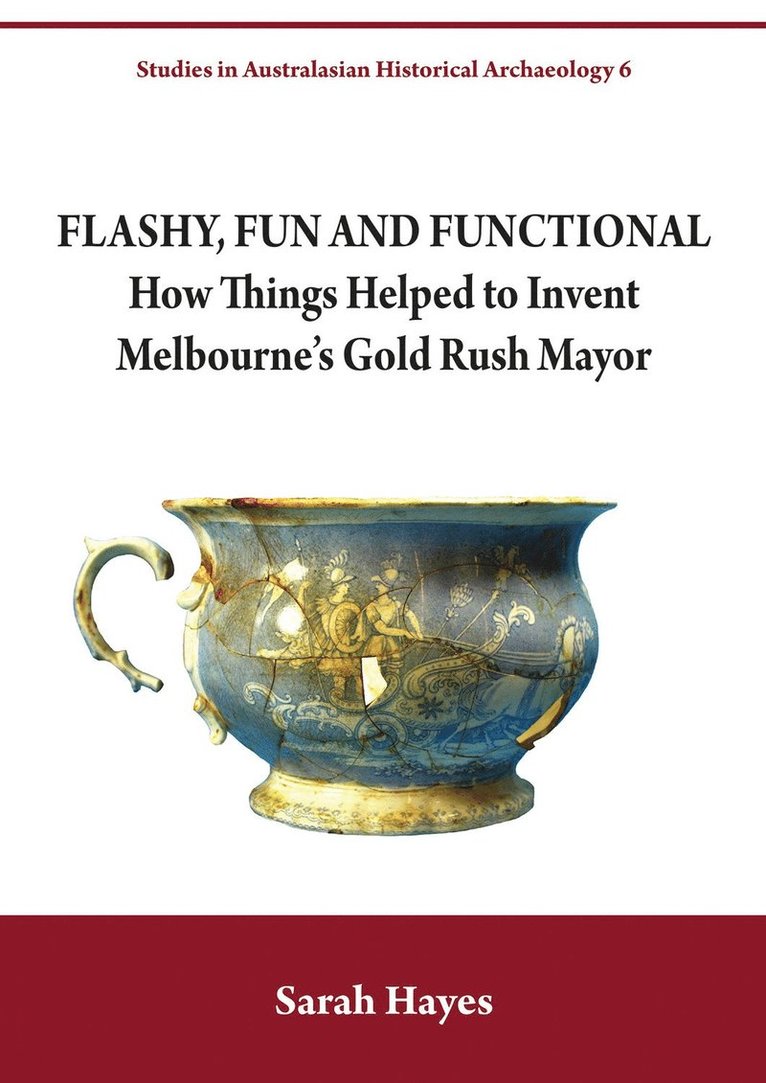
    Flashy, Fun and Functional

    How Things Helped to Invent Melbourne’s Gold Rush Mayor

    AvSarah Hayes

    Häftad, Engelska, 2018

    Del i serien Studies in Australasian Historical Archaeology

    235 kr

    Beställningsvara. Skickas inom 5-8 vardagar. Fri frakt över 249 kr.

    Beskrivning

    Against the backdrop of embryonic Melbourne, John Thomas Smith left behind his currency roots to become an influential member of society. A widely recognised figure about town smoking a cutty pipe and wearing a white top hat, in 1851 he became Lord Mayor of Melbourne; he went on to be re-elected seven times. His scandalous marriage to the daughter of an Irish Catholic publican, however, and his awkwardly appropriated gentility, made him unpopular with certain sections of society. From 1849 to 1860 Smith and his family occupied 300 Queen Street, Melbourne, one of the first true residential townhouses in the city. Flashy, Fun and Functional: How Things Helped to Invent Melbourne’s Gold Rush Mayor explores the things they left behind.Excavations at the site in 1982 by Judy Birmingham and Associates uncovered a rich and important archaeological record of the Smiths’ lives in the form of a cesspit rubbish deposit. The recovered artefacts can be used to examine the distinctive way the Smith family used material culture to negotiate their position in colonial society. Popular decoration styles and expensive materials suggest the family’s efforts to secure their newly obtained social status. The artefacts evoke the turmoil, volatility and opportunity of life in the first decades of the colony at Port Phillip. They provide an example of the possibility of social mobility in the colony, but also of the challenges of navigating the customs of a newly forming society.

    Produktinformation

    • Utgivningsdatum:2018-09-21
    • Mått:210 x 297 x 6 mm
    • Vikt:250 g
    • Format:Häftad
    • Språk:Engelska
    • Serie:Studies in Australasian Historical Archaeology
    • Antal sidor:84
    • Förlag:Sydney University Press
    • ISBN:9781743326152

    Utforska kategorier

    • Arkeologi inom Historia och arkeologi

    Mer om författaren

    Sarah Hayes is a historical archaeologist who researches quality of life and social mobility in 19th-century Victoria through the lives, homes and rubbish of everyday people. She works within the Heritage and Indigeneity stream of the Alfred Deakin Institute for Citizenship and Globalisation, Deakin University.

    Recensioner i media

    '[Hayes] sets out to establish what these different middle-class levels might look like in the archaeological record. She delivers on this aim by providing an interpretation of an aspirational early immigrant assemblage that is 'more grandiose and showy' than assemblages associated with either the established middle-class or the working class ... an important contribution to Australian historical archaeology that improves our understanding of class structure in the 19th century.'

    Innehållsförteckning

    • List of figuresList of tablesList of platesAbbreviationsAcknowledgements1. Introduction2. Early Melbourne and 300 Queen Street3. Personal histories4. Architecture and spatial layout5. Artefacts6. Life at 300 Queen Street7. Cultural capital and the road to successBibliographyIndex