Häftad, Engelska, 2025
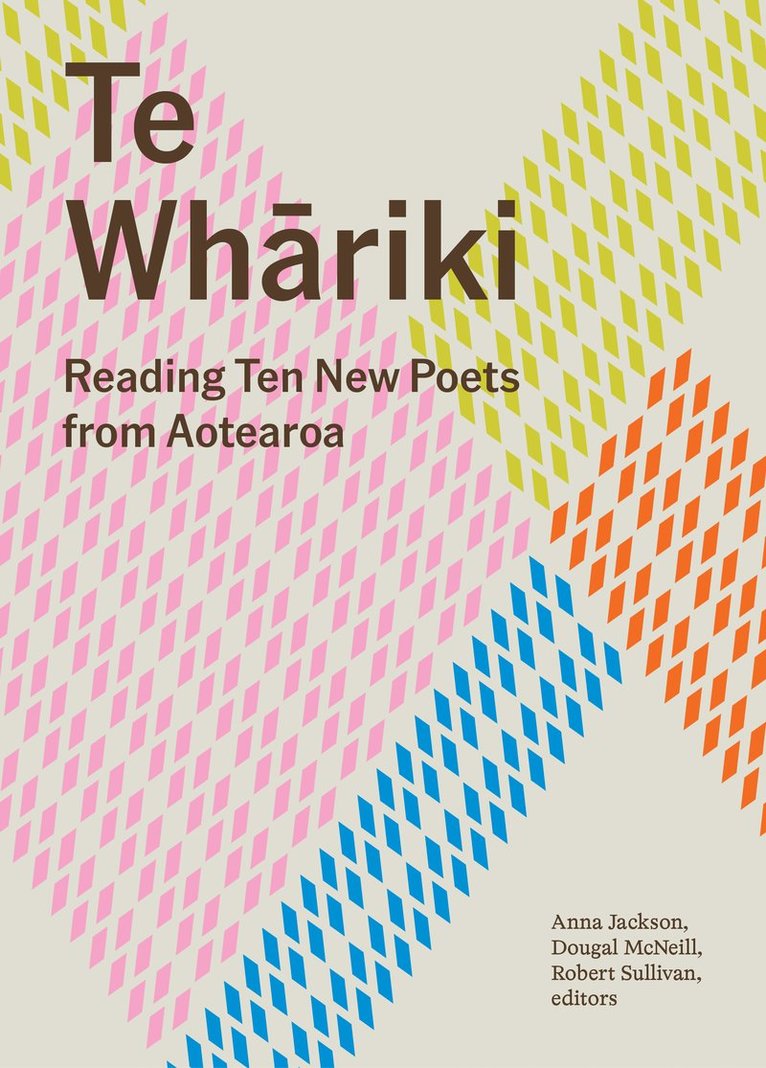
Te Whāriki
Reading Ten New Poets from Aotearoa
Av Anna Jackson, Dougal McNeill, Robert Sullivan
692 kr
Beställningsvara. Skickas inom 3-6 vardagar. Fri frakt över 249 kr.
Beskrivning
Produktinformation
- Utgivningsdatum: 2025-10-09
- Mått: 165 x 230 x 13 mm
- Vikt: 36 g
- Format: Häftad
- Språk: Engelska
- Antal sidor: 204
- Förlag: Auckland University Press
- ISBN: 9781776711314
Utforska kategorier
Mer om författaren
Anna Jackson is the author of seven collections of poetry aswell as Diary Poetics: Form and Style in Writers’ Diaries 1915–1962(Routledge, 2010) and Actions & Travels: How Poetry Works (AucklandUniversity Press, 2022). She lives in Island Bay, Te Whanganui-a-Tara, and isassociate professor in English literature at Te Herenga Waka – VictoriaUniversity of Wellington.DougalMcNeill teaches in the Literary and Creative Communication programmeat Te Herenga Waka – Victoria University of Wellington, and is active inthe Tertiary Education Union. He is co-author, with Charles Ferrall, of Writingthe 1926 General Strike: Literature, Culture, Politics (CambridgeUniversity Press, 2015), editor of Harry Holland’s Robert Burns: Poetand Revolutionist (Steele Roberts, 2016) and, most recently, author of Formsof Freedom: Marxist Essays in New Zealand and Australian Fiction (OtagoUniversity Press, 2024).Robert Sullivan (Ngāpuhi, Kāi Tahu) is theauthor of nine books of poetry, most recently Hopurangi—Songcatcher:Poems from the Maramataka (Auckland University Press, 2024), as well as a graphic noveland an award-winning book of Māori legends for children. He has also co-editedanthologies of Māori and Polynesian poetry. He is associate professor ofcreative writing at Te Kunenga ki Pūrehuroa – Massey University and hastaught previously at Manukau Institute of Technology and the University ofHawai‘i at Mānoa.
Recensioner i media
‘Te Whāriki is an inspired and inspiringset of weavings that lead us through the poetry terrain and poetic pulse ofnow. By opening up the writing of ten poets, vital connections are forged,communities nourished, intimate threads are woven . . . from the personal tothe intellectual to the experimental. This invigorating book makes my poetryheart sing.’ — Paula Green‘I have read this book with genuine pleasure. There’sa sense of freshness to the material and it’s written in an attractivelyaccessible way. It will be enjoyed by a wide range of readers.’ — ErinMercer, Te Kunenga ki Pūrehuroa – Massey University‘The names listedin this book’s contents page are themselves arguments for why this book shouldbe published. Taken together these poets represent a fair snapshot of thepoetry being written presently in Aotearoa. The book’s design – a whāriki – isideal: it acknowledges a diverse spectrum of (mostly) young writers whosevoices constellate a range of traditions and influences, present and past, andit invites readers to make connections between poems and poets for themselves.’ — Nicholas Wright, Te Whare Wānanga o Waitaha –University of Canterbury
Betyg & recensioner
0 recensioner
Inga recensioner tillgängliga.