• Fri frakt över 249 kr
  • •
  • Snabba leveranser
  • •
  • Billiga böcker
Kundservice

Du är på sajten för privatpersoner.

Företag, bibliotek eller offentlig verksamhet?

Du handlar på classic.bokus.com, där alla dina funktioner finns intakta.
Till classic.bokus.com
Bokus logotyp. Gå till startsidan.
  • Erbjudanden
  • Nyheter
  • Student
  • Topplistor
  • Barn & ungdom
  • Bokus Play
  • E-böcker
  • Pocketböcker
  • Spel & pussel

10% rabatt på allt med kod NYSTART10 →

Sidfot

Mina sidor

    Hjälp

    • Kundservice
    • Vanliga frågor och svar
    • Frakt och leverans
    • Retur vid ångerrätt
    • Reklamera vara
    • Betalning
    • Köpvillkor
    • Allmänna villkor
    • Information om webbplatsens tillgänglighet

    Om Bokus

    • Om oss
    • Pressrum
    • För studenter
    • För företag
    • För bibliotek och offentlig verksamhet
    • För leverantörer
    • Hållbarhet

    Populärt

    • Aktuella erbjudanden
    • Presentkort
    • Studentlitteratur
    • Nya böcker
    • Topplistor
    • Signerade böcker
    • Engelska böcker

    Inspiration

    • Boktips
    • BookTok
    • Populära bokserier
    • Barnbokskaraktärer
    • Populära författare
    Logotyp för Bokus
    Följ oss på Facebook (extern länk)Följ oss på Instagram (extern länk)Följ oss på YouTube (extern länk)Följ oss på TikTok (extern länk)
    bokus @ CookiesAnpassa cookiesIntegritetspolicyKöpvillkor
    Till Citymail hemsida (extern länk)Till Budbee hemsida (extern länk)Till Postnord hemsida (extern länk)Till Schenker hemsida (extern länk)Till Early Bird hemsida (extern länk)Till Walleys hemsida (extern länk)
    1. Naturvetenskap och teknik
    2. Geovetenskap
    3. Geovetenskap
    4. Geologi

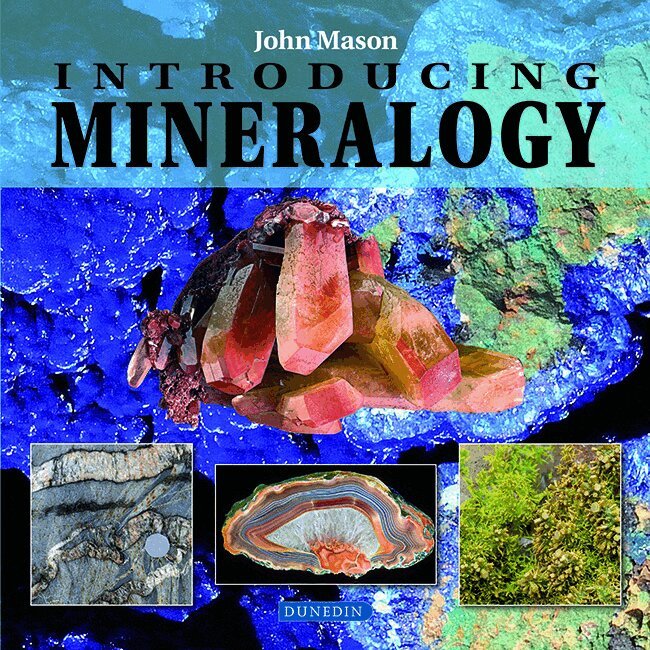
    Introducing Mineralogy

    AvJohn Mason

    Häftad, Engelska, 2014

    Del i serien Introducing Earth and Environmental Sciences

    405 kr

    Beställningsvara. Skickas inom 5-8 vardagar. Fri frakt över 249 kr.

    Beskrivning

    People have been fascinated by minerals since prehistory. The attractions of minerals lie in their colours, their beautiful crystals and the discoveries of their uses and the metals that can be obtained from them. Minerals receive attention from a wide variety of people: mining executives, collectors, prospectors and scientists unravelling their molecular structure and origins. But, for someone new to mineralogy, the subject can appear to be overwhelmingly complex.In Introducing Mineralogy John Mason considers the essence of mineralogy in a clear and logical manner. The book begins with the basic chemistry of minerals and the way in which the mineral kingdom is classified. It then considers mineral occurrences, both typical, such as the minerals that largely make up common rocks like granite, and atypical, such as concentrations of rare metals in ore-deposits. The ways in which minerals are studied using microscopes and the importance of careful observation and interpretation are discussed and the topics of mineral collecting and related issues are addressed. The final chapters explore the uses of minerals, both industrial and scientific, and take a look at environmental issues associated with mineral extraction and usageLavishly illustrated in colour and complete with a glossary, the book is aimed at students embarking on courses in the Earth Sciences and at the amateur collector who wants to find out more about the colourful rocks they may find when out walking.

    Produktinformation

    • Utgivningsdatum:2014-11-27
    • Mått:220 x 220 x 8 mm
    • Vikt:386 g
    • Format:Häftad
    • Språk:Engelska
    • Serie:Introducing Earth and Environmental Sciences
    • Antal sidor:128
    • Förlag:Liverpool University Press
    • ISBN:9781780460284

    Utforska kategorier

    • Geologi inom Naturvetenskap och teknik
    • Böcker om stenar och mineraler inom Djur och Natur

    Mer om författaren

    John Mason is a geology graduate who has studied the old mines in the hills of mid-Wales. He is an honorary research fellow at the National Museum of Wales, Cardiff.

    Recensioner i media

    'The writing style is very clever, presenting concise technical information pitched at a level where even somebody with very little knowledge of science can become absorbed and learn at ease…In summary, this book does exactly what the title says: Introducing Mineralogy. It is an excellent introductory book on mineralogy, well written and covers all of the basics very well…'Mineralogical Magazine'Unlike others book about minerals, this does not provide pages of descriptions of individual minerals, for that is an area that's already well covered. Neither does it present a deep coverage of mineralogy in the style of some of the dusty old textbooks that I remember from my undergraduate days (thank goodness).What we have here is a refreshing approach to the subject from an author who knows minerals well from a collectors perspective, but who is a geology graduate - arguably the perfect person to write such a book to introduce the subject… The book is beautifully illustrated by specimens that haven't been chosen to make the book look pretty, but for good scientific reasons. I repeat that in many ways this a unique approach to the subject of mineralogy, but it is one that works and will provide anyone looking for a way in to the subject with some sound and interesting material.'Down to Earth magazine'Introducing Mineralogy is aimed at the amateur collector and anyone interested in minerals. It would also be appropriate for an introductory mineralogy class for nonscience majors. The author, John Mason, has done an outstanding job of presenting complex notions in simple terms, providing many examples to which the reader can relate. The book is divided into seven chapters, and throughout, terms defined in the exhaustive glossary are highlighted. The book is also well illustrated, with over 100 color photographs mostly illustrating examples from the UK.'Elements

    Innehållsförteckning

    • Prologue: a mineral prospector's tale; 1. The basics of mineralogy; 2. Typical mineral occurrences; 3. Atypical concentrations of minerals; 4. Mineral collecting: where science and leisure overlap; 5. Studying mineral assemblages and parageneses; 6. Uses of minerals; 7. Minerals and the environment. Epilogue. Glossary. Further reading and resources.