• Fri frakt över 249 kr
  • •
  • Snabba leveranser
  • •
  • Billiga böcker
Kundservice

Du är på sajten för privatpersoner.

Företag, bibliotek eller offentlig verksamhet?

Du handlar på classic.bokus.com, där alla dina funktioner finns intakta.
Till classic.bokus.com
Bokus logotyp. Gå till startsidan.
  • Erbjudanden
  • Nyheter
  • Student
  • Topplistor
  • Barn & ungdom
  • Bokus Play
  • E-böcker
  • Pocketböcker
  • Spel & pussel

10% rabatt på allt med kod NYSTART10 →

Sidfot

Mina sidor

    Hjälp

    • Kundservice
    • Vanliga frågor och svar
    • Frakt och leverans
    • Retur vid ångerrätt
    • Reklamera vara
    • Betalning
    • Köpvillkor
    • Allmänna villkor
    • Information om webbplatsens tillgänglighet

    Om Bokus

    • Om oss
    • Pressrum
    • För studenter
    • För företag
    • För bibliotek och offentlig verksamhet
    • För leverantörer
    • Hållbarhet

    Populärt

    • Aktuella erbjudanden
    • Presentkort
    • Studentlitteratur
    • Nya böcker
    • Topplistor
    • Signerade böcker
    • Engelska böcker

    Inspiration

    • Boktips
    • BookTok
    • Populära bokserier
    • Barnbokskaraktärer
    • Populära författare
    Logotyp för Bokus
    Följ oss på Facebook (extern länk)Följ oss på Instagram (extern länk)Följ oss på YouTube (extern länk)Följ oss på TikTok (extern länk)
    bokus @ CookiesAnpassa cookiesIntegritetspolicyKöpvillkor
    Till Citymail hemsida (extern länk)Till Budbee hemsida (extern länk)Till Postnord hemsida (extern länk)Till Schenker hemsida (extern länk)Till Early Bird hemsida (extern länk)Till Walleys hemsida (extern länk)
    1. Psykologi och pedagogik
    2. Psykologi
    3. Psykologiska teorier och skolor
    4. Freudiansk psykologi

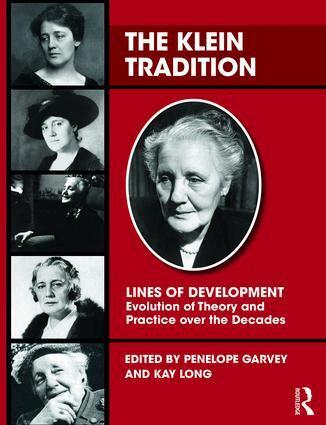
    Klein Tradition

    Lines of Development—-Evolution of Theory and Practice over the Decades

    AvKay Long,Penelope Garvey

    Häftad, Engelska, 2018

    Del i serien Lines of Development

    1 113 kr

    Beställningsvara. Skickas inom 10-15 vardagar. Fri frakt över 249 kr.

    Beskrivning

    Melanie Klein's extension of Freud's ideas - in particular her explorations into the world of the infant and her emphasis on the complex interactions between the infant's internal world of powerful primitive emotions of love and hate and the mothering that the infant receives - were greeted with skepticism but are now widely accepted as providing an invaluable way of understanding human cognitive and emotional development. Klein's insights shed light on persecuted states, guilt, the drive to create and to repair; they also provide the clinician with a theory of technique. Klein's work has inspired the work of psychoanalysts around the world. Her concept of projective identification with its implications for the understanding of countertransference made a significant impact on her followers and on psychoanalysts in other countries and from other schools of thought. Further exploration of these ideas has led to greater understanding of how change occurs in psychoanalysis and has inspired a large literature with a particular focus on technique.

    Produktinformation

    • Utgivningsdatum:2018-05-09
    • Mått:189 x 246 x 34 mm
    • Vikt:866 g
    • Format:Häftad
    • Språk:Engelska
    • Serie:Lines of Development
    • Antal sidor:434
    • Förlag:Taylor & Francis Ltd
    • ISBN:9781782205982

    Utforska kategorier

    • Freudiansk psykologi inom Psykologi och pedagogik

    Mer om författaren

    Penelope Garvey is a training analyst of the British Psychoanalytical Society. Her first training was as a clinical psychologist and she has worked as a consultant psychotherapist in the NHS. Kay Long, PhD, is a psychoanalyst in private practice in New Haven, CT. She is an Associate Clinical Professor in the Psychiatry Department of the Yale School of Medicine and a Training and Supervising Analyst at the Western New England Institute for Psychoanalysis.

    Recensioner i media

    "The ideas Melanie Klein developed on the basis of Freud’s work have now been taken up in many ways and in most centres of psychoanalysis throughout the world. As Klein often said she felt she had moved the psychoanalytic focus to ‘deeper layers’ of the unconscious. In these Chapters, the extraordinary ramifications of her explorations can be seen in greart detail. In some ways it re-treads the territory of Elizabeth Spillius’ two-volume work on Melanie Klein Today, in the 1980s; but, this new work brings us up to date with the sharp end of Kleinian thinking 30 years later. Klein’s own writing being dense and repetitive has always been difficult to master, and indeed sometimes disturbing. But this collection of original papers by a huge range of psychoanalysts demonstrates how rewarding the effort to understand these ideas has been. These Chapters do not just demonstrate the versatility of the ideas, but also comprise debates about issues not yet finalised, and for the next generation to venture into. If there is a public view that psychoanalysis has run its course in intellectual life, then this book gives the lie to that. Its Chapters confirm that Freud started the radical discovery of the human mind, but his results have nevertheless benefitted from others adventurously pushing on with his project." --R. D. Hinshelwood, Professor Emeritus of Psychoanalytic Studies, University of Essex, and Fellow of the British Psychoanalytical Society

    Innehållsförteckning

    • AcknowledgementsAbout the Editors and ContributorsIntroduction to the BookI Historical FrameGarvey, P. and Long, K. Melanie Klein: her main ideas and some theoretical and clinical developmentsII Theory and PracticeAbel Hirsch, N. Some detail on Bion’s concept of container/contained Bell, D. The Development of the Psychoanalytic Idea of Psychosis Blass, R. The Teaching of Klein: Some Guidelines for Opening Students to the Heart of Kleinian Thinking and PracticeBrenman Pick, I. Lurching between longing and destructionBrearley, M. The sense of self: generosity or narrow mindedness? Britton, R. The mountains of primal griefCassorla, R. Dreams, Symbolization, Enactment Clarkson, L. Autistic Features Encountered in the World of "As If" Feldman, M. Responding to Narcissism Frank, C. Getting to know splitting as an organizing unconscious phantasy then and todayMawson, C. The projective process and the two positions today O’Shaughnessy, E. Reparation: Waiting for a conceptPaul, K. Mourning and the Development of Internal Objects Pieczanski, A. Some thoughts on addiction and perversion in psychoanalysis: theory and techniqueRocha Barros, E. Evolutions in Kleinian Inspired Clinical PracticeRoth, P. "I used to think you were wonderful": the persecution/idealization cycle of melancholiaSteiner, J. Illusion, Disillusion and Irony in Psychoanalysis Weiss, H. Primitive reparation and the repetition compulsion in the analysis of a borderline patient Zeavin, L. The perfect is the enemy of the good: On idealization and self-Idealization III. Work with ChildrenAlvarez, A. Paranoid/schizoid position or paranoid and schizoid positions?Jackson, J. Balancing on a Tightrope of Mania: a Precarious Normality Rustin, M. Psychoanalytic work with an adopted child with a history of early abuse and neglect Williams, G. "At times when I see your face thinking, I am thinking as well": A Plea for an Organising Object IV. Applied ContributionsRockwell, S A Perfect Poem of Tears: Grieving as Depicted in Federico Garcia Lorca’s Lament for Ignacio Sanchez Mejias Rusbridger, R. Narcissism and ugliness in King LearTaffler, R. & Eshraghi, A. Hedge Funds as Phantastic Objects: A Psychoanalytic Perspective on Financial InnovationsWeintrobe, S. Communicating psychoanalytic ideas about climate change: a case study