• Fri frakt över 249 kr
  • •
  • Snabba leveranser
  • •
  • Billiga böcker
Kundservice

Du är på sajten för privatpersoner.

Företag, bibliotek eller offentlig verksamhet?

Du handlar på classic.bokus.com, där alla dina funktioner finns intakta.
Till classic.bokus.com
Bokus logotyp. Gå till startsidan.
  • Erbjudanden
  • Nyheter
  • Student
  • Topplistor
  • Barn & ungdom
  • Bokus Play
  • E-böcker
  • Pocketböcker
  • Spel & pussel

10% rabatt på allt med kod: NYSTART10 →

Sidfot

Mina sidor

    Hjälp

    • Kundservice
    • Vanliga frågor och svar
    • Frakt och leverans
    • Retur vid ångerrätt
    • Reklamera vara
    • Betalning
    • Köpvillkor
    • Allmänna villkor
    • Information om webbplatsens tillgänglighet

    Om Bokus

    • Om oss
    • Pressrum
    • För studenter
    • För företag
    • För bibliotek och offentlig verksamhet
    • För leverantörer
    • Hållbarhet

    Populärt

    • Aktuella erbjudanden
    • Presentkort
    • Studentlitteratur
    • Nya böcker
    • Topplistor
    • Signerade böcker
    • Engelska böcker

    Inspiration

    • Boktips
    • BookTok
    • Populära bokserier
    • Barnbokskaraktärer
    • Populära författare
    Logotyp för Bokus
    Följ oss på Facebook (extern länk)Följ oss på Instagram (extern länk)Följ oss på YouTube (extern länk)Följ oss på TikTok (extern länk)
    bokus @ CookiesAnpassa cookiesIntegritetspolicyKöpvillkor
    Till Citymail hemsida (extern länk)Till Budbee hemsida (extern länk)Till Postnord hemsida (extern länk)Till Schenker hemsida (extern länk)Till Early Bird hemsida (extern länk)Till Walleys hemsida (extern länk)
    1. Historia och arkeologi
    2. Historia
    3. Europas historia

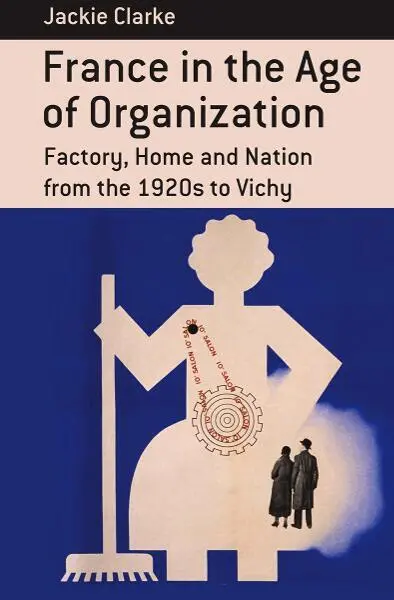
    France in the Age of Organization

    Factory, Home and Nation from the 1920s to Vichy

    AvJackie Clarke

    Häftad, Engelska, 2013

    Del i serien Berghahn Monographs in French Studies

    526 kr

    Beställningsvara. Skickas inom 5-8 vardagar. Fri frakt över 249 kr.

    Fler format och utgåvor

    Inbunden

    1 916 kr

    E-bok

    325 kr

    Beskrivning

    In interwar France, there was a growing sense that ‘organization’ was the solution to the nation’s perceived social, economic and political ills. This book examines the roots of this idea in the industrial rationalization movement and its manifestations in areas as diverse as domestic organization and economic planning. In doing so, it shows how experts in fields ranging from engineering to the biological sciences shaped visions of a rational socio-economic order from the 1920s to Vichy and beyond.

    Produktinformation

    • Utgivningsdatum:2013-12-01
    • Mått:152 x 229 x 12 mm
    • Vikt:313 g
    • Format:Häftad
    • Språk:Engelska
    • Serie:Berghahn Monographs in French Studies
    • Antal sidor:228
    • Förlag:Berghahn Books
    • ISBN:9781782380917

    Utforska kategorier

    • Europas historia inom Historia och arkeologi

    Mer om författaren

    Jackie Clarke is senior lecturer in French Studies at the University of Glasgow. She is a specialist in the history of twentieth-century France with a particular interest in questions about work and consumption.

    Recensioner i media

    “…an important, thought-provoking book that will be welcomed by specialists of modern France as well as by readers with interests in the history of gender, work and consumption. Clarke’s reassessment of older theories about inter-war France ‘in crisis’ has the potential to inject new energy into historiographical debates about modernization from the nineteenth century onward. Although the analysis extends only as far as 1944, Clarke’s conclusion offers suggestive pointers to the way the trends initiated by the organization movement carried into the latter half of the twentieth century.”  ·  History".a rich story of social science and interdisciplinarity in the service of addressing the pressing concerns of interwar France."  ·  H-France"In this fascinating and thoroughly researched account, Clarke steers clear of worn out debates over 'tradition' versus 'modernity' as the guiding forces of French economic and social life and convincingly shows how discourses, individuals, and institutions embodying both tradition and modernity (the phrase 'reactionary modernism' appears more than once) persisted over the course of the twentieth century."  ·  Journal of Social History” Even if Clarke’s rich and detailed account is mostly a story about the unrecognized interwar origins of the  postwar economic miracle, it provides many thought-provoking arguments about the heterogeneity of this ancestry and successfully challenges the central narrative of modernization in twentieth-century France.”  ·  American Historical Review“This book is exceptionally well written, is based on the detailed investigation and evaluation of a wide range of sources, and contributes impressively to our understanding of the economic, political, and social development of France in the twentieth century. Lastly, but by no means least, it also elevates to the mainstream the gendered dimension of the ‘modernization’ of France. The section at the end of the book providing biographical profiles of the key figures in the French scientific organization movement is also a very useful resource.”  ·  French Studies“The author argues that more attention should be paid to the French case when discussing the comparative history of rationalization, which often is seen as too homogenous. This book therefore contributes in an important way to a better understanding among a readership that is not very familiar with these questions and encourages us, at least we hope so, consider comparative aspects of the diversity of economic rationalizations in modern societies.”  ·  Vingtième Siècle. Revue d'histoire“In the course of a detailed, stimulating, and very clearly written analysis, Clarke is able to highlight the multiple ways in which interwar ideas about modernisation and industrial rationalisation were mediated through specifically French intellectual and political traditions…Clarke is able to offer a much fuller account of those links and of the intellectual, political, and cultural context from which they emerged [than was done before].”  ·  Modern & Contemporary France“In this well-argued volume, Clarke explores pre-1945 movements of scientific organization and rationalization in France, illustrating that the roots of the process of "modernization" predate WW II…Highly Recommended.”  ·  Choice"This book will change the way that historians think about the recent history of France. It challenges not only conventional narratives of the origins and nature of the French 'economic miracle', but the very categories that have been used to make sense of the social, economic and cultural history of the interwar years, Vichy and beyond.  No longer will it be possible for historians to use terms such as 'modernisation', 'technocracy' or even 'expertise' without careful reflection on their problematic meaning and their context. All that in a brilliantly written, accessible book"  ·  Kevin Passmore, Cardiff University“…a very good piece of historical scholarship. The book offers a fresh perspective on the relationship between science, culture and politics in interwar France. The author challenges in convincing ways current historiography through a reinterpretation of an impressive array of published and unpublished sources. It is well written, coherently structured and persuasively argued.”  ·  Andrés H. Reggiani, Universidad Torcuato Di Tella, Buenos Aires“This is an original and important book.  Jackie Clarke has written a fresh, arresting history of a network of advocates of ‘scientific rationalization’ in interwar France, and in so doing she has developed a new way of thinking about French elites in the era straddling the Second World War.”  ·  Herrick Chapman, New York University

    Innehållsförteckning

    • List of AbbreviationsAcknowledgementsIntroductionChapter 1: Constructing a Science of OrganizationChapter 2: Organization, Psychology and the Social QuestionChapter 3: Organization Goes HomeChapter 4: The Engineer-economist and the ‘Sciences of Man’ in the 1930sChapter 5: Organization and ‘Human Problems’ in Vichy FranceConclusionBiographicalBibliographyIndex