• Fri frakt över 249 kr
  • •
  • Snabba leveranser
  • •
  • Billiga böcker
Kundservice

Du är på sajten för privatpersoner.

Företag, bibliotek eller offentlig verksamhet?

Du handlar på classic.bokus.com, där alla dina funktioner finns intakta.
Till classic.bokus.com
Bokus logotyp. Gå till startsidan.
  • Erbjudanden
  • Nyheter
  • Student
  • Topplistor
  • Barn & ungdom
  • Bokus Play
  • E-böcker
  • Pocketböcker
  • Spel & pussel

10% rabatt på allt med kod: NYSTART10 →

Sidfot

Mina sidor

    Hjälp

    • Kundservice
    • Vanliga frågor och svar
    • Frakt och leverans
    • Retur vid ångerrätt
    • Reklamera vara
    • Betalning
    • Köpvillkor
    • Allmänna villkor
    • Information om webbplatsens tillgänglighet

    Om Bokus

    • Om oss
    • Pressrum
    • För studenter
    • För företag
    • För bibliotek och offentlig verksamhet
    • För leverantörer
    • Hållbarhet

    Populärt

    • Aktuella erbjudanden
    • Presentkort
    • Studentlitteratur
    • Nya böcker
    • Topplistor
    • Signerade böcker
    • Engelska böcker

    Inspiration

    • Boktips
    • BookTok
    • Populära bokserier
    • Barnbokskaraktärer
    • Populära författare
    Logotyp för Bokus
    Följ oss på Facebook (extern länk)Följ oss på Instagram (extern länk)Följ oss på YouTube (extern länk)Följ oss på TikTok (extern länk)
    bokus @ CookiesAnpassa cookiesIntegritetspolicyKöpvillkor
    Till Citymail hemsida (extern länk)Till Budbee hemsida (extern länk)Till Postnord hemsida (extern länk)Till Schenker hemsida (extern länk)Till Early Bird hemsida (extern länk)Till Walleys hemsida (extern länk)
    1. Skönlitteratur
    2. Litteraturvetenskap
    3. Litteraturvetenskap

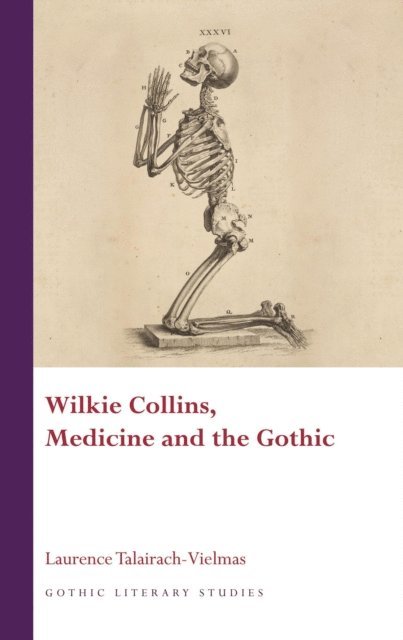
    Wilkie Collins, Medicine and the Gothic

    AvLaurence Talairach-Vielmas

    E-bok
    Engelska, 2009

    Del i serien Gothic Literary Studies

    290 kr

    Läs direkt i Bokus Reader – eller ladda ned till din enhet

    Fler format och utgåvor

    Inbunden

    672 kr

    E-bok

    289 kr

    Beskrivning

    This book examines how Wilkie Collins's interest in medical matters developed in his writing through explorations of his revisions of the late eighteenth century Gothic novel, from his first sensation novels to his last novels of the 1880s. Throughout his career, Collins made changes in the prototypical Gothic scenario. The aristocratic villains, victimized maidens and medieval castles of classic Gothic tales were reworked and adapted to thrill his Victorian readership. With the advances of neuroscience and the development of criminology as a significant backdrop to most of his novels, Collins drew upon contemporary anxieties and used the medical more and more to propel his criminal plots. While the archetypal castles were turned into modern medical institutions, his heroines no longer feared ghosts but the scientist's knife. This study underlines the way in which Collins's Gothic adaptations increasingly tackled medical questions, using the medical terrain to capitalize on the readers' fears. It demonstrates how Wilkie Collins's fiction revised Gothic themes and presented them through the prism of contemporary scientific, medical and psychological discourses, from debates revolving around mental physiology to those dealing with heredity and transmission. The book's structure is chronological, covering a selection of texts in each chapter; with a balance between discussion of the more canonical of Collins's texts, such as The Woman in White, The Moonstone and Armadale, and some of his more neglected writings.

    Produktinformation

    • Utgivningsdatum:2009-09-01
    • Språk:Engelska
    • Filformat:EPUB
    • Kopieringsskydd:LCP
    • ISBN:9781783163731
    • Förlag:University of Wales Press
    • Serie:Gothic Literary Studies

    Utforska kategorier

    • Litteraturvetenskap inom Skönlitteratur

    Mer om författaren

    Laurence Talairach is Professor of English at the University of Toulouse Jean Jaurès, and associate researcher at the Alexandre Koyré Centre for the History of Science and Technology (UMR 8560). Her research specialises on the interrelations between nineteenth-century literature, medicine and science.