• Fri frakt över 249 kr
  • •
  • Snabba leveranser
  • •
  • Billiga böcker
Kundservice

Du är på sajten för privatpersoner.

Företag, bibliotek eller offentlig verksamhet?

Du handlar på classic.bokus.com, där alla dina funktioner finns intakta.
Till classic.bokus.com
Bokus logotyp. Gå till startsidan.
  • Erbjudanden
  • Nyheter
  • Student
  • Topplistor
  • Barn & ungdom
  • Bokus Play
  • E-böcker
  • Pocketböcker
  • Spel & pussel

Må bättre, för mindre! Upp till 50% rabatt på hälsoböcker

Sidfot

Mina sidor

    Hjälp

    • Kundservice
    • Vanliga frågor och svar
    • Frakt och leverans
    • Retur vid ångerrätt
    • Reklamera vara
    • Betalning
    • Köpvillkor
    • Allmänna villkor
    • Information om webbplatsens tillgänglighet

    Om Bokus

    • Om oss
    • Pressrum
    • För studenter
    • För företag
    • För bibliotek och offentlig verksamhet
    • För leverantörer
    • Hållbarhet

    Populärt

    • Aktuella erbjudanden
    • Presentkort
    • Studentlitteratur
    • Nya böcker
    • Topplistor
    • Signerade böcker
    • Engelska böcker

    Inspiration

    • Boktips
    • BookTok
    • Populära bokserier
    • Barnbokskaraktärer
    • Populära författare
    Logotyp för Bokus
    Följ oss på Facebook (extern länk)Följ oss på Instagram (extern länk)Följ oss på YouTube (extern länk)Följ oss på TikTok (extern länk)
    bokus @ CookiesAnpassa cookiesIntegritetspolicyKöpvillkor
    Till Citymail hemsida (extern länk)Till Budbee hemsida (extern länk)Till Postnord hemsida (extern länk)Till Schenker hemsida (extern länk)Till Early Bird hemsida (extern länk)Till Walleys hemsida (extern länk)
    1. Ekonomi och Ledarskap
    2. Företagsekonomi
    3. Redovisning och finansiering
    4. Finansiering

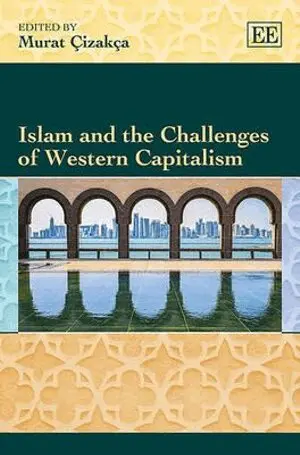
    Islam and the Challenges of Western Capitalism

    AvMurat Çizakça

    Inbunden, Engelska, 2014

    Del i serien Elgar Mini Series

    4 519 kr

    Beställningsvara. Skickas inom 5-8 vardagar. Fri frakt över 249 kr.

    Beskrivning

    This unique book brings together some of the finest minds in comparative economic / financial history and modern Islamic finance to discuss the rise, the decline and the contemporary efforts to regenerate Islamic capitalism. The collection features articles on the contribution of classical Muslim scholars to the history of economic thought, the institutions that translated these ideas into everyday life and whether these thoughts and institutions constitute a clash or a symbiosis of civilizations. The efforts of contemporary Muslim thinkers to design a modern Islamic economy are also carefully scrutinized.These collected works are expertly summarised by the editor in an original introduction and will be welcomed by all those with an historical or contemporary interest in Islamic studies.

    Produktinformation

    • Utgivningsdatum:2014-09-26
    • Mått:169 x 244 x undefined mm
    • Format:Inbunden
    • Språk:Engelska
    • Serie:Elgar Mini Series
    • Förlag:Edward Elgar Publishing Ltd
    • ISBN:9781783478880

    Utforska kategorier

    • Finansiering inom Ekonomi och Ledarskap
    • Finanskriser inom Ekonomi och Ledarskap
    • Sociala grupper och identitet inom Samhälle och politik

    Mer om författaren

    Edited by Murat Çizakça, Professor of Islamic Finance, Comparative Economic and Financial History, INCEIF University, Kuala Lumpur, Malaysia

    Recensioner i media

    ‘This impressive volume is long overdue. Its starting point is that historically the West met the challenge of Islamic civilization by developing its own form of capitalism and Islamic societies need to do likewise today, and the book provides a comparative analysis of the growth of modern Islamic institutions, assesses their achievements and outlines a blueprint for their future structure. The editor is a noted expert in these topics and, led by his own contributions, the collection of articles offers a well-organized and fascinating account.’

    Innehållsförteckning

    • Contents:AcknowledgementsIntroductionMurat ÇizakçaPART IHISTORICAL BACKGROUND ANot Clash, But Symbiosis of Civilizations1. Abbas Mirakhor (1987), ‘Muslim Contribution to Economics’2. Murat Çizakça (2013), How Civilizations Borrow Institutions From Each OtherB Why Islamic Capitalism Fell Behind3. Murat Çizakça (2012), ‘Long Term Causes of Decline of the Ottoman / Islamic Economies’4. Şevket Pamuk (2004), ‘Institutional Change and the Longevity of the Ottoman Empire, 1500–1800’C The Way to Recovery: Why the Existing Systems Developed in the West Would Not Suffice5. M. Umer Chapra (1991), ‘The Need for a New Economic System’6. Syed Othman Alhabshi (1987), ‘The Role of Ethics in Economics and Business'D From Theory to Application: Pre-Conditions for the Success of the New System7. Saïd Amir Arjomand (2009), ‘The Constitution of Medina: A Sociolegal Interpretation of Muhammad’s Acts of Foundation of the Umma’8. Murat Çizakça (2007), ‘Democracy, Economic Development and Maqasid al-Shari’ah’, Review of Islamic Economics, 11 (1), 101–18[18]PART IITHE ACHIEVEMENTS SO FAR A Ungku Aziz and Tabung Haji: Reorganization of the Pilgrimage9. Murat Çizakça (2011), ‘The lembaga urusan dan Tabung Haji: financing the Modern Pilgrimage’B The Birth and Evolution of Islamic Banks10. Ann Elizabeth Mayer (1985), ‘Islamic Banking and Credit Policies in the Sadat Era: The Social Origins of Islamic Banking in Egypt’11. Volker Nienhaus (2011), ‘Islamic Finance Ethics and Shari'ah Law in the Aftermath of the Crisis: Concept and Practice of Shari'ah Compliant Finance'12. Zubair Hasan (2010), ‘Islamic Finance: The Structure-Objective Mismatch and its Consequences'13. Zeti Akhtar Aziz (2013), ‘Financial Stability, Economic Growth and Development’PART IIITHE WAY FORWARD A Do We Still Need Islamic Banks?14. Mufti Muhammad Taqi Usmani (2008), ‘Looking for New Steps in Islamic Finance’15. Obiyatulla Ismath Bacha (1997), 'Adapting Mudarabah Financing to Contemporary Realities: A Proposed Financing Structure'B Non-Bank Financial Institutions: Venture Capital16. Murat Çizakça (2000), ‘Achievements of Venture Capital and its Potential in Emerging Markets With Specific Reference to Turkey’17. AbulKhair Jalaluddin (2007), ‘Motivations of Australian Small Business Firms to Apply Profit-Loss Sharing Method of Finance'C Cash Waqfs or the Waqf of Stocks18. Murat Çizakça (1998), ‘Awqaf in History and its Implications for Modern Islamic Economies’19. Tunku Alina Alias (2012), 'Venture Capital Strategies in Waqf Fund Investment and Spending'20. Magda Ismail A. Mohsin (2012), ‘Waqf-shares: New Product to Finance Old Waqf Properties'D Takaful21. Syed Othman Alhabshi and Shaikh Hamzah Shaikh Abdul Razak (2009), ‘Takaful: Concept, History, Development, and Future Challenges of its Industry'22. Ashraf bin Md. Hashim (2007), ‘The Collection of Waqf through Insurance Companies: A Critical Analysis of the Malaysian Experience'E Public Borrowing in an Islamic Context23. Muhammad Nejatullah Siddiqi (1993), ‘An Overview of Public Borrowing in Early Islamic History'24. Yasemin Zöngür (2009), ‘Comparison between Islamic and Conventional Securitization: A Survey'F Esham: A Proposal for Islamic Public Borrowing or Sharing Revenue with the State25. Murat Çizakça (2013), ‘Proposal for Innovation in the Capital Markets: Esham’Index