• Fri frakt över 249 kr
  • •
  • Snabba leveranser
  • •
  • Billiga böcker
Kundservice

Du är på sajten för privatpersoner.

Företag, bibliotek eller offentlig verksamhet?

Du handlar på classic.bokus.com, där alla dina funktioner finns intakta.
Till classic.bokus.com
Bokus logotyp. Gå till startsidan.
  • Erbjudanden
  • Nyheter
  • Student
  • Topplistor
  • Barn & ungdom
  • Bokus Play
  • E-böcker
  • Pocketböcker
  • Spel & pussel

10% rabatt på allt med kod: NYSTART10 →

Sidfot

Mina sidor

    Hjälp

    • Kundservice
    • Vanliga frågor och svar
    • Frakt och leverans
    • Retur vid ångerrätt
    • Reklamera vara
    • Betalning
    • Köpvillkor
    • Allmänna villkor
    • Information om webbplatsens tillgänglighet

    Om Bokus

    • Om oss
    • Pressrum
    • För studenter
    • För företag
    • För bibliotek och offentlig verksamhet
    • För leverantörer
    • Hållbarhet

    Populärt

    • Aktuella erbjudanden
    • Presentkort
    • Studentlitteratur
    • Nya böcker
    • Topplistor
    • Signerade böcker
    • Engelska böcker

    Inspiration

    • Boktips
    • BookTok
    • Populära bokserier
    • Barnbokskaraktärer
    • Populära författare
    Logotyp för Bokus
    Följ oss på Facebook (extern länk)Följ oss på Instagram (extern länk)Följ oss på YouTube (extern länk)Följ oss på TikTok (extern länk)
    bokus @ CookiesAnpassa cookiesIntegritetspolicyKöpvillkor
    Till Citymail hemsida (extern länk)Till Budbee hemsida (extern länk)Till Postnord hemsida (extern länk)Till Schenker hemsida (extern länk)Till Early Bird hemsida (extern länk)Till Walleys hemsida (extern länk)
    1. Ekonomi och Ledarskap
    2. Nationalekonomi

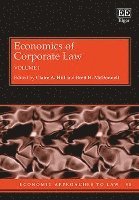
    Economics of Corporate Law

    AvClaire A. Hill,Brett H. McDonnell

    Inbunden, Engelska, 2016

    Del 50 i serien Economic Approaches to Law series

    11 763 kr

    Beställningsvara. Skickas inom 5-8 vardagar. Fri frakt över 249 kr.

    Beskrivning

    Scholarly analysis of corporate law in the United States has come to be dominated by an economic approach. Professor Hill and Professor McDonnell here draw together seminal articles which represent major milestones along the road that economics has traveled in coming to play this central role in corporate law scholarship. The focus is on the analysis of corporate law, drawing mainly upon legal scholarship and particularly on US scholarship, which is the originator of the application of modern economic analysis to corporate law and has had much influence in other countries.Beginning with several of the key works on the economics of the firm which have most heavily influenced legal scholarship, the title explores the central legal role of the board of directors and state competition for corporate charters. It further considers the role of hostile takeovers and board defenses against them and the effectiveness of shareholder suits and other agency mechanisms.31 articles, dating from 1931 to 2006Contributors include: L.A. Bebchuk, A.A. Berle, Jr., B.S. Black, H. Hansmann, R. Kraakman, H. Manne, M.J. Roe, R. Romano, O. Williamson

    Produktinformation

    • Utgivningsdatum:2016-06-24
    • Mått:169 x 244 x undefined mm
    • Format:Inbunden
    • Språk:Engelska
    • Serie:Economic Approaches to Law series
    • Förlag:Edward Elgar Publishing Ltd
    • ISBN:9781785361487

    Utforska kategorier

    • Nationalekonomi inom Ekonomi och Ledarskap
    • Bolagsrätt inom Juridik
    • Bolagsskatt inom Juridik

    Mer om författaren

    Edited by Claire A. Hill, Professor and James L. Krusemark Chair in Law and Brett H. McDonnell, Professor and Dorsey & Whitney Chair in Law, University of Minnesota Law School, US

    Innehållsförteckning

    • Contents:IntroductionClaire A. Hill and Brett McDonnellPART IECONOMICS OF THE FIRM 1. Ronald Coase (1937), ‘The Nature of the Firm’, Economica, 4, 386–4052. Michael C. Jensen and William H. Meckling (1976), ‘Theory of the Firm: Managerial Behavior, Agency Costs and Ownership Structure’, Journal of Financial Economics, 3 (4), October, 305–603. Oliver Williamson (1984), ‘Corporate Governance’, Yale Law Journal, 93 (7), June, 1197–230 PART IITHE BOARD AND PURPOSE 4. A.A. Berle, Jr. (1931), ‘Corporate Powers as Powers in Trust’, Harvard Law Review, XLIV (7), May, 1049–745. E. Merrick Dodd, Jr. (1932), ‘For Whom are Corporate Managers Trustees?’, Harvard Law Review, XLV (7), May, 1145–636. Stephen M. Bainbridge (2003), ‘Director Primacy: The Means and Ends of Corporate Governance’, Northwestern University Law Review, 97 (2), 547–6067. Margaret M. Blair and Lynn A. Stout (1999), ‘A Team Production Theory of Corporate Law’, Virginia Law Review, 85 (2), March, 247–3288. Sanjai Bhagat and Bernard Black (1999), ‘The Uncertain Relationship Between Board Composition and Firm Performance’, Business Lawyer, 54 (3), May, 921–639. Donald C. Langevoort (2001), ‘The Human Nature of Corporate Boards: Law, Norms, and the Unintended Consequences of Independence and Accountability’, Georgetown Law Journal, 89, 797–832PART IIISTATE COMPETITION 10. William L. Cary (1974), ‘Federalism and Corporate Law: Reflections Upon Delaware’, Yale Law Journal, 83 (4), March, 663–70511. Ralph K. Winter, Jr. (1977), ‘State Law, Shareholder Protection, and the Theory of the Corporation’, Journal of Legal Studies, 6 (2), June, 251–9212. Roberta Romano (1985), ‘Law as a Product: Some Pieces of the Incorporation Puzzle’, Journal of Law, Economics, and Organization, 1 (2), Fall, 225–8313. Bernard S. Black (1990), ‘Is Corporate Law Trivial?: A Political and Economic Analysis’, Northwestern University Law Review, 84 (2), 542–9714. Robert Daines (2001), ‘Does Delaware Law Improve Firm Value?’, Journal of Financial Economics, 62 (3), December, 525–5815. Ehud Kamar (1998), ‘A Regulatory Competition Theory of Indeterminacy in Corporate Law’, Columbia Law Review, 98 (8), December, 1908–5916. Mark J. Roe (2003), ‘Delaware’s Competition’, Harvard Law Review, 117 (2), December, 588–646Volume IIAn introduction to both volumes by the editors appears in Volume IPART 1TAKEOVERS AND TAKEOVER DEFENCES 1. Henry G. Manne (1965), ‘Mergers and the Market for Corporate Control’, Journal of Political Economy, 73 (2), April, 110–202. Frank H. Easterbrook and Daniel R. Fischel (1981), ‘The Proper Role of a Target’s Management in Responding to a Tender Offer’, Harvard Law Review, 94 (6), April, 1161–2043. Ronald J. Gilson and Reinier Kraakman (1989), ‘Delaware’s Intermediate Standard for Defensive Tactics: Is There Substance to Proportionality Review?’, Business Lawyer, 44 (2), February, 247–744. Jeffrey N. Gordon (1997), ‘”Just Say Never?” Poison Pills, Deadhand Pills, and Shareholder-Adopted Bylaws: An Essay for Warren Buffett’, Cardozo Law Review, 19 (1–2), September–November, 511–525. Lucian Arye Bebchuk, John C. Coates IV and Guhan Subramanian (2002), ‘The Powerful Antitakeover Force of Staggered Boards: Theory, Evidence, and Policy’, Stanford Law Review, 54 (5), May, 887–951PART IISHAREHOLDER SUITS AND OTHER AGENCY MECHANISMS 6. Janet Cooper Alexander (1991), ‘Do the Merits Matter? A Study of Settlements in Securities Class Actions’, Stanford Law Review, 43 (3), February, 497–5987. Melvin Aron Eisenberg (1993), ‘The Divergence of Standards of Conduct and Standards of Review in Corporate Law’, Fordham Law Review, 62 (3), 437–688. Edward B. Rock (1997), ‘Saints and Sinners: How Does Delaware Corporate Law Work?’, UCLA Law Review, 44, 1009–1079. Bernard Black, Brian Cheffins and Michael Klausner (2006), ‘Outside Director Liability’, Stanford Law Review, 58 (4), February, 1055–15910. Lucian Arye Bebchuk, Jesse M. Fried and David I. Walker (2002), ‘Managerial Power and Rent Extraction in the Design of Executive Compensation’, University of Chicago Law Review, 69, 751–84611. John C. Coffee, Jr. (2002), ‘Understanding Enron: “It’s About the Gatekeepers, Stupid”’, Business Lawyer, 57 (4), August, 1403–42012.Tom Baker and Sean J. Griffith (2006), ‘The Missing Monitor in Corporate Governance: The Directors’ and Officers’ Liability Insurer’, Georgetown Law Journal, 95, 1795–842PART IIIOTHER PERSPECTIVES 13. Mark J. Roe (1991), ‘A Political Theory of American Corporate Finance’, Columbia Law Review, 91, 10–6714. Henry Hansmann and Reinier Kraakman (2001), ‘The End of History for Corporate Law’, Georgetown Law Journal, 89 (2), June, 439–6815. Henry Hansmann and Reinier Kraakman (2000), ‘The Essential Role of Organizational Law’, Yale Law Journal, 110 (3), December, 387–440Index