• Fri frakt över 249 kr
  • •
  • Snabba leveranser
  • •
  • Billiga böcker
Kundservice

Du är på sajten för privatpersoner.

Företag, bibliotek eller offentlig verksamhet?

Du handlar på classic.bokus.com, där alla dina funktioner finns intakta.
Till classic.bokus.com
Bokus logotyp. Gå till startsidan.
  • Erbjudanden
  • Nyheter
  • Student
  • Topplistor
  • Barn & ungdom
  • Bokus Play
  • E-böcker
  • Pocketböcker
  • Spel & pussel

10% rabatt på allt med kod: NYSTART10 →

Sidfot

Mina sidor

    Hjälp

    • Kundservice
    • Vanliga frågor och svar
    • Frakt och leverans
    • Retur vid ångerrätt
    • Reklamera vara
    • Betalning
    • Köpvillkor
    • Allmänna villkor
    • Information om webbplatsens tillgänglighet

    Om Bokus

    • Om oss
    • Pressrum
    • För studenter
    • För företag
    • För bibliotek och offentlig verksamhet
    • För leverantörer
    • Hållbarhet

    Populärt

    • Aktuella erbjudanden
    • Presentkort
    • Studentlitteratur
    • Nya böcker
    • Topplistor
    • Signerade böcker
    • Engelska böcker

    Inspiration

    • Boktips
    • BookTok
    • Populära bokserier
    • Barnbokskaraktärer
    • Populära författare
    Logotyp för Bokus
    Följ oss på Facebook (extern länk)Följ oss på Instagram (extern länk)Följ oss på YouTube (extern länk)Följ oss på TikTok (extern länk)
    bokus @ CookiesAnpassa cookiesIntegritetspolicyKöpvillkor
    Till Citymail hemsida (extern länk)Till Budbee hemsida (extern länk)Till Postnord hemsida (extern länk)Till Schenker hemsida (extern länk)Till Early Bird hemsida (extern länk)Till Walleys hemsida (extern länk)
    1. Samhälle och politik
    2. Sociologi och antropologi

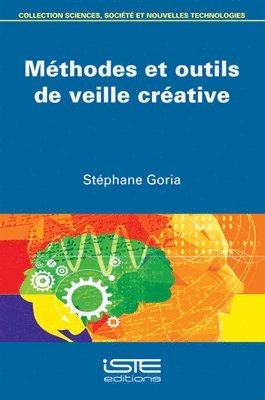
    Methods and Tools for Creative Competitive Intelligence

    AvStéphane Goria

    Inbunden, Engelska, 2017

    1 801 kr

    Beställningsvara. Skickas inom 5-8 vardagar. Fri frakt över 249 kr.

    Beskrivning

    "Creative competitive intelligence" is an information-seeking and monitoring activity of an information environment for the purpose of creativity and innovation. It involves the process leading up to the development of an informational supply adapted to the inspiration of creative or innovative personnel. This dynamic aims for the recognition of novelties (ideas, products, technologies, etc.), the identification of new players in the world of creation and innovation, and the identification of forgotten or neglected developmental paths.This book is aimed at readers who already have some experience of innovation and who are now looking for new ways to discover new products under development, anticipate the design of future products, identify unexplored tracks of inventions, develop and analyze innovation strategies, or recognize the emergence of budding artists.

    Produktinformation

    • Utgivningsdatum:2017-05-23
    • Mått:163 x 239 x 20 mm
    • Vikt:522 g
    • Format:Inbunden
    • Språk:Engelska
    • Antal sidor:272
    • Förlag:ISTE Ltd and John Wiley & Sons Inc
    • ISBN:9781786301635

    Utforska kategorier

    • Sociologi och antropologi inom Samhälle och politik

    Mer om författaren

    Stéphane Goria is Assistant Professor in Communication Sciences and a course convener of the Masters in Digital Documentation – Strategic Watch and Knowledge Organizations at the University of Lorraine in France.

    Innehållsförteckning

    • Introduction ixChapter 1 Intelligence and Creative Competitive Intelligence 11.1 Supplying intelligence 11.2 Informational supply and creative competitive intelligence 101.3 Creative class and creative competitive intelligence 121.4 Creative competitive intelligence, objectives and means 15Chapter 2 Researching and Identifying Trends 172.1 Weak and strong signals and routine signals 172.1.1 The puzzle method 192.1.2 The 3S hypotheses method 192.1.3 Researching routine signals 202.2 Trends interpreted using graphs 212.3 Sources of information on trends 272.4 Algorithm of trend research 32Chapter 3 Formatting, Analysis and Inspiration Using Trends 373.1 Word clouds 373.2 Boards, cartograms and trend books 403.3 Note about researching images that relate to a trend 443.4 Trend funnel and cartogram of opportunities 483.5 Routine boards 51Chapter 4 Presenting and Analyzing Networks 534.1 Overview 534.2 Illustrating indirect links 544.3 Illustrating links between individuals 564.4 Demonstrating networks with multivariate entities 604.4.1 Using star glyphs 604.4.2 Using Chernoff faces 614.5 Invisible chessboards 644.6 Comparative analysis of networks using graphs 66Chapter 5 Visual Tools for Problem Solving 675.1 The great issues of problem solving 675.2 Maps to express questions and ideas 685.2.1 Mind maps 685.2.2 Concept maps 695.2.3 Lotus flower maps 725.2.4 Ishikawa diagrams 745.2.5 The tree to break down objectives 765.3 Window tools to change perspective 775.3.1 Crossing multiscreens 775.3.2 Hyperspective multi-windows 795.3.3 The customer experience corridor 805.4 Business use cases and user stories 825.4.1 Business use case diagrams 825.4.2 User stories 845.5 User experience maps 84Chapter 6 Investigating the Past and Present 876.1 Existing solutions 876.1.1 Go and see what is done in other regions 886.1.2 Go to see what is done in other sectors 896.1.3 Go and see what exists in nature 916.2 Lateral thinking of obsolete technologies 946.3 The C-K theory for design 966.4 Investigating blue oceans 996.4.1 Strategic canvas 1006.4.2 Forgotten customers 1016.5 Crossing of current trends 103Chapter 7 Inspiration Using TRIZ 1077.1 A few general points about TRIZ 1077.2 The innovation principles 1087.3 Matrix of (technical) contradictions 1097.4 Separation principles 1127.5 Eras and laws of technical system evolution 1137.6 Analyzing the technical system 1177.7 The ideal final result (IFR) 119Chapter 8 Reasoning with the Aid of Operators 1218.1 Search operators of expressions of avenues for innovation 1218.2 The easy choice operators and their negation 1248.3 Verbal operators 1278.3.1 Scamper 1278.3.2 Mathematical operators (the most basic ones) 1288.3.3 DTC operators 1288.3.4 FRED ASTAIRE operators 1298.4 Operators using the imaginary 1308.4.1 The operator using super powerful characters (SPC) 1308.4.2 The operator inspired from science fiction (ISF) 1318.5 Combined techniques 1358.5.1 The use of the Sequencer 1358.5.2 Crossing of windows and operators 1368.6 The analogical operators 1388.6.1 Simple usage of an analogy matrix 1398.6.2 Using Synectics 141Chapter 9 Use of Games for Serious Purposes 1439.1 Some forms of games 1439.1.1 A game as an attitude or support 1449.1.2 The game as a design goal 1459.2 The game for serious purposes 1489.3 Information bingo to monitor speeches 1509.4 The semantic brainball to find ideas 1539.5 Keyword battleships 155Chapter 10 Diversion of Role-playing Games 15910.1 Role-playing games 15910.2 Knowledge acquisition through role-playing 16010.3 The personas 16010.4 The court of ideas 16410.5 The seven creative families 16810.6 Investigation trees 16910.7 Complex route mapping 17110.8 The investigation of possible futures 172Chapter 11 Tactical or Strategic Reflection and Wargames 17511.1 Reasoning by military analogies 17511.2 Free business wargames 17911.3 Product clash maps 18211.3.1 Choice and preliminary data collection, development of questionnaires 18211.3.2 Drawing the bottom of the map/terrain 18511.3.3 Placing pawns and estimating movements: the simplified version 18611.3.4 Placing pawns and estimating movements: the detailed version 18711.3.5 Reasoning using product clash maps 18911.4 The strategic goban 189Chapter 12 Use of Objective-based Games 19512.1 A small point about games with a purpose 19512.2 The strategic and creative shoot (SCS) 19612.2.1 SCS, strategic round 19712.2.2 SCS, creative round 19912.2.3 SCS, counter-attack or second level 20112.3 The Rummy of attributes 20312.4 The Small Horse Challenge 20512.5 The informational and creative centipede 209Chapter 13 Creative Competitive Intelligence and Territorial Intelligence 21513.1 Territory in question 21513.2 Problems with creative competitive intelligence and territorial intelligence 21713.3 Geo-strategic approach 22013.4 Risk approach with Clue Storming 223Conclusion 229Bibliography 233Index 241