• Fri frakt över 249 kr
  • •
  • Snabba leveranser
  • •
  • Billiga böcker
Kundservice

Du är på sajten för privatpersoner.

Företag, bibliotek eller offentlig verksamhet?

Du handlar på classic.bokus.com, där alla dina funktioner finns intakta.
Till classic.bokus.com
Bokus logotyp. Gå till startsidan.
  • Erbjudanden
  • Nyheter
  • Student
  • Topplistor
  • Barn & ungdom
  • Bokus Play
  • E-böcker
  • Pocketböcker
  • Spel & pussel

Må bättre, för mindre! Upp till 50% rabatt på hälsoböcker

Sidfot

Mina sidor

    Hjälp

    • Kundservice
    • Vanliga frågor och svar
    • Frakt och leverans
    • Retur vid ångerrätt
    • Reklamera vara
    • Betalning
    • Köpvillkor
    • Allmänna villkor
    • Information om webbplatsens tillgänglighet

    Om Bokus

    • Om oss
    • Pressrum
    • För studenter
    • För företag
    • För bibliotek och offentlig verksamhet
    • För leverantörer
    • Hållbarhet

    Populärt

    • Aktuella erbjudanden
    • Presentkort
    • Studentlitteratur
    • Nya böcker
    • Topplistor
    • Signerade böcker
    • Engelska böcker

    Inspiration

    • Boktips
    • BookTok
    • Populära bokserier
    • Barnbokskaraktärer
    • Populära författare
    Logotyp för Bokus
    Följ oss på Facebook (extern länk)Följ oss på Instagram (extern länk)Följ oss på YouTube (extern länk)Följ oss på TikTok (extern länk)
    bokus @ CookiesAnpassa cookiesIntegritetspolicyKöpvillkor
    Till Citymail hemsida (extern länk)Till Budbee hemsida (extern länk)Till Postnord hemsida (extern länk)Till Schenker hemsida (extern länk)Till Early Bird hemsida (extern länk)Till Walleys hemsida (extern länk)
    1. Djur och Natur
    2. Djurböcker
    3. Vilda djur
    4. Vattendjur

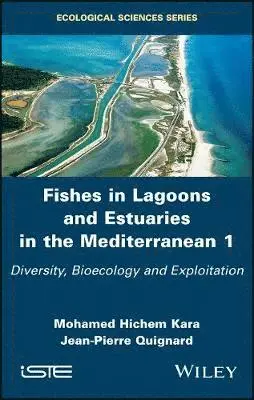
    Fishes in Lagoons and Estuaries in the Mediterranean 1

    Diversity, Bioecology and Exploitation

    AvMohamed Hichem Kara,Jean-Pierre Quignard

    Inbunden, Engelska, 2018

    1 805 kr

    Beställningsvara. Skickas inom 5-8 vardagar. Fri frakt över 249 kr.

    Beskrivning

    Lagoons and estuaries are transition spaces between earth and sea. Beyond their expanse, geographic repartition, geomorphological, hydroclimatic and ecobiological diversity and biodiversity, they play an important role in regional economies and are some of the ecosystems most vulnerable to global change.Reinforced by numerous references, this book studies Mediterranean lagoonal and estuarine fishes whose diversity largely depends on the composition of neighboring marine and continental ichtyofauna. The authors describe their morphological, biological, ecological and behavioral characteristics by evoking their distinctive features and differences with their marine or freshwater homologues. Their adaptation strategies, elucidated thanks to recent advances in morphology, genetics and molecular biology, are recognized as a major advantage in the context of climate change.This book is for natural environment managers, engineers, teachers, students and researchers.

    Produktinformation

    • Utgivningsdatum:2018-11-20
    • Mått:160 x 239 x 23 mm
    • Vikt:590 g
    • Format:Inbunden
    • Språk:Engelska
    • Antal sidor:288
    • Förlag:ISTE Ltd and John Wiley & Sons Inc
    • ISBN:9781786302441

    Utforska kategorier

    • Vattendjur inom Djur och Natur
    • Geografi inom Naturvetenskap och teknik
    • Fiskar inom Naturvetenskap och teknik

    Mer om författaren

    Mohamed Hichem Kara (Sc.D.) is Professor at the University of Annaba, Algeria, where he manages the marine bioresource laboratory, founded in 2003. He is a founding member of the Algerian Academy of Science and Technology, and a member of the French Ichtyological Society.Jean-Pierre Quignard (Sc.D.) is Honorary Professor at the University of Montpellier, France, where he manages the Mediterranean ichtyological laboratory. He is a member of the Montpellier Académie des sciences et lettres and of the French Ichthyological Society.

    Innehållsförteckning

    • Foreword ixPreface xiIntroduction xiiiChapter 1. Mediterranean Lagoons and Estuaries 11.1. What is a lagoon and what is an estuary? 21.2. Lagoons and estuaries of the Mediterranean: characteristics,inventory and classification 81.3. Some recurrent preconceived ideas and problems concerning lagoons 141.4. Geological, geographic and physicochemical types of lagoon 151.4.1. According to their geological origin 151.4.2. According to their connections with the sea 161.4.3. According to their physical chemistry 171.4.4. According to their haline system 171.4.5. According to their nutrient content 181.4.6. According to their geographic position and connection with the sea 191.5. Lagoon hydroclimate and hydrodynamics 191.6. Some features of lagoon ichthyoecobiology 211.7. Production in lagoons and trophic chains 261.8. Lagoon habitats 30Chapter 2. Ecology and Behavior 332.1. Origin and originality 382.2. Ecology and behavior 432.2.1. Sedentaries 442.2.2. Migrators 472.2.3. Intermittent residents 502.3. Sea–lagoon/lagoon–sea fish interaction: the phenology of migrations 512.3.1. Inmigration 512.3.2. Outmigrations 552.4. Ecological valence 582.5. Lagoons and invasions: the presence of exotic species 592.6. Structure of fish assemblages 622.6.1. Natural factors in spatiotemporal distribution 632.6.2. Assemblages and anthropization 662.6.3. Utilization of ichthyological indicators 69Chapter 3. Biology and Genetics 713.1. Sexuality 723.2. Reproduction 773.2.1. Nest building, gestation and fecundity 783.2.2. Reproductive success and gamete management 823.2.3. Reproductive particularities in Blenniidae, Gobiidae and Labridae 853.2.4. Reproductive particularities in Syngnathidae 863.2.5. Other aspects of nest building and parental care 933.2.6. Other aspects of reproduction in migrators 1043.3. Feeding and energy transfer 1053.3.1. Alimentary guilds and competition 1053.3.2. Cannibalism 1073.3.3. Feeding behavior 1083.4. Age and growth 1123.5. Intra- and interspecific communication 1183.5.1. Visual functions 1193.5.2. The olfactory functions 1213.5.3. Auditive and mechanoreceptive functions 1233.6. Ecological genetics 1263.6.1. Sedentary species 1263.6.2. Migratory species 1293.6.3. Other structural factors 130Chapter 4. Fisheries and Aquaculture 1374.1. Fishing in lagoons 1384.1.1. Advantages of lagoons for fisheries 1384.1.2. Fishing methods and techniques 1404.1.3. Fisheries production and yield 1524.1.4. Interaction between marine and lagoon fisheries 1614.2. Aquaculture in lagoons 1634.3. Fisheries–aquaculture interactions in the lagoons 166Chapter 5. Anthropization and Climate Change 1695.1. Threats to lagoon and estuarine systems and their ichthyological populations 1695.2. On the need for an integrated approach to lagoon ichthyology 1795.3. Toward a best knowledge of lagoons: the contribution of the Mediterranean “lagoon–estuarine networks” 180Appendix 183Glossary 191References 199Index of Scientific Names and Common Words 257Index by Country: Lagoons, Lakes, Ponds, Delta and Estuaries 263