• Fri frakt över 249 kr
  • •
  • Snabba leveranser
  • •
  • Billiga böcker
Kundservice

Du är på sajten för privatpersoner.

Företag, bibliotek eller offentlig verksamhet?

Du handlar på classic.bokus.com, där alla dina funktioner finns intakta.
Till classic.bokus.com
Bokus logotyp. Gå till startsidan.
  • Erbjudanden
  • Nyheter
  • Student
  • Topplistor
  • Barn & ungdom
  • Bokus Play
  • E-böcker
  • Pocketböcker
  • Spel & pussel

10% rabatt på allt med kod NYSTART10 →

Sidfot

Mina sidor

    Hjälp

    • Kundservice
    • Vanliga frågor och svar
    • Frakt och leverans
    • Retur vid ångerrätt
    • Reklamera vara
    • Betalning
    • Köpvillkor
    • Allmänna villkor
    • Information om webbplatsens tillgänglighet

    Om Bokus

    • Om oss
    • Pressrum
    • För studenter
    • För företag
    • För bibliotek och offentlig verksamhet
    • För leverantörer
    • Hållbarhet

    Populärt

    • Aktuella erbjudanden
    • Presentkort
    • Studentlitteratur
    • Nya böcker
    • Topplistor
    • Signerade böcker
    • Engelska böcker

    Inspiration

    • Boktips
    • BookTok
    • Populära bokserier
    • Barnbokskaraktärer
    • Populära författare
    Logotyp för Bokus
    Följ oss på Facebook (extern länk)Följ oss på Instagram (extern länk)Följ oss på YouTube (extern länk)Följ oss på TikTok (extern länk)
    bokus @ CookiesAnpassa cookiesIntegritetspolicyKöpvillkor
    Till Citymail hemsida (extern länk)Till Budbee hemsida (extern länk)Till Postnord hemsida (extern länk)Till Schenker hemsida (extern länk)Till Early Bird hemsida (extern länk)Till Walleys hemsida (extern länk)
    1. Psykologi och pedagogik
    2. Psykologi

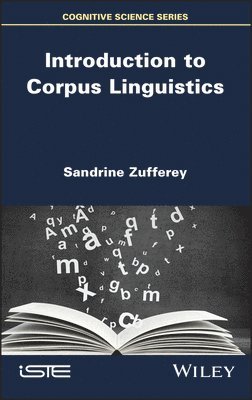
    Introduction to Corpus Linguistics

    AvSandrine Zufferey

    Inbunden, Engelska, 2020

    2 111 kr

    Beställningsvara. Skickas inom 3-6 vardagar. Fri frakt över 249 kr.

    Fler format och utgåvor

    E-bok

    2 131 kr

    E-bok

    2 131 kr

    Beskrivning

    Over the past decades, the use of quantitative methods has become almost generalized in all domains of linguistics. However, using these methods requires a thorough understanding of the principles underlying them. Introduction to quantitative methods in linguistics aims at providing students with an up-to-date and accessible guide to both corpus linguistics and experimental linguistics. The objectives are to help students developing critical thinking about the way these methods are used in the literature and helping them to devise their own research projects using quantitative data analysis.

    Produktinformation

    • Utgivningsdatum:2020-12-31
    • Mått:156 x 234 x 16 mm
    • Vikt:562 g
    • Format:Inbunden
    • Språk:Engelska
    • Antal sidor:288
    • Förlag:ISTE Ltd and John Wiley & Sons Inc
    • ISBN:9781786304179

    Utforska kategorier

    • Psykologi inom Psykologi och pedagogik
    • Språkvetenskap och lingvistik inom Språk och ordböcker

    Mer om författaren

    Sandrine Zufferey is a Professor of French Linguistics at the University of Bern in Switzerland, where she also teaches Corpus Linguistics.

    Innehållsförteckning

    • Preface ixChapter 1. How to Define Corpus Linguistics 11.1. Defining elements 11.2. Empiricism versus rationalism in linguistics 41.3. Chomsky’s arguments against empiricism in linguistics 51.4. Corpus linguistics and computer tools 81.5. Quantitative versus qualitative methods 111.6. Differences between corpus linguistics and experimental linguistics 141.7. Different types of corpora 161.8. Conclusion 191.9. Revision questions and answer key 201.9.1. Questions 201.9.2. Answer key 211.10. Further reading 23Chapter 2. How to Use Corpora in Theoretical Linguistics 252.1. Phonetics and phonology 252.2. Morphology 292.3. Syntax 322.4. Lexicon 352.5. Discourse analysis 382.6. Pragmatics 412.7. Sociolinguistics 432.8. Diachronic linguistics 462.9. Conclusion 482.10. Revision questions and answer key 492.10.1. Questions 492.10.2. Answer key 502.11. Further reading 52Chapter 3. How to Use Corpora in Applied Linguistics 533.1. Language acquisition 533.2. Language impairments 583.3. Second language acquisition 613.4. Language teaching 643.5. Lexicography 683.6. Stylistics 723.7. Legal linguistics 743.8. Conclusion 773.9. Revision questions and answer key 773.9.1. Questions 773.9.2. Answer key 783.10. Further reading 80Chapter 4. How to Use Multilingual Corpora 834.1. Comparable corpora and parallel corpora 834.2. Looking for a tertium comparationis 874.3. Translations as a discursive genre 904.4. Multilingual corpora and contrastive linguistics 924.5. Parallel corpora and translation studies 974.6. Parallel corpora and bilingual dictionaries 1004.7. Conclusion 1024.8. Revision questions and answer key 1024.8.1. Questions 1024.8.2. Answer key 1034.9. Further reading 105Chapter 5. How to Find and Analyze Corpora in French 1075.1. Corpora formats and their availability 1075.2. Reference corpora 1105.3. Written French corpora 1115.4. Spoken French corpora 1145.5. Children and learner corpora 1165.6. Multilingual corpora including French 1195.7. Corpus consultation tools 1235.7.1. Concordancers 1235.7.2. Focus on the AntConc concordancer 1265.7.3. Focus on the CLAN concordancer 1285.8. Conclusion 1295.9. Revision questions and answer key 1305.9.1. Questions 1305.9.2. Answer key 1315.10. Further reading 136Chapter 6. How to Build a Corpus 1376.1. Before deciding to build a corpus 1376.2. Establishing the size and representativeness of data 1396.3. Choosing language samples 1436.4. Preparing and coding corpus files 1476.5. Recording and transcribing spoken data 1526.6. Ethical and legal issues 1546.7. Conclusion 1576.8. Revision questions and answer key 1576.8.1. Questions 1576.8.2. Answer key 1586.9. Further reading 162Chapter 7. How to Annotate a Corpus 1637.1. Corpus annotations 1637.2. Different types of annotations 1667.3. Standardization of annotation schemes 1707.4. The stages of the annotation process 1717.5. Annotation tools 1777.6. Measuring the quality and reliability of an annotation 1807.7. Sharing your annotations 1847.8. Conclusion 1867.9. Revision questions and answer key 1867.9.1. Questions 1867.9.2. Answer key 1877.10. Further reading 193Chapter 8. How to Analyze Corpus Data 1958.1. Descriptive statistics for corpus data 1958.2. Measuring the lexical richness of a corpus 2008.3. Measuring lexical dispersion in a corpus 2028.4. Basics of inferential statistics 2048.5. Typical variables in corpus studies 2078.6. Measuring the differences between categories 2108.7. Conclusion 2198.8. Revision questions and answer key 2208.8.1. Questions 2208.8.2. Answer key 2228.9. Further reading 226Conclusion: The Stages for Carrying Out a Corpus Study 227References 233Index 255