• Fri frakt över 249 kr
  • •
  • Snabba leveranser
  • •
  • Billiga böcker
Kundservice

Du är på sajten för privatpersoner.

Företag, bibliotek eller offentlig verksamhet?

Du handlar på classic.bokus.com, där alla dina funktioner finns intakta.
Till classic.bokus.com
Bokus logotyp. Gå till startsidan.
  • Erbjudanden
  • Nyheter
  • Student
  • Topplistor
  • Barn & ungdom
  • Bokus Play
  • E-böcker
  • Pocketböcker
  • Spel & pussel

10% rabatt på allt med kod: NYSTART10 →

Sidfot

Mina sidor

    Hjälp

    • Kundservice
    • Vanliga frågor och svar
    • Frakt och leverans
    • Retur vid ångerrätt
    • Reklamera vara
    • Betalning
    • Köpvillkor
    • Allmänna villkor
    • Information om webbplatsens tillgänglighet

    Om Bokus

    • Om oss
    • Pressrum
    • För studenter
    • För företag
    • För bibliotek och offentlig verksamhet
    • För leverantörer
    • Hållbarhet

    Populärt

    • Aktuella erbjudanden
    • Presentkort
    • Studentlitteratur
    • Nya böcker
    • Topplistor
    • Signerade böcker
    • Engelska böcker

    Inspiration

    • Boktips
    • BookTok
    • Populära bokserier
    • Barnbokskaraktärer
    • Populära författare
    Logotyp för Bokus
    Följ oss på Facebook (extern länk)Följ oss på Instagram (extern länk)Följ oss på YouTube (extern länk)Följ oss på TikTok (extern länk)
    bokus @ CookiesAnpassa cookiesIntegritetspolicyKöpvillkor
    Till Citymail hemsida (extern länk)Till Budbee hemsida (extern länk)Till Postnord hemsida (extern länk)Till Schenker hemsida (extern länk)Till Early Bird hemsida (extern länk)Till Walleys hemsida (extern länk)
    1. Naturvetenskap och teknik
    2. Matematik och naturvetenskap
    3. Biologi

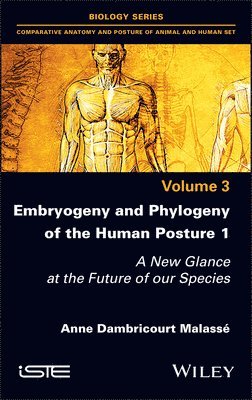
    Embryogeny and Phylogeny of the Human Posture 1

    A New Glance at the Future of our Species

    AvAnne Dambricourt Malasse

    Inbunden, Engelska, 2021

    1 805 kr

    Beställningsvara. Skickas inom 5-8 vardagar. Fri frakt över 249 kr.

    Fler format och utgåvor

    E-bok

    2 183 kr

    E-bok

    2 177 kr

    Beskrivning

    The future of the human posture is in the spotlight. The 200-year-old locomotion paradigm can no longer resist the advancement of knowledge, yet 2,500 years of thinking on the place of verticalized human anatomy and its reflexive consciousness in the natural history of life and the Earth, is more relevant than ever.This book retraces these reflections from pre-Socratic philosophers, focusing on the link between verticality and the most complex and consciously reflexive nervous system on the top rung of the ladder of living beings. The origin of animated forms, or animals, was considered metaphysical until the 19th century but reflection on their inception, from fertilization, paved the way for mathematics of infinitesimal geometry and dynamics. The simian filiation was inconceivable until Jean-Baptiste de Lamarck bridged the gap in 1802 with the locomotion postulate to explain the transition from quadrupedal to bipedal posture, sustained by the hypothesis of inheritance of acquired characteristics. This doctrine was overturned in 1987 by the discovery of the embryonic origins of the straightening - specific dynamics linked to neurogenesis - confirming the natural place of human verticality and nervous system complexity with its psychomotor and cognitive consequences.Sapiens find themselves at the physical limit of the straightening while mechanisms of gametogenesis have never ceased in making neurogenesis exponentially more complex. Is the future exclusively terrestrial or does intrauterine hominization open up new perspectives for space exploration? Posturologists, occlusodontics, osteopaths, cognisciences - all anthropological sciences exposed to human verticality are concerned with this discovery, which allows Sapiens to face their natural destiny

    Produktinformation

    • Utgivningsdatum:2021-10-08
    • Mått:10 x 10 x 10 mm
    • Vikt:454 g
    • Format:Inbunden
    • Språk:Engelska
    • Antal sidor:256
    • Förlag:ISTE Ltd and John Wiley & Sons Inc
    • ISBN:9781786306067

    Utforska kategorier

    • Biologi inom Naturvetenskap och teknik

    Mer om författaren

    Anne Dambricourt Malasse is a Paleoanthropologist at the French National Center for Scientific Research (CNRS) attached to the National Museum of Natural History, at the Institut de paléontologie humaine, Paris. She studies the straightening of the nervous system in the primate lineage that leads to human posture and questions its future after having demonstrated its embryonic and phylogenetic origin in 1987.

    Innehållsförteckning

    • Preface xiPart 1. The Vertical Human: Philosopher of Nature 1Chapter 1. Anthropos, the First of the Animals 31.1. Introduction 31.1.1. Epistemology according to Georges Cuvier 51.1.2. From the metaphysics of beings to the physics of their matter 71.1.3. Mathematics, forms and women physicians 101.1.4. Socrates, Plato and Aristotle: an anthropology of ideas or a certain idea of anthropology 131.2. Anthropos, the axis of the world 161.2.1. Man, a vertical anatomy 161.2.2. Apes and humans 171.2.3. The generation of anthropos: the father as a model, the mother by default 20Chapter 2. From Aristotle to the 16th Century: The Eclipse of Science 272.1. Introduction 272.2. Comparative anatomy of apes and humans from Aristotle to Galen 272.2.1. The Museum of Alexandria 272.3. Decadence and rebirth of natural philosophy and human anatomy 312.3.1. Albertus Magnus, the Aristotle of a reborn Europe 312.3.2. The first lay schools of medicine in Europe in the 11th and 12th centuries 332.3.3. Instant of grace: Leonardo da Vinci, from the elusive movement to the restitution of the soul 39Chapter 3. The 16th Century: From Generation to Human Physiology 533.1. Ambroise Paré (1510–1590), father of French surgery with “more than barbaric Latin” 533.2. André Vésale (1514–1564), the audacity of objectivity in the face of Galen’s anthropo-simian chimeras 553.3. Jacobus Sylvius (1478–1555): defending Galen body and soul 563.4. Gabriele Fallope (1523–1562): freedom of dissection, the fine anatomy of the ear and cranial base 593.5. Bartolomeo Eustachi (Bartholomaeus Eustachius, c. 1523–1562): the human fetus and the monkey 603.6. The embryo, the fetus and blood circulation with the maternal body 623.6.1. Arantius (1530–1589): the development of the human fetus 623.6.2. D’Aquapendente (1533–1619): the father of embryology 623.6.3. William Harvey (1578–1657): the demonstration of blood circulation, vital for the development of the embryo 633.7. On human generation and fetal development 643.7.1. Gabriel de Zerbis (1455–1505) 653.7.2. Volcher Coiter (1534–1576) 653.7.3. Félix Platter (Foelix Platerus, 1536–1614), the first optician 663.8. Giovanni Alfonso Borelli (1608–1679): the dynamic geometry of the vertical body 67Chapter 4. Centuries in Search of Light 694.1. Independent Academies of Sciences 694.1.1. Gerolamo Cardano: of the necessity and the form of Man, by spontaneous generation or by putrefaction? 714.1.2. Giulio Cesare Vanini (1585–1619), “Prince of the libertines” 754.1.3. Man absent from himself, God always as explanation 774.2. The beginning of Man and Russian dolls 774.2.1. From microscope to microcosm 774.2.2. The created species are not immortal 81Chapter 5. The Century of Naturalistic Enlightenment 855.1. The Jardin royal des plantes: a new natural history of animals 855.1.1. Georges Leclerc, Count of Buffon 855.1.2. A research organization independent of biblical dogmatism 875.1.3. The history of the Earth as a premise of the natural history of Man 905.1.4. Man is the last “internal mold” created on the Earth 955.1.5. The species according to Buffon 1005.1.6. A fundamental principle: the subordination of external parties to internal parties 105Part 2. The Place of Humans among Current and Fossilized Primates 107Chapter 6. From Natural Curiosity Cabinets to the First Primate Collections 1096.1. Introduction 1096.1.1. Conrad Gessner (1516–1565), the first great collector of natural curiosities 1096.1.2. Ulisse Aldrovandi (1522–1605), the first natural history museums in Europe 1116.1.3. Jacobus Bontius (Jacob de Bondt, 1592–1631): the first wild great ape or “Man of the Woods” 1126.1.4. Tulpius (1593–1674), the first description of a chimpanzee 1126.1.5. Edward Tyson (1650–1708), the first dissection of a chimpanzee 1136.1.6. Carl Linnaeus (1707–1778), the classification of organisms by species and genera 1166.2. Comparative anatomy at the Muséum national d’Histoire naturelle 1186.2.1. Louis-Jean-Marie Daubenton (1716–1799), the occipital hole and the face unified by geometry 1186.2.2. Georges Buffon publishes his own “Nomenclature of Apes” 1226.2.3. Petrus Camper (1722–1789), the first dissection of an orangutan: the ape does not speak 1246.2.4. The premises of a gradualist and racial anthropology 125Chapter 7. The Transition from the 18th to the 19th Century: Birth of Paleontology and Comparative Anatomy 1277.1. Oryctography or the study of the disposition of minerals and fossils in the soil 1277.1.1. François-Xavier de Burtin (1743–1818), a leading European collector 1277.1.2. The French Revolution: naturalist audacity faced with the fury of the Terror (1792–1794) 1287.1.3. The premises of the Industrial Revolution: energy and thermodynamics 1317.2. Georges Cuvier (1769–1832), the French Revolution and the revolution of the globe 1347.2.1. The natural sciences at the heart of the “Terror” 1347.2.2. Karl Kielmeyer, Georges Cuvier’s great comrade and gifted youngster 1377.2.3. Étienne Geoffroy Saint-Hilaire, the unity of the animal composition plan 1387.2.4. The laws of animal oeconomy 1397.2.5. Humans have no fossil ancestor according to Cuvier 1417.2.6. The division between Cuvier and Geoffroy Saint-Hilaire or the distinction between micro- and macroevolution 144Chapter 8. The Slow Recognition of Humans’ Simian Origins 1478.1. Introduction 1478.2. Jean-Baptiste de Lamarck or the audacity of the transformist theory of organization plans 1488.2.1. “The causes of the main physical facts” or “what is life” (1780) 1488.2.2. Transformism or the first formulation of evolution 1508.2.3. Lamarck and the first theory of the common origins of the orangutan, the chimpanzee and Homo sapiens 1538.2.4. The anatomical origins of Homo sapiens, a break with his own statements 1548.2.5. Which system to classify humans: the separation of organizational plans or the variety of a single plan? 155Chapter 9. Embryology, Fixist Anthropology and the Neanderthal Man 1599.1. Introduction 1599.1.1. The theory of epigenesis (Wolff 1759) 1609.1.2. Karl von Baer discovers the formation of the ovum (1827) 1609.1.3. Johann Meckel (1781–1833), the revolution of the 11 laws of embryogenesis 1619.2. The origins of the vertical anatomy of humans: between poetic metaphysics, transcendental finality and climatic influences 1649.3. Great confusion between Linnaean nesting classification and the emergence of organizational plans 1669.3.1. Étienne Serres (1786–1868) and the “transcendental” anatomy of the embryo (1832) 1669.3.2. Alfred Velpeau (1795–1867) and the cranio-caudal gradient of embryogenesis (1832) 1689.3.3. The first Chair of Embryogeny at the Collège de France (1844) 1709.3.4. The discovery of the gorilla, 1847–1852 1719.3.5. Franz Fick (1813–1858), a giant step forward: the study of the internal base of the skull (1853–1862) 1729.3.6. Rudolf Virchow (1821–1902), a major study on the relations between the internal base and the external face 1749.3.7. Neanderthal Man (1856), a lost human species 1759.3.8. Herman Welcker (1822–1897), comparative internal growth of the orangutan and Homo sapiens (1862) 175Chapter 10. The Decline of Transformism at the Muséum national d’Histoire naturelle 17710.1. The decline of transformism despite the discovery of the first monkey fossils 17710.1.1. First manmade objects contemporary to Diluvium, 1842 17810.1.2. Edouard Lartet: the first great fossil monkey to the rescue of Cuvier (1856) 17910.1.3. Paris, capital of transformist anthropology and free thought (1848–1857) 18010.2. A theory lacking internal coherence 18210.2.1. Gradualist classification and discontinuities between fossil genera: an impasse 18210.2.2. Charles Darwin (1809–1882) knocked at the door of the French Academy of Sciences and convinced no one 18410.2.3. A progression toward scientific formalization of the evolution of structures: the geometrical study of the skull 18810.2.4. The cart before the horse: the Linnaean classification of fossils before understanding of processes 19010.2.5. The transmission of acquired characteristics and Charles Darwin’s gemmules 19410.2.6. The faults of Charles Darwin against Armand de Quatrefages 197Chapter 11. Transformist Paleontology Inaugurates the 20th Century 20311.1. The rebirth 20311.1.1. Albert Gaudry (1827–1908), a palace in the Jardin des plantes for paleontology and comparative anatomy 20311.1.2. Paul Gervais (1816–1879) at the Chair of Anatomy and the first bipedal fossil monkey 20411.1.3. Haeckel (1834–1919), on the way to formalizing processes 20511.1.4. Haeckel, a new hope 20711.1.5. Phylogenesis and embryogenesis, a reversed logic 20911.2. Natural selection and the scale of human societies 211References 215Index 227