• Fri frakt över 249 kr
  • •
  • Snabba leveranser
  • •
  • Billiga böcker
Kundservice

Du är på sajten för privatpersoner.

Företag, bibliotek eller offentlig verksamhet?

Du handlar på classic.bokus.com, där alla dina funktioner finns intakta.
Till classic.bokus.com
Bokus logotyp. Gå till startsidan.
  • Erbjudanden
  • Nyheter
  • Student
  • Topplistor
  • Barn & ungdom
  • Bokus Play
  • E-böcker
  • Pocketböcker
  • Spel & pussel

10% studentrabatt med kod TERM26

Sidfot

Mina sidor

    Hjälp

    • Kundservice
    • Vanliga frågor och svar
    • Frakt och leverans
    • Retur vid ångerrätt
    • Reklamera vara
    • Betalning
    • Köpvillkor
    • Allmänna villkor
    • Information om webbplatsens tillgänglighet

    Om Bokus

    • Om oss
    • Pressrum
    • För studenter
    • För företag
    • För bibliotek och offentlig verksamhet
    • För leverantörer
    • Hållbarhet

    Populärt

    • Aktuella erbjudanden
    • Presentkort
    • Studentlitteratur
    • Nya böcker
    • Topplistor
    • Signerade böcker
    • Engelska böcker

    Inspiration

    • Boktips
    • BookTok
    • Populära bokserier
    • Barnbokskaraktärer
    • Populära författare

    Mina sidor

      Hjälp

      • Kundservice
      • Vanliga frågor och svar
      • Frakt och leverans
      • Retur vid ångerrätt
      • Reklamera vara
      • Betalning
      • Köpvillkor
      • Allmänna villkor
      • Information om webbplatsens tillgänglighet

      Om Bokus

      • Om oss
      • Pressrum
      • För studenter
      • För företag
      • För bibliotek och offentlig verksamhet
      • För leverantörer
      • Hållbarhet

      Populärt

      • Aktuella erbjudanden
      • Presentkort
      • Studentlitteratur
      • Nya böcker
      • Topplistor
      • Signerade böcker
      • Engelska böcker

      Inspiration

      • Boktips
      • BookTok
      • Populära bokserier
      • Barnbokskaraktärer
      • Populära författare
      Logotyp för Bokus
      Följ oss på Facebook (extern länk)Följ oss på Instagram (extern länk)Följ oss på YouTube (extern länk)Följ oss på TikTok (extern länk)
      bokus @ CookiesAnpassa cookiesIntegritetspolicyKöpvillkor
      Till Citymail hemsida (extern länk)Till Budbee hemsida (extern länk)Till Postnord hemsida (extern länk)Till Schenker hemsida (extern länk)Till Early Bird hemsida (extern länk)Till Walleys hemsida (extern länk)
      1. Samhälle och politik
      2. Sociologi och antropologi

      Gamification of Society

      AvStephane Le Lay,Stéphane Le Lay

      Inbunden, Engelska, 2021

      1 817 kr

      Beställningsvara. Skickas inom 5-8 vardagar. Fri frakt över 249 kr.

      Beskrivning

      The applications of gamification and the contexts in which game elements can be successfully incorporated have grown significantly over the years. They now include the fields of health, education, work, the media and many others. However, the human and social sciences still neglect the analysis and critique of gamification. Research conducted in this area tends to focus on game objects and not gamification�s logic as its ideological dimension. Considering that the game, as a model and a reference, laden with social value, deserves to be questioned beyond its objects, The Gamification of Society gathers together texts, observations and criticisms that question the influence that games and their �mechanics� have on wider society. The empirical research presented in this book (examining designers� practices, early childhood, political action, the quantified self, etc.) also probes several different national contexts – those of Norway, Belgium, the United States and France, among others.

      Produktinformation

      • Utgivningsdatum:2021-06-11
      • Mått:10 x 10 x 10 mm
      • Vikt:454 g
      • Format:Inbunden
      • Språk:Engelska
      • Antal sidor:224
      • Förlag:ISTE Ltd and John Wiley & Sons Inc
      • ISBN:9781786306456

      Utforska kategorier

      • Sociologi och antropologi inom Samhälle och politik

      Mer om författaren

      Stéphane Le Lay is a specialist in occupational health, a sociologist and a researcher at the Institut de Psychodynamique du Travail, France. Emmanuelle Savignac is an anthropologist and senior lecturer at the Université de la Sorbonne Nouvelle and a researcher at CERLIS (CNRS) in France. Pierre Lénel is an associate researcher in the Interdisciplinary Laboratory for Economic Sociology at CNAM-CNRS, France. Jean Frances is a sociologist and senior lecturer at ENSTA Bretagne, France.

      Innehållsförteckning

      • Foreword xiIntroduction xvPart 1. Observing and Discerning: Contextualizing the Situation and Recommending a Consistent Set of Options 1Chapter 1. Understanding the Strategic Landscape 31.1. Understanding the decision-making situation 41.1.1. Identifying the variables and factors that make up the situation 41.1.2. Detecting the context of the situation through structural analysis 51.2. Representing the context of the action 151.2.1. Addressing the situational context through nested frames 161.2.2. Conceptualizing the strategic landscape as a system with three macrocomponents 171.2.3. Reconstructing the multilevel landscape system 261.2.4. Configuring the intervention as a system connected to the landscape 321.2.5. Specifying the interactions of the “landscape” and “intervention” systems 32Chapter 2. Imagining and Directing Plausible Futures 372.1. Exploring the future through the use of scenarios 372.1.1. Reorienting scenarios as a core element of foresight 382.1.2. Building frames or scenario profiles 392.1.3. Sketching morphological profiles 432.1.4. Adopting a two-step procedure 452.2. Reinforcing and fleshing out the scenarios 602.2.1. Enriching and completing global scenarios 602.2.2. Periodically updating the scenarios 632.2.3. Using scenarios for strategic purposes 65Chapter 3. Developing Relevant Strategic Initiatives 673.1. Defining objectives and considering options 673.1.1. Specifying and defining the main orientations 683.1.2. Drafting consistent action profiles 693.1.3. The case of the industrial future of a department in Ile-de-France 723.2. Transforming options into project concepts 753.2.1. Creating the tree of objectives 753.2.2. Detecting the critical conditions for achieving objectives 773.2.3. Summarizing each option in the form of a logical framework 803.2.4. Aggregating projects into coherent programs 853.2.5. Considering the plan as a metaprogram of actions 88Part 2. Judging and Arbitrating: Evaluating and Reconfiguring Recommendations to Decide on a Successful Intervention 91Chapter 4. Defining Priorities and Gauging Courses of Action 934.1. Clarifying preferences and comparing options 934.1.1. Setting up the overall performance appraisal system 954.1.2. Structuring and weighting criteria according to their hierarchical breakdown 974.1.3. Determining the estimators and scales of appreciation of the options according to the operational criteria 1004.2. Evaluating options according to the macrocriteria to inform the decision 1004.2.1. Appreciating congruence with the context of intervention as a springboard for pragmatism 1014.2.2. Assessing future validity as an indicator of future pluralism 1064.2.3. Assessing the adequacy of the strategic reference as a guarantee of finalism 1114.3. Gauging the options according to their propensity to immerse themselves favorably in the strategic landscape: interpreting and appropriating the triad of macrocriteria 1134.3.1. A subtle mix of key priorities 1134.3.2. An evolving assessment of the intervention according to the macrocriteria 1154.3.3. Using fundamentally circumstantial multicriteria assessment 116Chapter 5. Revealing Areas of Potential and Adopting a Decision-making Logic 119 5.1. Modeling the decision problem and scrutinizing the spaces of freedom and opportunity 1195.1.1. Considering strategic initiatives in terms of composite options 1205.1.2. Revealing the scope of plural actions 1285.2. Making wise use of uncertainty and ambiguity 1325.2.1. Adopting a strategic posture according to the level of uncertainty 1325.2.2. Exercising circumspection in an almost inextricable situation 135Chapter 6. Recomposing Solutions and Making the Best Decisions 1376.1. Reconciling requirements and risks by combining simulation and optimization 1386.1.1. Conducting a cascading arbitration and selection process 1386.1.2. Adjusting inconsistent interventions by adapting them to constraint 1396.1.3. Developing a robust trade-off in a reasonably uncertain future 1416.1.4. Guarding cautiously against contingencies and any eventuality 1446.1.5. Changing the conditions to modify or transform the intervention 1496.2. Interpreting optimized solutions to support the decision 1506.2.1. Visualizing the results in a triptych of dashboards 1506.2.2. Revealing performance levels for the objectives-criteria 1526.2.3. Describing the composition of the options and exploiting the room for maneuver 1546.2.4. Identifying saturation and estimating the pressure of constraints 1566.2.5. Detecting and estimating the value of proactive deposits 159Part 3. Acting and Intervening: Judiciously Guiding Action to Generate a Virtuous Dynamic 161Chapter 7. Identifying Predispositions to Act and Generating Compromises 1637.1. Deciphering the power relationships and power factors of the actors 1647.1.1. Schematizing the conceptual approach and introducing key concepts 1657.1.2. Determining the power effect (or leverage) 1707.1.3. Conducting a structural analysis of the actors in terms of their strengths or powers 1727.1.4. Interpreting the power relationships according to the stature and posture of the actors 1747.2. Extending the analytical framework to a metasystem incorporating actors and objectives 1807.2.1. Globalizing the existence of each actor on the basis of their relations to the subsystem of factors and objectives 1817.2.2. Aggregating the existence of each objective based on its relationship to the two subsystems of objectives and actors: visible and/or hidden preponderance and prevalence 1837.2.3. Extending the relational existence of each actor by adding successive dimensions 1837.2.4. Measuring the overall coherence and the capacity for relational convergence of the metasystem 1857.3. Interpreting the dialectic of transformation of the interplay between actors 1867.3.1. Diagnosing dynamic power accesses 1877.3.2. Interpreting the dialectic of power access regimes 191Chapter 8. Breathing Lasting Vitality into the Long Term 1978.1. A gradual movement towards a good start 1998.1.1. Mobilizing a triad of key skills to guide action 2008.1.2. Bringing together the three dimensions of performance evaluation: finality, pluralism with regard to the future, and pragmatism 2018.1.3. Driving and animating wise actions: a conceptual insight 2048.1.4. Promoting a dizzying rise towards beneficial action 2098.2. Working for sustainable viability, generating vitality 2128.2.1. Gaining directivity through continuous monitoring and evaluation of finality: a dialogical spiral between voluntarism and conservatism 2128.2.2. Gaining insight and agility through the permanent regulation of pluralism and pragmatism 2148.2.3. Stimulating the emergence of sustainability through a proven experience of overall performance 2178.3. Ensuring the completion of the vortex elevation 2198.3.1. Gaining access to prosperity, sustainability, and vivacity as completion of directivity, perspicacity, and agility 2208.3.2. Tending towards vitality as a sublimation of viability and a complement to prosperity, sustainability, and vivacity 220Chapter 9. Forging a Guidance System and Deploying Skills 2239.1. Reinvigorating practices of anticipation 2259.1.1. Differentiating and making normative approaches more flexible 2259.1.2. Comparing and enriching the results at the different stages of the process 2269.1.3. Committing to reinvigorating the process of forward thinking or strategic planning 2299.2. Making the process more fluid and sustainable through deployment plans and projects 2349.2.1. Considering the main structures involved 2349.2.2. Strengthening institutional anchoring and organizational learning 2349.2.3. Preserving the logic and prerogatives of the preceding parts 2359.2.4. Opting for a strengthened approach capable of percolating through the organization 2369.2.5. The case of a project to strengthen technical-institutional capacities in strategic foresight 2379.3. Practicing, integrating, and appropriating the strategic engineering approach 2409.3.1. Thinking of organization and action as holomorphic 2409.3.2. Organizing conferences, specific training courses, or on-site strategic engineering projects in a modular manner 2429.3.3. Promoting and developing advanced strategic engineering instruments 247Conclusion 249Postface 251Glossary 255References 265Index 273
      Hoppa över listan

      Mer från samma författare

      Stéphane Le Lay, Emmanuelle Savignac - gamification de la société, Övrigt

      gamification de la société

      Stéphane Le Lay, Emmanuelle Savignac

      1 263 kr

      Hoppa över listan

      Du kanske också är intresserad av

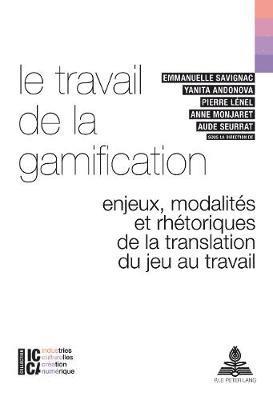
      Emmanuelle Savignac, Bertrand Legendre, François Moreau, Emmanuelle Savignac, Yanita Andonova, Pierre Lénel, Anne Monjaret, Aude Seurrat - travail de la gamification, Häftad
      Del 3

      travail de la gamification

      Emmanuelle Savignac, Bertrand Legendre, François Moreau, Emmanuelle Savignac, Yanita Andonova, Pierre Lénel, Anne Monjaret, Aude Seurrat

      Häftad, 2017

      913 kr

      Pierre L nel, Jean Frances, Emmanuelle Savignac, St phane Le Lay - Gamification of Society, E-bok

      Gamification of Society

      Pierre L nel, Jean Frances, Emmanuelle Savignac, St phane Le Lay

      E-bok
      2021

      2 177 kr

      Pierre L nel, Jean Frances, Emmanuelle Savignac, St phane Le Lay - Gamification of Society, E-bok

      Gamification of Society

      Pierre L nel, Jean Frances, Emmanuelle Savignac, St phane Le Lay

      E-bok
      2021

      2 177 kr

      Stéphane Le Lay, Emmanuelle Savignac - gamification de la société, Övrigt

      gamification de la société

      Stéphane Le Lay, Emmanuelle Savignac

      1 263 kr

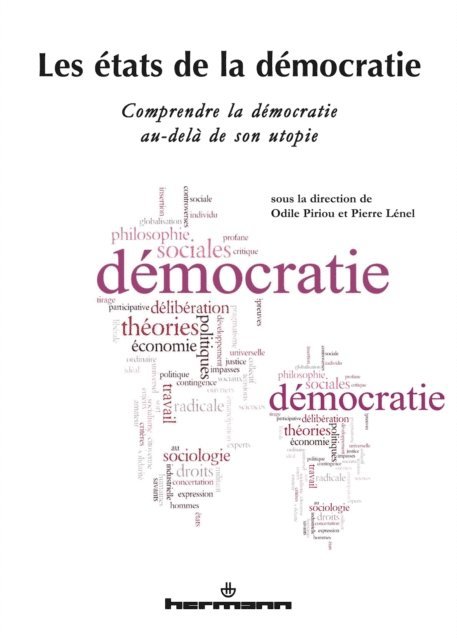
      Pierre Lenel, Odile Piriou - Les états de la démocratie, E-bok

      Les états de la démocratie

      Pierre Lenel, Odile Piriou

      E-bok
      2011

      419 kr

      Emmanuelle Savignac - Gamification of Work, E-bok

      Gamification of Work

      Emmanuelle Savignac

      E-bok
      2017

      2 258 kr

      Emmanuelle Savignac - gamification du travail, Övrigt

      gamification du travail

      Emmanuelle Savignac

      825 kr

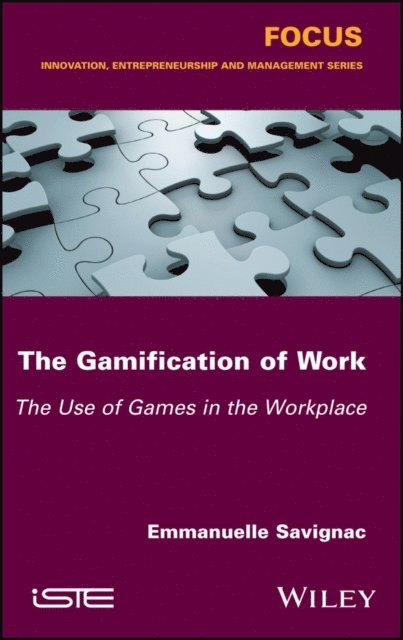
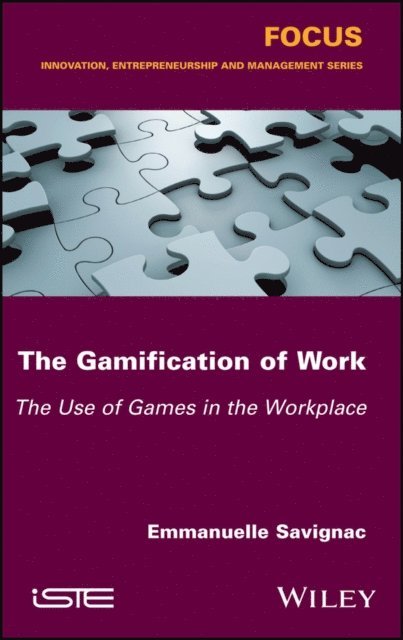
      Emmanuelle Savignac - Gamification of Work, Inbunden

      Gamification of Work

      Emmanuelle Savignac

      Inbunden, 2017

      1 871 kr

      Emmanuelle Savignac - Gamification of Work, E-bok

      Gamification of Work

      Emmanuelle Savignac

      E-bok
      2017

      2 258 kr

      Måns Petter Zelmerlöw - När allt faller, Inbunden
      • -12%

      När allt faller

      Måns Petter Zelmerlöw

      Inbunden, 2026

      229 kr259 kr