• Fri frakt över 249 kr
  • •
  • Snabba leveranser
  • •
  • Billiga böcker
Kundservice

Du är på sajten för privatpersoner.

Företag, bibliotek eller offentlig verksamhet?

Du handlar på classic.bokus.com, där alla dina funktioner finns intakta.
Till classic.bokus.com
Bokus logotyp. Gå till startsidan.
  • Erbjudanden
  • Student
  • Topplistor
  • Barn & ungdom
  • Bokus Play
  • E-böcker
  • Ljudböcker
  • Pocketböcker
  • Spel och pussel

Pocketfynda! Hundratals böcker för 49 kr/st →

Sidfot

Mina sidor

    Hjälp

    • Kundservice
    • Vanliga frågor och svar
    • Frakt och leverans
    • Retur vid ångerrätt
    • Reklamera vara
    • Betalning
    • Köpvillkor
    • Allmänna villkor
    • Information om webbplatsens tillgänglighet

    Om Bokus

    • Om oss
    • Pressrum
    • För studenter
    • För företag
    • För bibliotek och offentlig verksamhet
    • För leverantörer
    • Hållbarhet

    Populärt

    • Aktuella erbjudanden
    • Presentkort
    • Studentlitteratur
    • Nya böcker
    • Topplistor
    • Signerade böcker
    • Engelska böcker

    Inspiration

    • Boktips
    • BookTok
    • Barnbokskaraktärer
    • Populära författare
    Logotyp för Bokus
    Följ oss på Facebook (extern länk)Följ oss på Instagram (extern länk)Följ oss på YouTube (extern länk)Följ oss på TikTok (extern länk)
    bokus @ CookiesAnpassa cookiesIntegritetspolicyKöpvillkor
    Till Citymail hemsida (extern länk)Till Budbee hemsida (extern länk)Till Postnord hemsida (extern länk)Till Schenker hemsida (extern länk)Till Early Bird hemsida (extern länk)Till Walleys hemsida (extern länk)
    1. Psykologi och pedagogik
    2. Pedagogik
    3. Högskola och universitet

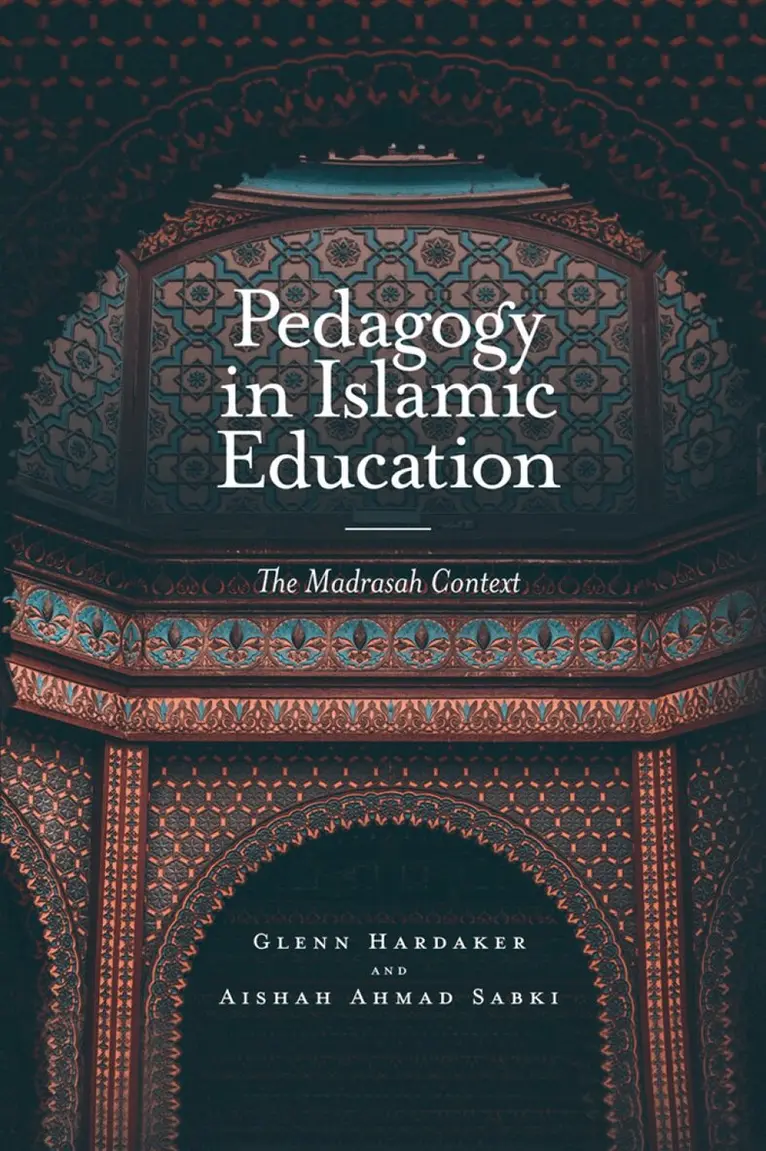
    Pedagogy in Islamic Education

    The Madrasah Context

    AvGlenn Hardaker,Aishah Ahmad Sabki

    Inbunden, Engelska, 2018

    960 kr

    Beställningsvara. Skickas inom 5-8 vardagar. Fri frakt över 249 kr.

    Beskrivning

    In Islamic education, the development of teaching and learning for the physical and spiritual training of humanity places equal importance on revealed and acquired knowledge. This book provides a greater understanding of Islamic pedagogy from a spiritual perspective, which requires empathy with the Islamic premise of the inseparable nature of knowledge and the sacred. The book is intended to provide a particular insight into the relationship between Islamic pedagogy and embodied learning and associated common features that are seen in Madrasahs, and related educational institutions. The first part of the book traces key moments in madrasah history and their formation; diversity of Islamic institutions, and the notion of the scholastic community. It identifies the rise of the Islamic education institutions and the diversity within their formation. Despite the partial disappearance of the spiritual in many Islamic education institutions, the authors argue that the spiritual construct is still deeply implicated in the reification of Islamic pedagogy and in the process of embodiment. The second part of the book draws on unravelling knowledge and the sacred that considers the philosophy of Islam and knowledge, spiritual understanding of Islamic education, and knowledge and the sacred as an educational compass. Finally, the book explores the implications of Islamic pedagogy and embodied learning, the universal nature of Islamic pedagogy, and reflections for the future. By bringing to bear a variety of Islamic and educational studies research, relative to Islamic pedagogy, this book opens up new avenues for research into Islamic education. The book will be of particular interest to scholars investigating Islamic education, Islamic pedagogy, and embodied learning.

    Produktinformation

    • Utgivningsdatum:2018-11-19
    • Mått:152 x 229 x 12 mm
    • Vikt:357 g
    • Format:Inbunden
    • Språk:Engelska
    • Antal sidor:160
    • Förlag:Emerald Publishing Limited
    • ISBN:9781787545328

    Utforska kategorier

    • Högskola och universitet inom Psykologi och pedagogik

    Mer om författaren

    Professor Glenn Hardaker is Director of Centre for Lifelong Learning and Professor of Education at Sultan Hassanal Bolkiah Institute of Education, Universiti of Brunei, Brunei. He is also a National Teaching Fellow for the Higher Education Academy (UK) and Editor of two international publications: Journal for Multicultural Education (JME) and International Journal Information & Learning Technology (IJILT). Dr Aishah Ahmad Sabki is an independent researcher, focused on community education for social inclusion, based in the UK. Her experience includes jointly setting up and managing a British higher education madrasah. She has developed policy and operational documentation for successfully achieving early years education OFSTED approval in the UK and has specialist knowledge and expertise in madrasahs, Islamic pedagogy, and technology management.

    Recensioner i media

    The authors examine Islamic pedagogy from a spiritual perspective, using the concepts of sensory orders, identity, embodiment, and spirituality and proposing that the Islamic approach to the sensoria is different and privileges orality, kinesthesia, and embodiment. They reveal the relationship between Islamic pedagogy and embodied learning and associated features seen in madrasahs (Islam's institution of higher learning focused on the religious sciences and their ancillary subjects) and related educational institutions. They outline the impact of this approach on the use of language, moral values embedded in teaching and learning, a madrasah model of embodiment, and ideas about knowledge and the sacred. They explore key moments in madrasah history and their formation, the diversity of Islamic institutions, and the idea of the scholastic community, to show the rise of Islamic education institutions and the diversity within their formation; the philosophy of Islam and knowledge, spiritual understanding of Islamic education and knowledge, and the sacred as an educational compass; and the implications of Islamic pedagogy and embodied learning, the universal nature of Islamic pedagogy, and reflections for the future.

    Innehållsförteckning

    • PART I: ISLAMIC EDUCATIONAL INSTITUTION Chapter 1. The Rise of the Islamic Institution  Chapter 2. The Diversity of Islamic Educational Institutions Chapter 3. The Scholastic Community PART II: KNOWLEDGE AND THE SACRED Chapter 4. Philosophy of Islam and Knowledge Chapter 5. A Spiritual Understanding of Islamic Education Chapter 6. Knowledge and the Sacred as an Educational Compass PART III: IMPLICATIONS OF ISLAMIC PEDAGOGY Chapter 7. Islamic Pedagogy for Embodied Learning Chapter 8. Universal Nature of Islamic Pedagogy Chapter 9. Reflections on Islamic Pedagogy Chapter 10. Afterthoughts