• Fri frakt över 249 kr
  • •
  • Snabba leveranser
  • •
  • Billiga böcker
Kundservice

Du är på sajten för privatpersoner.

Företag, bibliotek eller offentlig verksamhet?

Du handlar på classic.bokus.com, där alla dina funktioner finns intakta.
Till classic.bokus.com
Bokus logotyp. Gå till startsidan.
  • Erbjudanden
  • Nyheter
  • Student
  • Topplistor
  • Barn & ungdom
  • Bokus Play
  • E-böcker
  • Pocketböcker
  • Spel & pussel

10% rabatt på allt med kod: NYSTART10 →

Sidfot

Mina sidor

    Hjälp

    • Kundservice
    • Vanliga frågor och svar
    • Frakt och leverans
    • Retur vid ångerrätt
    • Reklamera vara
    • Betalning
    • Köpvillkor
    • Allmänna villkor
    • Information om webbplatsens tillgänglighet

    Om Bokus

    • Om oss
    • Pressrum
    • För studenter
    • För företag
    • För bibliotek och offentlig verksamhet
    • För leverantörer
    • Hållbarhet

    Populärt

    • Aktuella erbjudanden
    • Presentkort
    • Studentlitteratur
    • Nya böcker
    • Topplistor
    • Signerade böcker
    • Engelska böcker

    Inspiration

    • Boktips
    • BookTok
    • Populära bokserier
    • Barnbokskaraktärer
    • Populära författare
    Logotyp för Bokus
    Följ oss på Facebook (extern länk)Följ oss på Instagram (extern länk)Följ oss på YouTube (extern länk)Följ oss på TikTok (extern länk)
    bokus @ CookiesAnpassa cookiesIntegritetspolicyKöpvillkor
    Till Citymail hemsida (extern länk)Till Budbee hemsida (extern länk)Till Postnord hemsida (extern länk)Till Schenker hemsida (extern länk)Till Early Bird hemsida (extern länk)Till Walleys hemsida (extern länk)
    1. Ekonomi och Ledarskap
    2. Nationalekonomi

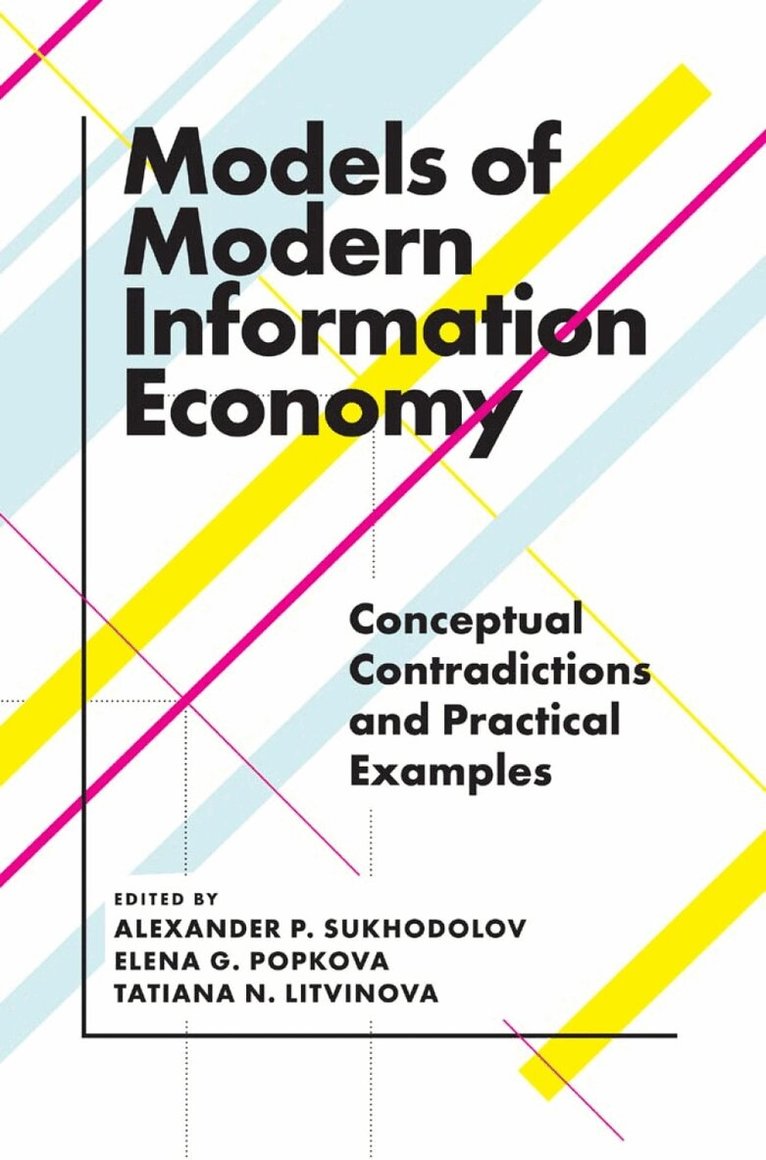
    Models of Modern Information Economy

    Conceptual Contradictions and Practical Examples

    AvAlexander P. Sukhodolov,Elena G. Popkova

    Inbunden, Engelska, 2018

    1 021 kr

    Beställningsvara. Skickas inom 5-8 vardagar. Fri frakt över 249 kr.

    Beskrivning

    The concept of an information economy is considered by some to be a new branch of economic theory, and by others as the next stage of development for an economy post-industrialization. Leading and developing economies are seeking to quickly develop a functional information economy in order to help overcome the consequences of the global financial crisis and ensure high global economic competitiveness. This book analyzes modern conceptualmodels of information economies, highlighting and examining their systemiccontradictions and failings. It explores the disconnection between the readiness of the technical infrastructure for forming and developing the information economy, and an unprepared institutional and societal structure that is therefore unable to implement these processes and models. The editors present different approaches to solving these methodological and practicalcontradictions and lay out future models across different internationalcontexts. They also provide recommendations for optimizing their theoretical model and improving its implementation in modern economic systems.

    Produktinformation

    • Utgivningsdatum:2018-10-29
    • Mått:152 x 229 x 15 mm
    • Vikt:662 g
    • Format:Inbunden
    • Språk:Engelska
    • Antal sidor:384
    • Förlag:Emerald Publishing Limited
    • ISBN:9781787562882

    Utforska kategorier

    • Nationalekonomi inom Ekonomi och Ledarskap
    • Internationell ekonomi inom Ekonomi och Ledarskap

    Mer om författaren

    Alexander P.Sukhodolov is the Rector of Baikal State University, Russia. He is the head of theeditorial board for the journals Issues of Theory and Practice of Journalism and Russian Journal of Criminology, and he is the editor-in-chief ofthe scientific journal Russian-Chinese Research. Alexander isthe author of more than 200 publications in Russian, English, and French.Elena G. Popkova is Professor of World Economics and Economic Theory at Volgograd State Technical University, Russia, andfounder of the autonomous non-profit organization The Institute of ScientificCommunications. She has published her research in several international journals, and she isthe author of more than 200 publications in Russian and English.Tatiana N. Litvinova is Associate Professor of Management at Volgograd State Agrarian University, Russia. She has published her research in several international journals, and she is the author of more than 50 publications in Russian and English.

    Recensioner i media

    Russian economists who specialize in the evolution and modernization of economic systems present results of their scientific, methodological, and applied research into the information economy, which they find to be the pinnacle of economic evolution. They cover a theoretical model of the modern information economy, practical experience of formation of an information economy model, peculiarities of the information economy in modern Russia, logical disparities of the model of an information economy, recommendations for optimizing the model, key characteristics of the optimization model of a well-balanced information economy, methodological provisions of monitoring and control over implementing the optimization model, and adapting the optimization model to modern Russia's economy.

    Innehållsförteckning

    • Part I. Theoretical Model of Modern Information EconomyChapter 1. The Notion and Essence of Information EconomyChapter 2. Basic Characteristics of Information EconomyChapter 3. Basic Characteristics of Information Economy:Theoretical Peculiarities and Analytical AspectsChapter 4. Stages of Information Economy’s FormationPart II. Practical Experience of the Formation of the InformationEconomy ModelChapter 5. Information Economy in Asian CountriesChapter 6. The European Experience of Information Economy’sFormationChapter 7. The American Practice of Implementing the Modelof Information EconomyPart III. Peculiarities of Information Economy in ModernRussiaChapter 8. The Basic Preconditions of Information Economy’sFormation in Modern Russia Chapter 9. Barriers on the Path of Information Economy’sFormation in Modern RussiaChapter 10. Implementation of CALS Systems as a Condition ofInformation Economy’s Formation in the Russian Production PracticeChapter 11. Stages of Development of Information Economy inModern RussiaPart IV. Logical Disparities of the Model of InformationEconomyChapter 12. Unreadiness of Society for Information Economy’sFormationChapter 13. Entrepreneurship’s Potential in Economy’sInformatizationChapter 14. Institutional Contradictions of InformationEconomyPart V. Recommendations for Optimization of the Model ofInformation EconomyChapter 15. Mechanism of Optimization of the Model ofInformation EconomyChapter 16. New Balance in the Model of Information EconomyChapter 17. Perspective Model of Well-Balanced InformationEconomyPart VI. The Key Characteristics of the Optimization Modelof Well-Balanced Information EconomyChapter 18. The Principles of Implementation of InnovationalModel of Well-Balanced Information EconomyChapter 19. Priorities of Implementation of the OptimizationModel of Well-Balanced Information EconomyChapter 20. The Main Components of Well-Balanced InformationEconomyChapter 21. The Basic Institutes of Well-BalancedInformation EconomyPart VII. Methodological Provision of Monitoring and ControlOver Implementation of the Optimization Model of Information EconomyChapter 22. Indicators of Efficiency of the Process ofImplementation of the Optimization Model of Information EconomyChapter 23. Criteria of Effectiveness of State Management of the Process of Implementing the Optimization Model of Information EconomyChapter 24. Target Indicators of Implementing theMeasures on Formation of the Model of Information EconomyChapter 25. The Main Directions of Development ofInformation Production of Russia's Tax SystemPart VIII. Adaptation of the Optimization Model to theModern Russia’s EconomyChapter 26. The Framework Strategy of Implementing theInformation Economy’s Optimization Model in Modern RussiaChapter 27. Algorithm of the Strategy of Implementing theInformation Economy’s Optimization Model in Modern RussiaChapter 28. Perspectives of Information Economy’s Formationin Modern RussiaChapter 29. Expected Scenarios of Development of InformationEconomy in the Global Economic SystemChapter 30. The Essence and Peculiarities of Implementingthe Optimal Scenario of Digital Economy Development in Modern RussiaChapter 31. Practical Recommendations for Monitoring andControl of Implementing the Optimization Model of Digital Economy in ModernRussiaChapter 32. Correlation of Evolutional and RevolutionaryTransformations in a Socio-Economic System in the Conditions of InformationEconomy’s FormationChapter 33. The Role and Value of Information in theEconomic System: Opposition of Post-Industrial and Information EconomyConclusions