• Fri frakt över 249 kr
  • •
  • Snabba leveranser
  • •
  • Billiga böcker
Kundservice

Du är på sajten för privatpersoner.

Företag, bibliotek eller offentlig verksamhet?

Du handlar på classic.bokus.com, där alla dina funktioner finns intakta.
Till classic.bokus.com
Bokus logotyp. Gå till startsidan.
  • Erbjudanden
  • Nyheter
  • Student
  • Topplistor
  • Barn & ungdom
  • Bokus Play
  • E-böcker
  • Pocketböcker
  • Spel & pussel

10% rabatt på allt med kod NYSTART10 →

Sidfot

Mina sidor

    Hjälp

    • Kundservice
    • Vanliga frågor och svar
    • Frakt och leverans
    • Retur vid ångerrätt
    • Reklamera vara
    • Betalning
    • Köpvillkor
    • Allmänna villkor
    • Information om webbplatsens tillgänglighet

    Om Bokus

    • Om oss
    • Pressrum
    • För studenter
    • För företag
    • För bibliotek och offentlig verksamhet
    • För leverantörer
    • Hållbarhet

    Populärt

    • Aktuella erbjudanden
    • Presentkort
    • Studentlitteratur
    • Nya böcker
    • Topplistor
    • Signerade böcker
    • Engelska böcker

    Inspiration

    • Boktips
    • BookTok
    • Populära bokserier
    • Barnbokskaraktärer
    • Populära författare
    Logotyp för Bokus
    Följ oss på Facebook (extern länk)Följ oss på Instagram (extern länk)Följ oss på YouTube (extern länk)Följ oss på TikTok (extern länk)
    bokus @ CookiesAnpassa cookiesIntegritetspolicyKöpvillkor
    Till Citymail hemsida (extern länk)Till Budbee hemsida (extern länk)Till Postnord hemsida (extern länk)Till Schenker hemsida (extern länk)Till Early Bird hemsida (extern länk)Till Walleys hemsida (extern länk)
    1. Naturvetenskap och teknik
    2. Teknik och industri
    3. Agronomi och lantbruk

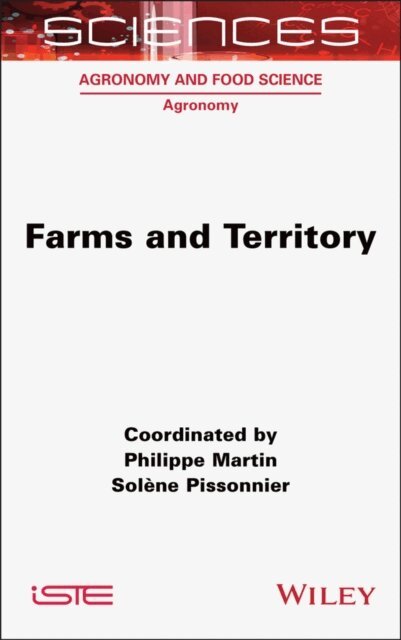
    Farms and Territory

    AvPhilippe Martin,Philippe Martin

    Inbunden, Engelska, 2025

    Del i serien ISTE Invoiced

    1 720 kr

    Beställningsvara. Skickas inom 5-8 vardagar. Fri frakt över 249 kr.

    Beskrivning

    What are the new relationships between territories and farms? Farms and Territory addresses this question by exploring a range of landscapes, from mountains to cereal plains, forged by different actors who exploit and protect resources such as land and wild – or domestic – biodiversity. These territories are also the site of renewed interactions between farms for the use of biomass, whether for methanization or herd feeding. This book focuses on the various methods and tools used to diagnose, design or evaluate agricultural dynamics in territories: database matching, material and energy flow calculations, codesign approaches, etc. In short, this book illustrates the diversity of work carried out at the farm–territory interface by research teams to understand changes in the agricultural world and the ecological, economic and societal impacts.

    Produktinformation

    • Utgivningsdatum:2025-09-10
    • Mått:156 x 234 x 19 mm
    • Vikt:637 g
    • Format:Inbunden
    • Språk:Engelska
    • Serie:ISTE Invoiced
    • Antal sidor:336
    • Förlag:ISTE Ltd
    • ISBN:9781789452266

    Utforska kategorier

    • Agronomi och lantbruk inom Naturvetenskap och teknik

    Mer om författaren

    Philippe Martin works as a professor at AgroParisTech, France. His research, conducted at the SADAPT Joint Research Unit (UMR SADAPT), focuses on the dynamics of agricultural systems within territories, using mixed approaches (database analysis and field surveys).Solène Pissonnier works as Associate Professor at AgroParisTech and the SADAPT Joint Research Unit (UMR SADAPT), France. Her work focuses on crop–livestock interactions at the territorial level, particularly on developing methodologies to support their development.

    Innehållsförteckning

    • Introduction xiiiPhilippe MARTIN and Solène PISSONNIERChapter 1. Which Land Resources to Adopt for an Ecological Transition of Agri-Food Systems? A Cross-View of Law and Sociology 1Pierre-Etienne BOUILLOT and Romain MELOT1.1. Legal framework and contractual practices in farming: towards a greening of land tools? 21.2. Changes in agricultural landholding structures: a challenge for the transition of agri-food systems and generational renewal 91.3. The multifunctionality of agricultural land in food systems 131.4. Conclusion and perspectives 151.5. References 16Chapter 2. Synergies between Animal Husbandry and Forests for the Development of Agroecological Systems in Middle Mountain and Mediterranean Foothill Regions: Comparative Study of the Limousine Mountain and the Lodevois 23Nathan MORSEL and Nadège GARAMBOIS2.1. Introduction 232.2. The Lodevois and the Limousine Mountain: a disconnection between animal husbandry and forestry 272.3. Frugal agropastoral systems: putting grazing back at the heart of herd feeding, especially in forest ecosystems 332.4. Obstacles to the use of wooded areas on the Limousine Mountain and the Lodevois: an overview 392.5. Ways to promote the (re)connection between livestock and forests 432.6. Conclusion 462.7. References 47Chapter 3. Crop–Livestock Interaction at the Territorial Scale: Tools and Methods to Support Its Development 51Solène PISSONNIER3.1. Introduction 513.2. Specialization and its ramifications 523.3. Characteristics of systems integrating crops and livestock 563.4. Spatial and temporal coordinations on a territorial scale 593.5. Types of actors involved and forms of partnership 613.6. Methods for diagnosing, designing, evaluating and supporting the development of these systems 673.7. Conclusion 753.8. References 75Chapter 4. Genetic Choices, Farming Systems and Territories 81Etienne VERRIER and Anne LAUVIE4.1. Introduction 814.2. Organization of animal breeding and the role of farmers, farming systems and links to the territory 824.3. Collective breeding goals and territories 854.4. Breeds, farmers' collectives and other territorial components: diversity of relationships 884.5. Individual farmers' decisions and how they relate to breeding collectives' decisions 914.6. Conclusion 934.7. References 94Chapter 5. Town Microfarms, Country Microfarms in Fields: Innovative Systems in Contrasting Territories 97Agnès LELIÈVRE and Kevin MOREL5.1. Innovative projects in response to a variety of socio-ecological territorial challenges 975.2. Multiple innovations driven by new farmer profiles 1005.3. Discussion and perspectives 1105.4. References 112Chapter 6. The Rise of Professional Gathering in Rural Areas 115Valentin ASSELAIN and Florence PINTON6.1. Introduction 1156.2. A centuries-old business embedded in agroecosystems 1186.3. Make a living by gathering 1256.4. Gathering territories and rural areas: separate paths or mutual learning? 1336.5. Conclusion 1396.6. References 140Chapter 7. How Can Biodiversity Be Taken into Account on Farm Territories? 145Aude BARBOTTIN, Daphnée DURANT, Raymond REAU and Hélène GROSS7.1. What is biodiversity in agricultural landscapes? 1457.2. Biodiversity as seen by farmers 1467.3. Can agriculture and biodiversity conciliation occur at the farm territory level? 1487.4. How can we support biodiversity conservation at farm level? 1507.5. Examples of integrating biodiversity into farm projects: challenges, results and difficulties 1577.6. Monitoring biodiversity 1647.7. Conclusion 1657.8. References 166Chapter 8. Sociometabolic Approaches to Conceptualizing and Supporting Agri-Food Transitions 171Caroline PETIT and Thierry BONAUDO8.1. Introduction 1718.2. Society's metabolism: overview of epistemological foundations and current research trends 1738.3. Agriculture in the metabolism of societies 1768.4. For agri-food metabolism approaches at the local scale 1798.5. Discussion: avenues for further exploration and prospects for cross-disciplinary work between sociometabolic approaches and agronomy 1848.6. Conclusion 1888.7. References 188Chapter 9. Farms in the Transition to Sustainable Food in Urban Areas: The Role of Collective Catering 195Christine AUBRY and Emmanuel RAYNAUD9.1. Introduction 1959.2. Collective catering: a vector for sustainable food practices 1969.3. Adapting agricultural production to meet growing demand for sustainable food: the example of Île-de-France 2059.4. Conclusion 2119.5. References 212Chapter 10. Farming and the Circular Economy in Territories: Recycling Urban Waste in Agriculture 217Florent LEVAVASSEUR and Sabine HOUOT10.1. Introduction 21710.2. From urban waste to organic fertilizer 21910.3. Regulations governing the return of urban OWPs to the soil in agriculture 22710.4. How to meet the needs of agriculture 22910.5. What are the challenges associated with the agricultural recycling of municipal waste? 23410.6. Environmental balance sheet 23810.7. Value chain organization 24010.8. Farmers' perception of agricultural recycling of urban OWPs and social acceptability. 24010.9. Conclusion 24110.10. Reference 242Chapter 11. Biogas and Biomass Valorization Circuits at the Farm and Territory Levels 249Jeanne CADIOU and Jean-Marc MEYNARD11.1. Introduction 24911.2. New biomass flows find new uses in agriculture 25111.3. By modifying the flows and uses of biomass, biogas production renews the links between farms and territory: a casestudy from Grand Est 25411.4. New sustainability challenges emerge on farms and in territories 25911.5. A biogas development policy faced with the challenge of current regulatory dynamics? 26311.6. Conclusion 26511.7. Reference 265Chapter 12. Databases for Analyzing Relationships Between Farm Holdings and Territories 269Philippe MARTIN and Myriam GRILLOT12.1. Interest in and availability of databases for the analysis of farm–territory relationships 26912.2. Databases 27112.3. SI-BOAT: an information system for agri-food systems 28212.4. Enhancing the impact of RPG: the RPG Explorer project 28912.5. Conclusion 30012.6. References 30112.7. Webography for further information or access to the databases cited 303Conclusion 305Philippe MARTIN and Solène PISSONNIERList of Authors 307Index 311