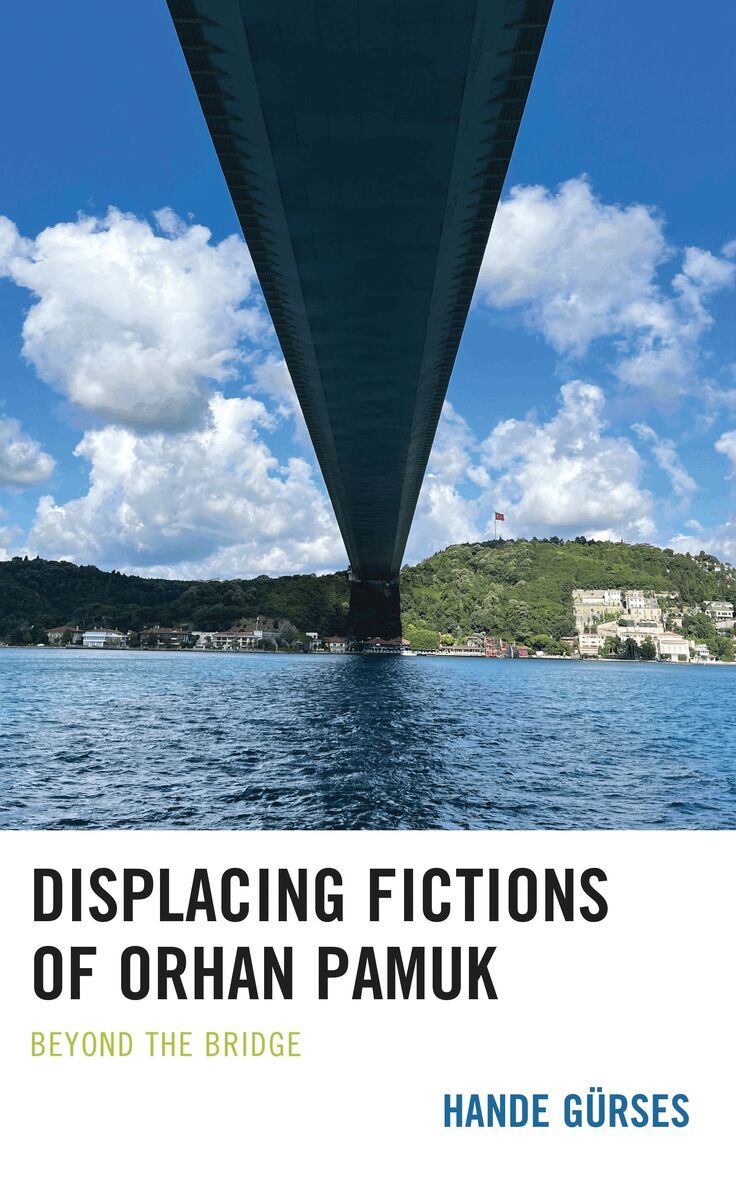
Inbunden, Engelska, 2023
Displacing Fictions of Orhan Pamuk
Beyond the Bridge
Av Hande Gürses
Del i serien Lexington Books
1222 kr
Beställningsvara. Skickas inom 10-15 vardagar. Fri frakt över 249 kr.
Beskrivning
Produktinformation
- Utgivningsdatum: 2023-11-21
- Mått: 159 x 236 x 25 mm
- Vikt: 503 g
- Format: Inbunden
- Språk: Engelska
- Serie: Lexington Books
- Antal sidor: 210
- Förlag: Bloomsbury Publishing Plc
- ISBN: 9781793625762
Utforska kategorier
Mer om författaren
Hande Gürses is instructor at Capilano University.
Recensioner i media
Gürses’s book is a wonderful addition to the literature on Turkish novelist Orhan Pamuk (b. 1951) and on Ottoman and Middle Eastern studies in general. In the expansive introduction Gürses not only encapsulates a review of the literature of the Nobel laureate’s life and works but also provides a meditation on Orientalism and a summary of Ottoman literary history—an impressive sweep of information that provides context for this study of Pamuk. Gürses elects to use the bridge as a site of contestation, as opposed to (re)-conciliation, to capture continuous movement of peoples and ideas. He asserts that the objective of his work is to “demonstrate the limits and violence of the bridge metaphor through the study of the new symbols of Pamuk’s work” (p. 27). He is artful in achieving his objective. In four well-crafted chapters Gürses establishes the foundation for his study and critiques The White Castle, My Name Is Red, and Istanbul: Memories of a City. The coda brings a satisfying close to the complicated ideas advanced by the author. The bridge as symbol of violence speaks to displacement of those in exile as well as notions of home. Highly recommended. Upper-division undergraduates through faculty.
Betyg & recensioner
0 recensioner
Inga recensioner tillgängliga.