• Fri frakt över 249 kr
  • •
  • Snabba leveranser
  • •
  • Billiga böcker
Kundservice

Du är på sajten för privatpersoner.

Företag, bibliotek eller offentlig verksamhet?

Du handlar på classic.bokus.com, där alla dina funktioner finns intakta.
Till classic.bokus.com
Bokus logotyp. Gå till startsidan.
  • Erbjudanden
  • Student
  • Topplistor
  • Barn & ungdom
  • Bokus Play
  • E-böcker
  • Ljudböcker
  • Pocketböcker
  • Spel och pussel

Pocketfynda! Hundratals böcker för 49 kr/st →

Sidfot

Mina sidor

    Hjälp

    • Kundservice
    • Vanliga frågor och svar
    • Frakt och leverans
    • Retur vid ångerrätt
    • Reklamera vara
    • Betalning
    • Köpvillkor
    • Allmänna villkor
    • Information om webbplatsens tillgänglighet

    Om Bokus

    • Om oss
    • Pressrum
    • För studenter
    • För företag
    • För bibliotek och offentlig verksamhet
    • För leverantörer
    • Hållbarhet

    Populärt

    • Aktuella erbjudanden
    • Presentkort
    • Studentlitteratur
    • Nya böcker
    • Topplistor
    • Signerade böcker
    • Engelska böcker

    Inspiration

    • Boktips
    • BookTok
    • Barnbokskaraktärer
    • Populära författare
    Logotyp för Bokus
    Följ oss på Facebook (extern länk)Följ oss på Instagram (extern länk)Följ oss på YouTube (extern länk)Följ oss på TikTok (extern länk)
    bokus @ CookiesAnpassa cookiesIntegritetspolicyKöpvillkor
    Till Citymail hemsida (extern länk)Till Budbee hemsida (extern länk)Till Postnord hemsida (extern länk)Till Schenker hemsida (extern länk)Till Early Bird hemsida (extern länk)Till Walleys hemsida (extern länk)
    1. Samhälle och politik
    2. Politik och statsskick
    3. Ursprungsbefolkningar

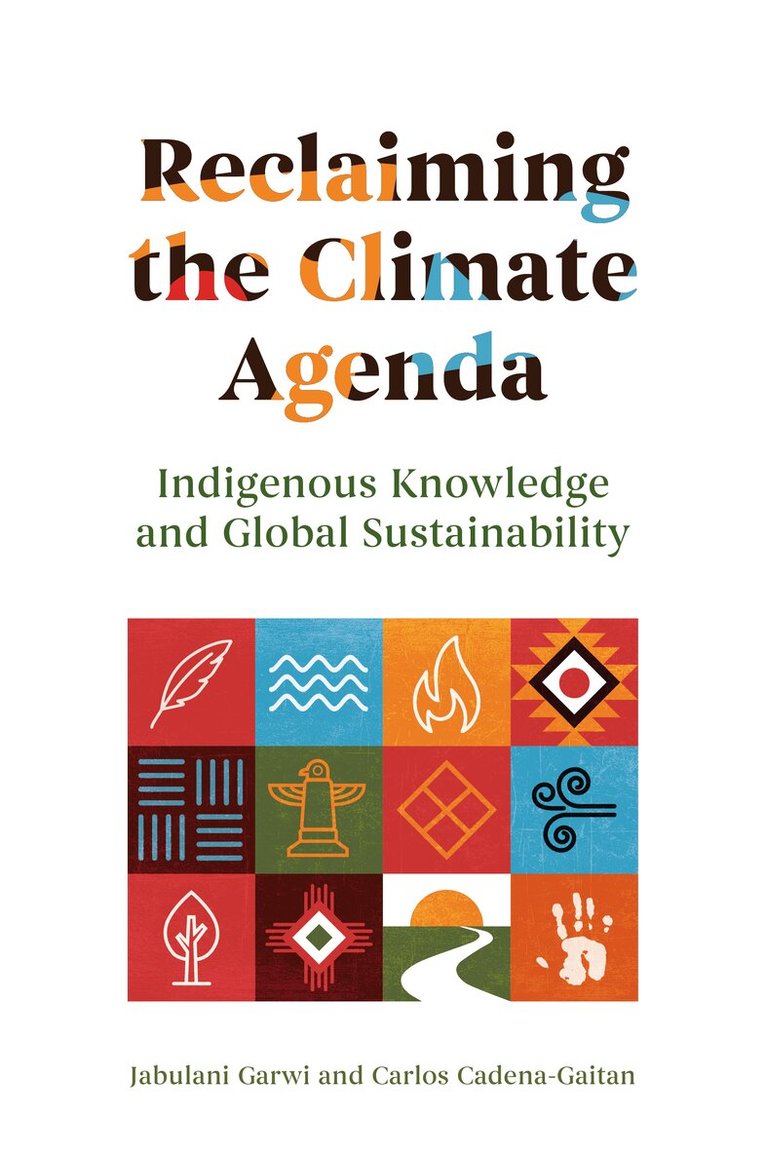
    Reclaiming the Climate Agenda

    Indigenous Knowledge and Global Sustainability

    AvJabulani Garwi,Carlos Cadena-Gaitan

    Inbunden, Engelska, 2026

    1 264 kr

    Kommande

    Beskrivning

    Reclaiming the Climate Agenda: Indigenous Knowledge and Global Sustainability is a pioneering volume that challenges the dominant climate discourse and advocates for a more inclusive approach to sustainability. Through a diverse collection of contributions from experts in environmental science, Indigenous studies, and climate policy from around the globe, this edited collection highlights the critical role Indigenous knowledge plays in fostering resilience, adaptation, ecological balance and economic growth. It presents compelling case studies of Indigenous-led conservation, explores the intersections between traditional ecological knowledge and scientific innovation, and calls for decolonizing climate governance. By centering Indigenous voices and advocating for epistemological pluralism, this work provides an essential roadmap for integrating Indigenous knowledge into global sustainability efforts.Bringing together scholars, policymakers, and Indigenous leaders, this collection is an invaluable resource for anyone committed to climate justice and sustainable development. Whether you are a researcher, activist, or policymaker, Reclaiming the Climate Agenda offers critical insights into building a more just, inclusive, and effective response to the climate crisis.

    Produktinformation

    • Utgivningsdatum:2026-09-28
    • Mått:152 x 229 x 22 mm
    • Vikt:619 g
    • Format:Inbunden
    • Språk:Engelska
    • Antal sidor:336
    • Förlag:Emerald Publishing Limited
    • ISBN:9781837422692

    Utforska kategorier

    • Ursprungsbefolkningar inom Samhälle och politik
    • Miljövetenskap och miljöpolitik inom Naturvetenskap och teknik

    Mer om författaren

    Jabulani Garwi is an academic researcher at the University of South Africa.Carlos Cadena-Gaitan is an Associate Professor at EAFIT University, Colombia.

    Innehållsförteckning

    • Chapter 1. Strengthening Collaborative Climate Governance Through Local Knowledge: Lessons from the Climate Action Co-laboratory in Metropolitan Medellin; Carlos Cadena-Gaitan, Maria Camila Florez-Muñoz, Andrea Cano Muñoz, and Laura Ospina Montoya Chapter 2. The Doma Indigenous Knowledge Systems at Cross-Roads with Socio-Ecological Economic (SEE) Developments? Reflections through the Resilience Theory; Kwashirai Zvokuomba Chapter 3. Beyond Green Transitions: Indigenous Rights, Environmental Justice, and Energy Colonialism in La Guajira, Colombia; Giulia Fandiño and Parveen Kumar Chapter 4. From Relics to Resilience: Camellones and Indigenous Knowledge as Transformative Heritage for Climate-Resilient Futures; Alissa Diesch and Carlos Bueno Rivero Chapter 5. Entheogens and Amazonian Indigenous Practices: Bridging Healing and Ecological Renewal; Esteban Llano-Piedrahíta Chapter 6. The Knowledge of Ancestors: Indigenous Knowledge System as a Blue Print for Climate Resilience; Anjali Sharma and Divyanshu Mishra Chapter 7. Claiming the Forest: Indigenous Mului Struggles for More-than-Human Survival in a Changing Climate; Afdil Hafidh and Puji Hastuti Chapter 8. Carbon Markets and Indigenous Territories: Ethical Finance or Green Colonialism?; Sanya and Deepika Dhingra Chapter 9. Youth Leadership and Indigenous Knowledge in Cyclone Preparedness: A Coastal Perspective from Bangladesh; M. M. Abdullah Al Mamun Sony, Sheikh Anwar Hossain, Rifah Nanziba Islam, Prosenjith Sen Bappa, and Md Mamunur Rashid Chapter 10. Bridging Indigenous Knowledge and Climate Science for Sustainable Adaptation: A Systematic Review; Rumbidzai Matindike and Leonard Chitongo Chapter 11. Epistemologies of Nature: Indian Knowledge System and the Ecological Crisis; Swatilekha Bhattacharya and Santi Sarkar Chapter 12. The Organic Growth Story: How Indigenous Organic Practices are Driving Global Sustainability; Apurva S. Bandodcar and Filipe Rodrigues e Melo Chapter 13. Agroecology and Climate Change Adaptation: A Case Study of Farming Systems in Chirumhanzu District, Zimbabwe; Mashford Zenda, Adrino Mazenda, and Jabulani Garwi Chapter 14. Big Data and Indigenous Knowledge Systems: Bridging Ubuntu Philosophy with Green Governance; Martin Muduva, Colletor Tendeukai Chipfumbu, Fungai Jacqueline Kiwa, Reason Masengu, Tinashe Kelvin Magaya, Belinda Mutunhu Ndlovu, and Jabulani Garwi Chapter 15. Harnessing Artificial Intelligence to Amplify Indigenous Knowledge for Climate Resilience: Towards Epistemologically Inclusive Climate Innovation; Martin Muduva, Fungai Jacqueline Kiwa, Reason Masengu, Patience Eleanor Mangwiro, Tinashe Kelvin Magaya, and Jabulani Garwi Chapter 16. Indigenous Knowledge, Technology, and Climate Innovation: Rethinking Intellectual Property Frameworks for Global Sustainability; Sarah Mumbi Bisamunyu Chapter 17. Weaving Traditional Knowledge into Glocal Sustainability Practices; Polyana Batista da Silva and Fabrício Ramos Neves Chapter 18. Indigenous Textile Traditions and Sustainable Fashion: A Model for Climate-Resilient Economic Development; Nirbhay Rana