Häftad, Engelska, 2024
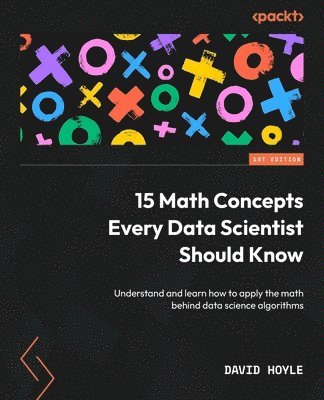
15 Math Concepts Every Data Scientist Should Know
Av David Hoyle
619 kr
Beställningsvara. Skickas inom 5-8 vardagar. Fri frakt över 249 kr.
Beskrivning
Create more effective and powerful data science solutions by learning when, where, and how to apply key math principles that drive most data science algorithmsKey FeaturesUnderstand key data science algorithms with Python-based examplesIncrease the impact of your data science solutions by learning how to apply existing algorithmsTake your data science solutions to the next level by learning how to create new algorithmsPurchase of the print or Kindle book includes a free PDF eBookBook DescriptionData science combines the power of data with the rigor of scientific methodology, with mathematics providing the tools and frameworks for analysis, algorithm development, and deriving insights. As machine learning algorithms become increasingly complex, a solid grounding in math is crucial for data scientists. David Hoyle, with over 30 years of experience in statistical and mathematical modeling, brings unparalleled industrial expertise to this book, drawing from his work in building predictive models for the world's largest retailers. Encompassing 15 crucial concepts, this book covers a spectrum of mathematical techniques to help you understand a vast range of data science algorithms and applications. Starting with essential foundational concepts, such as random variables and probability distributions, you’ll learn why data varies, and explore matrices and linear algebra to transform that data. Building upon this foundation, the book spans general intermediate concepts, such as model complexity and network analysis, as well as advanced concepts such as kernel-based learning and information theory. Each concept is illustrated with Python code snippets demonstrating their practical application to solve problems.By the end of the book, you’ll have the confidence to apply key mathematical concepts to your data science challenges.What you will learnMaster foundational concepts that underpin all data science applicationsUse advanced techniques to elevate your data science proficiencyApply data science concepts to solve real-world data science challengesImplement the NumPy, SciPy, and scikit-learn concepts in PythonBuild predictive machine learning models with mathematical conceptsGain expertise in Bayesian non-parametric methods for advanced probabilistic modelingAcquire mathematical skills tailored for time-series and network data typesWho this book is forThis book is for data scientists, machine learning engineers, and data analysts who already use data science tools and libraries but want to learn more about the underlying math. Whether you’re looking to build upon the math you already know, or need insights into when and how to adopt tools and libraries to your data science problem, this book is for you. Organized into essential, general, and selected concepts, this book is for both practitioners just starting out on their data science journey and experienced data scientists.
Produktinformation
- Utgivningsdatum: 2024-08-16
- Mått: 191 x 235 x 27 mm
- Vikt: 942 g
- Format: Häftad
- Språk: Engelska
- Antal sidor: 510
- Förlag: Packt Publishing Limited
- ISBN: 9781837634187
Utforska kategorier
Betyg & recensioner
0 recensioner
Inga recensioner tillgängliga.