Skickas fredag 23/10. Fri frakt över 249 kr.
Beskrivning
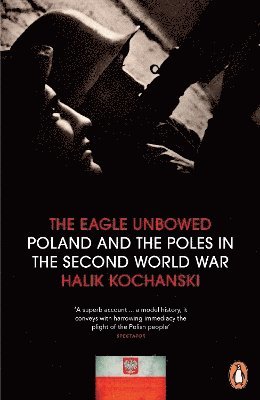
In Halik Kochanski's extraordinary book, the untold story of Poland and the Poles in the Second World War is finally heardBy almost every measure the fate of the inhabitants of Poland was the most terrible of any group in the Second World War. Following the destruction of its armed forces in the autumn of 1939, the Republic of Poland was partitioned between Nazi and Soviet forces and officially ceased to exist. As the war progressed millions of Poles were killed, with each phase unleashing a further round, from the industrialised genocide of Treblinka to the crushing of the Warsaw Rising. Polish Jews were all to be murdered, Christians reduced to a semi-literate slave class. This powerful and original new book is perhaps the most important 'missing' work on the whole conflict, describing both the fate of those trapped within occupied Poland and of the millions of Poles who were able to escape.Reviews:'A remarkable book ... [Kochanski] brings to the subject not only an impressive grasp of the military and political context, but also a balance, neutrality and honesty few could manage, combined with the intelligence, imagination and empathy necessary to grasp the true depth of the experience she recounts ... This book is history at its best. It tells the whole story, and tells it well, with just the right mixture of detachment and empathy, in crisp, readable prose. But it also speaks to the imagination and makes the reader think - and not just about the subject in hand' Standpoint'Until Halik Kochanski's The Eagle Unbowed nobody had written a comprehensive English-language history of Poland at war ... She uncovers details that will surprise even history geeks ... Ms Kochanski marshals an impressive and comprehensive array of English and Polish material' Economist'Poland's war was so terrible as to almost defy summary ... this book is opinionated, fluid and forceful' Oliver Bullough, New Statesman'An informative, authoritative and wide-ranging account of the tragedy that befell Poland and its inhabitants, Gentiles and Jews, during the war and its aftermath ... An engaging and important book' Hubert Zawadzki (author of A Concise History of Poland)About the author:Halik Kochanski read Modern History at Balliol College, Oxford and then completed a PhD at King's College London. She has taught at both King's College London and University College London and presented papers to a number of military history conferences. She has written a number of articles and is the author of Sir Garnet Wolseley: Victorian Hero (1999). She is a Fellow of the Royal Historical Society. She has been a member of the councils of the Army Records Society and Society for Army Historical Research and remains a member of both societies. She is also a member of the British Commission for Military History and the Institute for Historical Research. She is currently a judge for the Templer Medal book prize.