• Fri frakt över 249 kr
  • •
  • Snabba leveranser
  • •
  • Billiga böcker
Kundservice

Du är på sajten för privatpersoner.

Företag, bibliotek eller offentlig verksamhet?

Du handlar på classic.bokus.com, där alla dina funktioner finns intakta.
Till classic.bokus.com
Bokus logotyp. Gå till startsidan.
  • Erbjudanden
  • Nyheter
  • Student
  • Topplistor
  • Barn & ungdom
  • Bokus Play
  • E-böcker
  • Pocketböcker
  • Spel & pussel

10% rabatt på allt med kod NYSTART10 →

Sidfot

Mina sidor

    Hjälp

    • Kundservice
    • Vanliga frågor och svar
    • Frakt och leverans
    • Retur vid ångerrätt
    • Reklamera vara
    • Betalning
    • Köpvillkor
    • Allmänna villkor
    • Information om webbplatsens tillgänglighet

    Om Bokus

    • Om oss
    • Pressrum
    • För studenter
    • För företag
    • För bibliotek och offentlig verksamhet
    • För leverantörer
    • Hållbarhet

    Populärt

    • Aktuella erbjudanden
    • Presentkort
    • Studentlitteratur
    • Nya böcker
    • Topplistor
    • Signerade böcker
    • Engelska böcker

    Inspiration

    • Boktips
    • BookTok
    • Populära bokserier
    • Barnbokskaraktärer
    • Populära författare
    Logotyp för Bokus
    Följ oss på Facebook (extern länk)Följ oss på Instagram (extern länk)Följ oss på YouTube (extern länk)Följ oss på TikTok (extern länk)
    bokus @ CookiesAnpassa cookiesIntegritetspolicyKöpvillkor
    Till Citymail hemsida (extern länk)Till Budbee hemsida (extern länk)Till Postnord hemsida (extern länk)Till Schenker hemsida (extern länk)Till Early Bird hemsida (extern länk)Till Walleys hemsida (extern länk)
    1. Språk och ordböcker
    2. Språkvetenskap och lingvistik

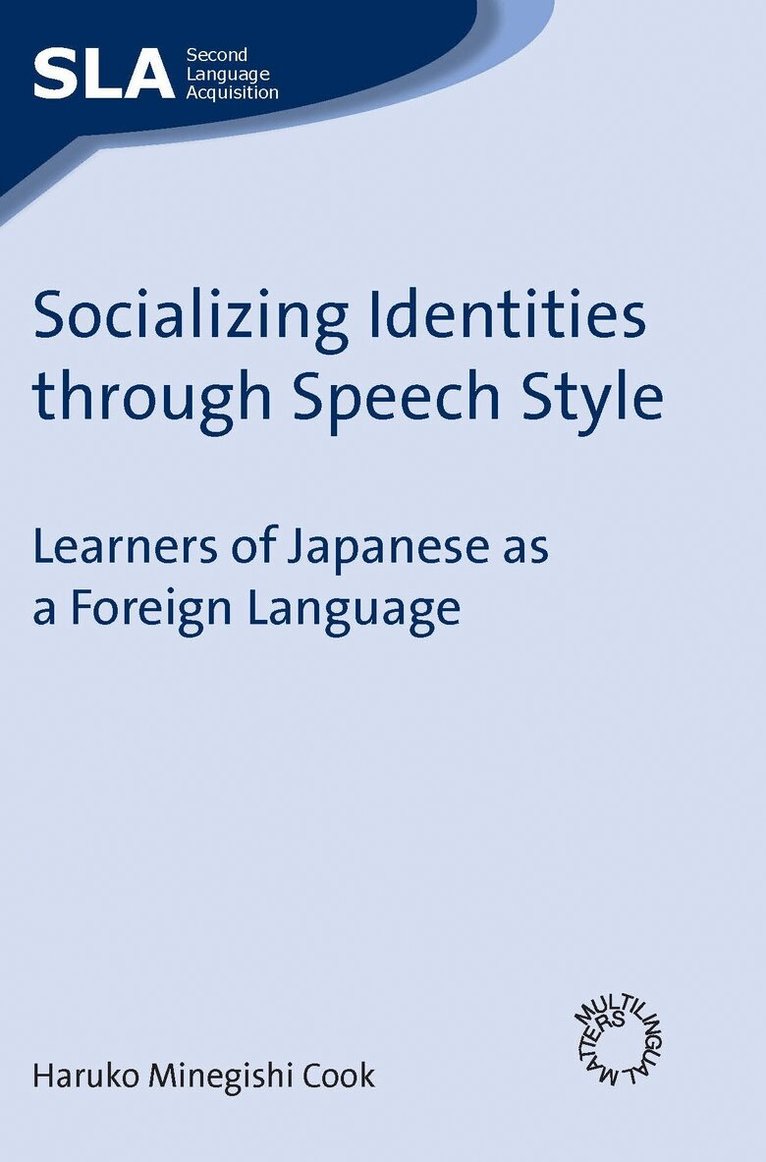
    Socializing Identities through Speech Style

    Learners of Japanese as a Foreign Language

    AvHaruko Minegishi Cook

    Häftad, Engelska, 2008

    Del 32 i serien Second Language Acquisition

    498 kr

    Beställningsvara. Skickas inom 5-8 vardagar. Fri frakt över 249 kr.

    Fler format och utgåvor

    Inbunden

    1 477 kr

    Beskrivning

    Drawing on the perspective of language socialization and a theory of indexicality, this book explores ways in which learners of Japanese as a foreign language and their Japanese host families socialize their identities through style shift between the masu and plain forms in a homestay context. Going beyond the usual assumption that the masu form is a polite speech marker, the book analyzes the masu form as an index of various social identities and activities. The book discusses both socialization through speech styles and socialization to use an appropriate speech style. Qualitative analysis of dinnertime conversations demonstrates how learners are implicitly and explicitly socialized into the norms of style shift in Japanese in interaction with their host family members.

    Produktinformation

    • Utgivningsdatum:2008-08-21
    • Mått:156 x 234 x 13 mm
    • Vikt:378 g
    • Format:Häftad
    • Språk:Engelska
    • Serie:Second Language Acquisition
    • Antal sidor:240
    • Förlag:Channel View Publications Ltd
    • ISBN:9781847691002

    Utforska kategorier

    • Språkvetenskap och lingvistik inom Språk och ordböcker

    Mer om författaren

    Haruko Minegishi Cook is a Professor in the Department of East Asian Languages and Literatures at the University of Hawaii at Manoa. She earned a PhD in Linguistics from University of Southern California. Her main research interests include language socialization, sociolinguistics, discourse analysis, and pragmatics. She has published in major journals and edited volumes and a number of articles on the Japanese sentence-final particles, honorifics, and style shift from a constructivist perspective.

    Recensioner i media

    Based on a fine-grained analysis of situated interactional data, the volume is impressive in its theoretical depth and promises to make a multi-dimensional contribution to the field.

    Innehållsförteckning

    • Chapter 1. Introduction: Indexical Approach to Language and Language Socialization Chapter 2. Social Meaning and Indexicality Chapter 3. Functions of the Masu Form Chapter 4. Identity Construction Through Use of the Masu Form: JFL Learners and Host Families Chapter 5. Marked and Unmarked Uses of the Masu Form in the Homestay Context Chapter 6. Explicit Language Socialization: Socialization to Use Polite Language Chapter 7. Implications of the Study for L2 Pragmatics and Pedagogy Chapter 8. Conclusion References Appendix 1 Appendix 2