• Fri frakt över 249 kr
  • •
  • Snabba leveranser
  • •
  • Billiga böcker
Kundservice

Du är på sajten för privatpersoner.

Företag, bibliotek eller offentlig verksamhet?

Du handlar på classic.bokus.com, där alla dina funktioner finns intakta.
Till classic.bokus.com
Bokus logotyp. Gå till startsidan.
  • Erbjudanden
  • Nyheter
  • Student
  • Topplistor
  • Barn & ungdom
  • Bokus Play
  • E-böcker
  • Pocketböcker
  • Spel & pussel

10% rabatt på allt med kod: NYSTART10 →

Sidfot

Mina sidor

    Hjälp

    • Kundservice
    • Vanliga frågor och svar
    • Frakt och leverans
    • Retur vid ångerrätt
    • Reklamera vara
    • Betalning
    • Köpvillkor
    • Allmänna villkor
    • Information om webbplatsens tillgänglighet

    Om Bokus

    • Om oss
    • Pressrum
    • För studenter
    • För företag
    • För bibliotek och offentlig verksamhet
    • För leverantörer
    • Hållbarhet

    Populärt

    • Aktuella erbjudanden
    • Presentkort
    • Studentlitteratur
    • Nya böcker
    • Topplistor
    • Signerade böcker
    • Engelska böcker

    Inspiration

    • Boktips
    • BookTok
    • Populära bokserier
    • Barnbokskaraktärer
    • Populära författare
    Logotyp för Bokus
    Följ oss på Facebook (extern länk)Följ oss på Instagram (extern länk)Följ oss på YouTube (extern länk)Följ oss på TikTok (extern länk)
    bokus @ CookiesAnpassa cookiesIntegritetspolicyKöpvillkor
    Till Citymail hemsida (extern länk)Till Budbee hemsida (extern länk)Till Postnord hemsida (extern länk)Till Schenker hemsida (extern länk)Till Early Bird hemsida (extern länk)Till Walleys hemsida (extern länk)
    1. Ande, kropp och själ
    2. Ande, kropp och själ
    3. Alternativa terapier, healing och hälsa

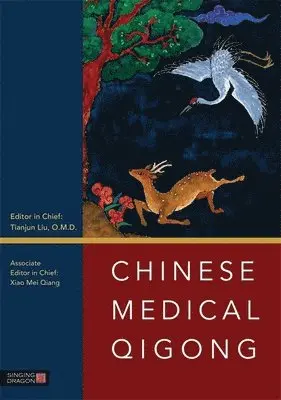
    Chinese Medical Qigong

    AvXiao Mei Qiang,Tianjun Liu

    Häftad, Engelska, 2013

    515 kr

    Skickas . Fri frakt över 249 kr.

    Beskrivning

    Based on the latest edition of the approved textbook on Medical Qigong used in Chinese universities, this authoritative paperback edition has been completely revised and edited to meet the needs of western practitioners. The editors emphasize the practice of Qigong, and this section of the book has been revised and expanded; a wide range of Qigong forms are presented, taking full account of the history, correct practice, and development of Qigong. The section on the clinical applications of Qigong in the treatment of a wide range of conditions, with the recommended Qigong forms for treatment, and relevant references to the ancient texts has been substantially revised, and focuses on conditions more common in the West. The book also presents the newest research on Medical Qigong, including groundbreaking new discoveries about the physiological and psychological mechanisms. Omitted from this paperback edition are the extensive excerpts from the ancient texts, and the detailed history, more appropriate for academic study.This is an unparalleled resource for practitioners of Qigong and Chinese medicine, as well as medical students and other healthcare professionals seeking a better understanding of the theory, practice and beneficial health applications of Medical Qigong.

    Produktinformation

    • Utgivningsdatum:2013-05-28
    • Mått:173 x 244 x 20 mm
    • Vikt:742 g
    • Format:Häftad
    • Språk:Engelska
    • Antal sidor:408
    • Förlag:Jessica Kingsley Publishers
    • Medarbetare:Tianjun Liu
    • ISBN:9781848190962

    Utforska kategorier

    • Alternativa terapier, healing och hälsa inom Ande, kropp och själ
    • Filosofiska discipliner inom Filosofi och religion

    Mer om författaren

    Tianjun Liu, O.M.D., is Director of the Qigong research laboratory at Beijing University of Chinese Medicine where he has taught Qigong for more than twenty years. He is also secretary general of the National Qigong Education and Study Association, secretary general of China Academic Society of Medical Qigong, and the first government approved academic mentor for Ph.D. candidates in the field of medical Qigong in China. For the past decade, Dr. Liu has been Editor in Chief of Qigong Study in Chinese Medicine, the only official Qigong textbook used in universities and colleges of traditional Chinese medicine in China. Tianjun Liu, O.M.D., is Director of the Qigong research laboratory at Beijing University of Chinese Medicine where he has taught Qigong for more than twenty years. He is also secretary general of the National Qigong Education and Study Association, secretary general of China Academic Society of Medical Qigong, and the first government approved academic mentor for Ph.D. candidates in the field of medical Qigong in China. For the past decade, Dr. Liu has been Editor in Chief of Qigong Study in Chinese Medicine, the only official Qigong textbook used in universities and colleges of traditional Chinese medicine in China.

    Recensioner i media

    Praise for the hardback edition:'This is the first English translation of this ancient art of Chinese medicine. It is a must read for Traditional Chinese Medical Practitioners as it allows the traditional principles of qigong to be related to current scientific evidence. The book was generally an excellent read, being a great introduction to the practice of Qigong for both experienced and non-experienced TCM practitioners... as a sole English reference book in the practice of Qigong it makes an excellent reference text for any traditional Chinese medical practitioner... Personally, I found this book an excellent read as a practitioner of a more Western approach of acupuncture. It presented itself very well at demonstrating the approach of Qigong to many typically "Western" diagnoses, which I found useful as a mainly non-TCM practitioner. Overall, Chinese Medical Qigong is an excellent reference text in the TCM practice of Qigong a vital read for any practitioner.'

    Innehållsförteckning

    • Foreword. General Introduction. I. Essential Concepts of CMQ. II. The Academic System of CMQ. III. Subjects Related to CMQ. IV. The Study of CMQ. Part I: Fundamental Theories. 1. The Origins of Qigong and the Major Schools. Section 1: The Origin of Qigong. I. Historical Texts. II. Medical Texts. III. Archaeological Discoveries. Section 2: Traditional Major Qigong Schools. I. Medical Qigong. II. Daoist Qigong. III. Buddhist Qigong. IV. Confucian Qigong. V. Martial Arts Qigong. 2. Classical Theories. Section 1: Theories of Medical Qigong. I. Theory of Yin-Yang and the Five Elements. II. Zang-Fu (Visceral Manifestation) and Meridian Theory. III. The Theory of Essence-Qi-Spirit. Section 2: Theories of Other Qigong Schools. I. Daoist Qigong Theory. II. Buddhist Qigong Theory. III. Confucian Qigong Theory. IV. Martial Arts Qigong. 3. Modern Scientific Research on Qigong. Section 1: Summary of Modern Research on Qigong. I. Development of Modern Research on Qigong. II. Trends and Controversy in Qigong Research. Section 2: Physiological Effects of Qigong. I. Effects of Qigong on the Respiratory System. II. Effect of Qigong on the Cardiovascular System. III. Effects of Qigong on Neuroelectrophysiology. Section 3: Psychological Effects of Qigong. I. Operational Mechanism of Adjusting Mind in Qigong Practice. II. Psychological Elements of External Qi Therapy. Part II Practical Methods and Skills. 4. Basic Operations of Qigong. Practice. Section 1: Adjustment of Body. I. External Adjustments. II. Internal Adjustment. Section 2: Adjustment of Breath. I. Adjustment of Breathing Types. II. Adjustment of Breathing Air. Section 3: Adjustment of Mind. I. Operation of Mind Adjustment (Yi Nian Tiao Kong). II. Adjustment of the Mental Realm (Jing Jie Tiao Kong). Section 4: Integrating Three Adjustments into One. I. Consolidating Method. II. Extending Method. III. Characteristics of the State Integrating Three Adjustments into One. 5. General Introduction to Qigong Forms. Section 1: Classification of Qigong Forms. I. Classification of Qigong by Academic Schools or Traditions. II. Classification by Dynamic/Static Types. III. Classification by the Three Adjustments. IV. Classification by Practice Style or Characteristics. Section 2: Guidelines and Precautions for Practice. I. Guidelines. II. Precautions Before and After Practicing. Section 3: Possible Reactions to Qigong Practice. Normal Reactions. II. Adverse Reactions. Section 4: Qigong Deviations and Corrections. I. The Causes of Deviation. II. Symptoms of Deviation. III. Classifications. IV. Treatment Methods for Correction of Deviations. 6. Selected Qigong Forms. Section 1: Five-Animal Frolics. I. Practice Method. II. Application. Section 2: The Six Syllable Formula. I. Practice Method. II. Application. Section 3: Muscle/Tendon Changing Classic. I. Practice Method. II. Application. Section 4: Eight Pieces of Brocade. I. Practice Method. II. Application. Section 5: Five Elements Palm. I. Practice Method. II. Application. Section 6: Health Preserving Qigong. I. Practice Method. II. Application. Section 7: Post Standing Qigong. I. Practice Method. II. Application. Section 8: Relaxation Qigong. Practice Method. II. Application. Section 9: Internal Nourishing Qigong. I. Practice Method. II. Application. Section 10: Roborant Qigong. I. Practice Method. II. Application. Section 11: New Qigong Therapy. I. Practice Method. II. Application. Part III Clinical Applications. 7. General Introduction to Qigong Therapy. Section 1: Characteristics and Indications of Qigong Therapy. I. Characteristics of Qigong Therapy. II. Indications and Contraindications of Qigong Therapy. Section 2: Principles of Administering Treatment by Syndrome Differentiation in Qigong Therapy. I. Recognizing TCM Syndromes and Administering Qigong by Syndrome Differentiation. II. Administering Qigong Suitably to Individual, Time, and Location . Section 3: Standard Procedures and Clinical Routine of Qigong Therapy. I. Qigong Prescription. II. Qigong Treatment Methods. III. The Treatment Process of Qigong. IV. Writing Medical Records. Chapter 8. Examples of Clinical Application. Section 1: Hypertension. I. Main Qigong Forms. II. Administer Qigong Forms by Syndrome Differentiation. III. Cautions. Section 2: Coronary Artery Disease. I. Main Qigong Forms. II. Administer Qigong Forms by Syndrome Differentiation. III. Cautions. Section 3: Peptic Ulcers. I. Main Qigong Forms. II. Administer Qigong Forms by Syndrome Differentiation. III. Cautions. Section 4: Chronic Liver Diseases. I. Main Qigong Forms. II. Administer Qigong Forms by Syndrome Differentiation. III. Cautions. Section 5: Diabetes Mellitus. I. Main Qigong Forms. II. Administer Qigong Forms by Syndrome Differentiation. III. Cautions. Section 6: Obesity. I. Main Qigong Forms. II. Administer Qigong Forms by Syndrome Differentiation. III. Cautions. Section 7: Menopause Syndrome. I. Main Qigong Forms. II. Administer Qigong Forms by Syndrome Differentiation. III. Cautions. Section 8: Chronic Fatigue Syndrome. I. Main Qigong Forms. II. Administer Qigong Forms by Syndrome Differentiation. III. Cautions. Section 9: Insomnia. I. Main Qigong Forms. II. Administer Qigong Forms by Syndrome Differentiation. III. Cautions. Section 10: Tumor and Cancer. I. Main Qigong Forms. II. Administer Qigong Forms by Syndrome Differentiation. II. Cautions. Section 11: Lower Back Pain and Leg Pain. I. Main Qigong Forms. II. Administer Qigong Forms by Syndrome Differentiation. III. Cautions. Section 12: Cervical Spondylosis. I. Main Qigong Forms. II. Administer Qigong Forms by Syndrome Differentiation. III. Cautions. Section 13: Myopia. I. Main Qigong Forms. II. Administer Qigong Forms by Syndrome Differentiation. III. Cautions. Index.