• Fri frakt över 249 kr
  • •
  • Snabba leveranser
  • •
  • Billiga böcker
Kundservice

Du är på sajten för privatpersoner.

Företag, bibliotek eller offentlig verksamhet?

Du handlar på classic.bokus.com, där alla dina funktioner finns intakta.
Till classic.bokus.com
Bokus logotyp. Gå till startsidan.
  • Erbjudanden
  • Nyheter
  • Student
  • Topplistor
  • Barn & ungdom
  • Bokus Play
  • E-böcker
  • Pocketböcker
  • Spel & pussel

10% rabatt på allt med kod: NYSTART10 →

Sidfot

Mina sidor

    Hjälp

    • Kundservice
    • Vanliga frågor och svar
    • Frakt och leverans
    • Retur vid ångerrätt
    • Reklamera vara
    • Betalning
    • Köpvillkor
    • Allmänna villkor
    • Information om webbplatsens tillgänglighet

    Om Bokus

    • Om oss
    • Pressrum
    • För studenter
    • För företag
    • För bibliotek och offentlig verksamhet
    • För leverantörer
    • Hållbarhet

    Populärt

    • Aktuella erbjudanden
    • Presentkort
    • Studentlitteratur
    • Nya böcker
    • Topplistor
    • Signerade böcker
    • Engelska böcker

    Inspiration

    • Boktips
    • BookTok
    • Populära bokserier
    • Barnbokskaraktärer
    • Populära författare
    Logotyp för Bokus
    Följ oss på Facebook (extern länk)Följ oss på Instagram (extern länk)Följ oss på YouTube (extern länk)Följ oss på TikTok (extern länk)
    bokus @ CookiesAnpassa cookiesIntegritetspolicyKöpvillkor
    Till Citymail hemsida (extern länk)Till Budbee hemsida (extern länk)Till Postnord hemsida (extern länk)Till Schenker hemsida (extern länk)Till Early Bird hemsida (extern länk)Till Walleys hemsida (extern länk)
    1. Naturvetenskap och teknik
    2. Geovetenskap
    3. Geovetenskap

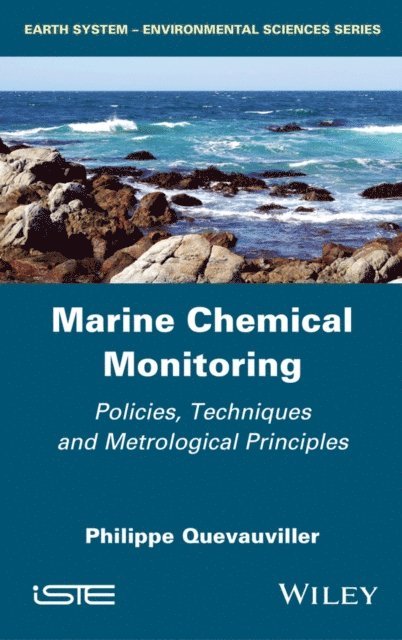
    Marine Chemical Monitoring

    Policies, Techniques and Metrological Principles

    AvPhilippe Quevauviller

    Inbunden, Engelska, 2016

    2 162 kr

    Tillfälligt slut

    Fler format och utgåvor

    E-bok

    2 193 kr

    E-bok

    2 193 kr

    Beskrivning

    Combining laboratory experience with research and policy developments, this book provides an insight into the historical background of marine monitoring, its regulatory frameworks and science–policy interactions.With experience in the European Commission, the author draws from practical experience in research and policy implementation to present a concise review of marine monitoring on an international level.The author deals with monitoring and related QA/QC principles, focusing on monitoring types, while describing general features of analytical methods used in marine monitoring.The book concludes with a discussion about how to achieve metrology principles (measurement traceability) in marine monitoring.

    Produktinformation

    • Utgivningsdatum:2016-01-08
    • Mått:165 x 241 x 23 mm
    • Vikt:603 g
    • Format:Inbunden
    • Språk:Engelska
    • Antal sidor:310
    • Förlag:ISTE Ltd and John Wiley & Sons Inc
    • ISBN:9781848217409

    Utforska kategorier

    • Geovetenskap inom Naturvetenskap och teknik

    Mer om författaren

    Philippe Quevauviller is Associate Professor at the Vrije Universiteit Brussel (VUB) in Belgium where he teaches as part of the Interuniversity Programme on Water Resource Engineering. He is also Policy Officer at the European Commission, where he is responsible for research programming in the area of security.

    Innehållsförteckning

    • Preface ixGlossary  xvAbbreviations  xxiChapter 1. Marine Monitoring: Historical Background, Regulatory Framework and Science–Policy Interactions  11.1. Introduction  11.2. International institutions 31.2.1. International Council for the Exploration of the Sea 51.2.2. United Nations Environment Programme  61.2.3. Intergovernmental Oceanographic Commission of UNESCO  101.2.4. European Union 111.3. International conventions/programs  121.3.1. UN Convention on the Law of the Sea  121.3.2. London Dumping Convention 131.3.3. OSPAR Conventions  131.3.4. Helsinki Convention 161.3.5. MARPOL 171.3.6. Mediterranean Sea: Barcelona Convention 181.3.7. Bonn Agreement 191.3.8. Arctic Ocean: Arctic Monitoring and Assessment Programme  191.3.9. North East Pacific Ocean 201.3.10. North West Atlantic Ocean 211.3.11. North Sea conferences 221.3.12. Other conventions 221.4. The EU marine strategy 221.4.1. The notion of “good environmental status” 241.4.2. Marine strategies of the Member States 251.4.3. Monitoring in the MSFD policy context  261.5. Science–policy interactions  291.5.1. Scientific foundation of environmental policies: where do we stand? 291.5.2. EU scientific framework in support of water and marine policies 311.5.3. Identification of research needs in the water policy sectors  331.5.4. Interactions with the scientific community 341.5.5. Science-based development of an integrated environmental policy 371.6. Conclusions  39Chapter 2. Monitoring and Quality Assurance 412.1. Monitoring of what? 412.1.1. Selection of compartments  412.1.2. Selection of compounds  422.2. Quality of data  442.2.1. Introduction 442.2.2. Interlaboratory comparisons  452.2.3. Guidelines  472.2.4. (Certified) reference materials  482.2.5. Laboratory performance studies 492.2.6. Example: monitoring of trace metals in seawater 512.3. Certified reference materials  532.3.1. Introduction 532.3.2. Production and use of reference materials 532.3.3. CRMs for trace elements in nutrients  622.3.4. CRMs for organic non-halogenated compounds  662.3.5. CRMs for organic halogenated compounds  682.3.6. Future needs of CRMs 71Chapter 3. Types of Monitoring  733.1. Classical chemical marine monitoring  733.1.1. Introduction  733.1.2. The basis and purpose of marine monitoring 743.1.3. Some considerations around classical monitoring 773.1.4. Designing a sampling program  803.1.5. Sample collection and immediate handling 823.1.6. Sample storage (short- and long-term)  833.1.7. Laboratory analyses 863.1.8. The final assessment 933.1.9. Conclusions  943.2. In situ methods  943.2.1. Introduction  943.2.2. In situ automatic analyzers 963.2.3. Passive sampling technologies 993.2.4. Spectroscopic methods 1063.2.5. Electrochemical techniques  1103.2.6. Sensors 1133.2.7. Biological early warning systems 1163.2.8. Future 1193.3. Biomonitoring 1213.3.1. Introduction  1213.3.2. Analytical trends in chemical monitoring of marine biota  1233.3.3. Main features of biota monitoring programs  1283.3.4. Analytical methods 1313.3.5. Integration of chemical and biological effect monitoring  1363.4. Use of sediment in coastal monitoring  1393.4.1. Introduction  1393.4.2. Sediment monitoring in the WFD context  1423.4.3. Chemical monitoring in estuaries for coastal management  142Chapter 4. Analytical Methods 1474.1. Trace elements  1474.1.1. Introduction  1474.1.2. Digestion methods  1484.1.3. Preconcentration methods for seawater analysis  1504.1.4. Atomic absorption and emission techniques  1514.1.5. (Instrumental) neutron activation analysis  1574.1.6. X-ray techniques  1584.1.7. Electrochemical techniques  1594.1.8. Conclusions 1604.2. Chemical species 1614.2.1. Introduction 1614.2.2. Labile/complexed fractionation of metal species 1634.2.3. Inorganic chromium species 1684.2.4. Inorganic and organic arsenic species  1714.2.5. Inorganic and methylated mercury species 1764.2.6. Butyltin and other organotin species 1814.3. Organic micropollutants  1854.3.1. Introduction 1854.3.2. Polychlorinated biphenyls 1864.3.3. Polybrominated diphenyls ethers 1894.3.4. Emerging contaminants  1914.3.5. Organohalogens in water 1934.3.6. Polycyclic aromatic hydrocarbons  1964.4. Nutrients  1974.4.1. Introduction 1974.4.2. Nutrient monitoring 1984.4.3. Analytical methods 199Chapter 5. Conclusions: Achieving Traceability in Marine Monitoring Measurements?  2055.1. Metrology in marine chemistry: traceability principles of chemical measurements 2055.1.1. Meaning of traceability for chemical measurements  2065.1.2. Stated references  2095.1.3. Case studies illustrating metrology in marine chemistry  2205.1.4. Conclusions 2295.2. Policy perspectives 231Bibliography 235Index  283