• Fri frakt över 249 kr
  • •
  • Snabba leveranser
  • •
  • Billiga böcker
Kundservice

Du är på sajten för privatpersoner.

Företag, bibliotek eller offentlig verksamhet?

Du handlar på classic.bokus.com, där alla dina funktioner finns intakta.
Till classic.bokus.com
Bokus logotyp. Gå till startsidan.
  • Erbjudanden
  • Student
  • Topplistor
  • Barn & ungdom
  • Bokus Play
  • E-böcker
  • Ljudböcker
  • Pocketböcker
  • Spel & pussel

10% rabatt på allt med kod NYSTART10 →

Sidfot

Mina sidor

    Hjälp

    • Kundservice
    • Vanliga frågor och svar
    • Frakt och leverans
    • Retur vid ångerrätt
    • Reklamera vara
    • Betalning
    • Köpvillkor
    • Allmänna villkor
    • Information om webbplatsens tillgänglighet

    Om Bokus

    • Om oss
    • Pressrum
    • För studenter
    • För företag
    • För bibliotek och offentlig verksamhet
    • För leverantörer
    • Hållbarhet

    Populärt

    • Aktuella erbjudanden
    • Presentkort
    • Studentlitteratur
    • Nya böcker
    • Topplistor
    • Signerade böcker
    • Engelska böcker

    Inspiration

    • Boktips
    • BookTok
    • Populära bokserier
    • Barnbokskaraktärer
    • Populära författare
    Logotyp för Bokus
    Följ oss på Facebook (extern länk)Följ oss på Instagram (extern länk)Följ oss på YouTube (extern länk)Följ oss på TikTok (extern länk)
    bokus @ CookiesAnpassa cookiesIntegritetspolicyKöpvillkor
    Till Citymail hemsida (extern länk)Till Budbee hemsida (extern länk)Till Postnord hemsida (extern länk)Till Schenker hemsida (extern länk)Till Early Bird hemsida (extern länk)Till Walleys hemsida (extern länk)
    1. Psykologi och pedagogik
    2. Psykologi
    3. Socialpsykologi och gruppsykologi

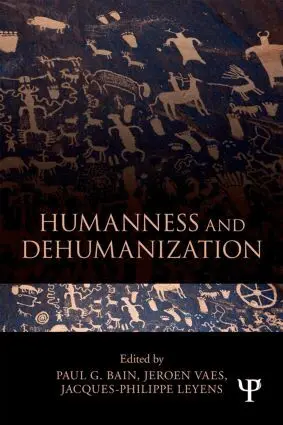
    Humanness and Dehumanization

    AvPaul G. Bain,Jeroen Vaes

    Häftad, Engelska, 2013

    947 kr

    Beställningsvara. Skickas inom 10-15 vardagar. Fri frakt över 249 kr.

    Beskrivning

    What does it mean to be human? Why do people dehumanize others (and sometimes themselves)? These questions have only recently begun to be investigated in earnest within psychology. This volume presents the latest thinking about these and related questions from research leaders in the field of humanness and dehumanization in social psychology and related disciplines. Contributions provide new insights into the history of dehumanization, its different types, and new theories are proposed for when and why dehumanization occurs. While people’s views about what humanness is, and who has it, have long been known as important in understanding ethnic conflict, contributors demonstrate its relevance in other domains, including medical practice, policing, gender relations, and our relationship with the natural environment. Cultural differences and similarities in beliefs about humanness are explored, along with strategies to overcome dehumanization.In highlighting emerging ideas and theoretical perspectives, describing current theoretical issues and controversies and ways to resolve them, and in extending research to new areas, this volume will influence research on humanness and dehumanization for many years.

    Produktinformation

    • Utgivningsdatum:2013-10-07
    • Mått:152 x 229 x 20 mm
    • Vikt:476 g
    • Format:Häftad
    • Språk:Engelska
    • Antal sidor:368
    • Förlag:Taylor & Francis Ltd
    • ISBN:9781848726901

    Utforska kategorier

    • Socialpsykologi och gruppsykologi inom Psykologi och pedagogik

    Mer om författaren

    Paul G. Bain is Research Fellow in the Humanities and Social Sciences at the University of Queensland, Australia. His research focuses on conceptions and attributions of humanness (including dehumanization) and folk beliefs about the future of society. His research has been published in the top social psychology journals including the Journal of Personality and Social Psychology and Personality and Social Psychology Bulletin, as well as top specialist journals such as Nature Climate Change.Jeroen Vaes is Assistant Professor at the University of Padova, Italy. His research focuses on humanness as a dimension of social judgment in intergroup relations, and in the realm of sexual and medical objectification. He has published research articles and chapters in the most important international outlets of social psychology. Currently, he is an associate editor of the British Journal of Social Psychology and has received the Jos Jaspars award from the European Association of Social Psychology for early career scientific achievements.Jacques-Philippe Leyens is Professor Emeritus at the Catholic University of Louvain at Louvain-la-Neuve, Belgium. He has initiated several lines of research in social perception, intergroup relations, and racism. Chief editor of the European Journal of Social Psychology, he has been president of the European Association of Social Psychology and received the Tajfel award for his work and contribution to the development of social psychology in Europe. He was also associate editor of the Journal of Personality and Social Psychology-Interpersonal Relations and Group Processes.

    Recensioner i media

    "This timely and thought-provoking volume introduces the reader to the brave new world of systematic psychological research on our implicit theories of what it means to be human and the subtle (and not-so-subtle) ways in which we dehumanize the Other. In addition to a state-of-the-art review of theory and research in this fascinating domain, the various chapters in the volume draw links to other areas of basic and applied significance. Highly recommended." --Marilynn B. Brewer, Ph.D., University of New South Wales, Australia"This book sheds an original, comprehensive, and wide scope of light on the concepts of humanness and dehumanization. The editors assembled very knowledgeable experts who cover numerous aspects, and in the analysis of each context they offer a coherent illumination of how these concepts are used, their meaning, and their consequences. The book is a must-have for those who want to understand how individuals and groups interact with each other and how they explain their interaction." --Daniel Bar-Tal, Ph.D., Tel Aviv University"In this important volume, the editors have assembled leading international scholars to consider the past, present, and the future of research in this area. The volume is unusually expansive: It includes an impressive range of theoretical perspectives to understand the causes and consequences of humanization and dehumanization, defining the topic in the present and setting the scholarly agenda into the future." --John Dovidio, Ph.D., Yale University

    Innehållsförteckning

    • Advances in Understanding Humanness and Dehumanization, P.G. Bain, J. Vaes, J.-P. Leyens. Part 1: Historical and Theoretical Insights into Dehumanization. An Anthropological History of Dehumanization from Late 18th to Mid-20th Centuries, G. Jahoda. What Is Dehumanization?, N. Haslam. The Lesser Minds Problem, A. Waytz, J. Schroeder, N. Epley. Dehumanized Perception: Psychological and Neural Mechanisms Underlying Everyday Dehumanization, V. Lee, L. Harris. (Over)Valuing "Humanness" as an Aggravator of Intergroup Prejudices and Discrimination, G. Hodson, C.C. Macinnis, K. Costello. Dehumanization: A Threat and Solution to Terror Management, N. Heflick, J. Goldenberg. Part 2: Dehumanization – Specific Targets and Fields of Occurrence. Dehumanization, Moral Disengagement and Public Attitudes to Crime and Punishment, M. Vasiljevic, G.T. Viki. Cops and Criminals: The Interplay of Mechanistic and Animalistic Dehumanization in the Criminal Justice System, R. Hetey, J. Eberhardt. Humanity Forever in Medical Dehumanization, J.-P. Leyens. The Inhuman Body: When Sexual Objectification Becomes Dehumanizing, J. Vaes, S. Loughnan, E. Puvia. An Interpersonal Perspective on Dehumanization, B. Bastian, J. Jetten, N. Haslam. Part 3: Exploring and Extending Ideas About Humanity. The Human Category: Its Structure, Its Content, and Its Implications, P.G. Bain. Dehumanization as a Denial of Human Potentials: The Naïve Theory of Humanity Perspective, M. Kofta, T. Baran, M. Tarnowska. More Human: Individuation in the 21st Century, J. Swencionis, S. Fiske. On Human-Nature Relationships, Y. Kashima, E. Margetts. Conclusion. Understanding Humanness and Dehumanization: Emerging Themes and Directions, J. Vaes, P.G. Bain, J.-P. Leyens.