• Fri frakt över 249 kr
  • •
  • Snabba leveranser
  • •
  • Billiga böcker
Kundservice

Du är på sajten för privatpersoner.

Företag, bibliotek eller offentlig verksamhet?

Du handlar på classic.bokus.com, där alla dina funktioner finns intakta.
Till classic.bokus.com
Bokus logotyp. Gå till startsidan.
  • Erbjudanden
  • Nyheter
  • Student
  • Topplistor
  • Barn & ungdom
  • Bokus Play
  • E-böcker
  • Pocketböcker
  • Spel & pussel

10% rabatt på allt med kod NYSTART10 →

Sidfot

Mina sidor

    Hjälp

    • Kundservice
    • Vanliga frågor och svar
    • Frakt och leverans
    • Retur vid ångerrätt
    • Reklamera vara
    • Betalning
    • Köpvillkor
    • Allmänna villkor
    • Information om webbplatsens tillgänglighet

    Om Bokus

    • Om oss
    • Pressrum
    • För studenter
    • För företag
    • För bibliotek och offentlig verksamhet
    • För leverantörer
    • Hållbarhet

    Populärt

    • Aktuella erbjudanden
    • Presentkort
    • Studentlitteratur
    • Nya böcker
    • Topplistor
    • Signerade böcker
    • Engelska böcker

    Inspiration

    • Boktips
    • BookTok
    • Populära bokserier
    • Barnbokskaraktärer
    • Populära författare
    Logotyp för Bokus
    Följ oss på Facebook (extern länk)Följ oss på Instagram (extern länk)Följ oss på YouTube (extern länk)Följ oss på TikTok (extern länk)
    bokus @ CookiesAnpassa cookiesIntegritetspolicyKöpvillkor
    Till Citymail hemsida (extern länk)Till Budbee hemsida (extern länk)Till Postnord hemsida (extern länk)Till Schenker hemsida (extern länk)Till Early Bird hemsida (extern länk)Till Walleys hemsida (extern länk)
    1. Samhälle och politik
    2. Politik och statsskick
    3. Internationella relationer

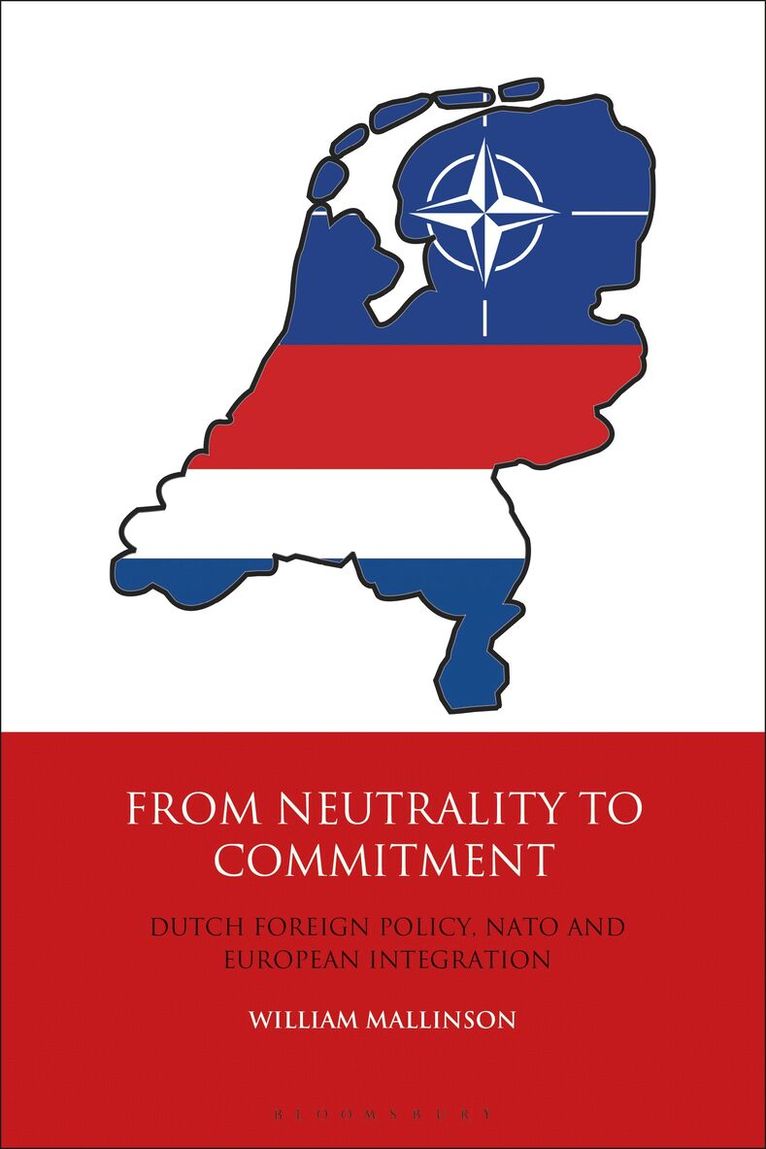
    From Neutrality to Commitment

    Dutch Foreign Policy, NATO and European Integration

    AvWilliam Mallinson

    Inbunden, Engelska, 2010

    1 951 kr

    Beställningsvara. Skickas inom 10-15 vardagar. Fri frakt över 249 kr.

    Fler format och utgåvor

    E-bok

    529 kr

    Häftad

    300 kr

    Beskrivning

    Until the mid-twentieth century, the Dutch, with their overseas empire, had managed to stay aloof from the machinations of intra-European fighting. However, the beginning of the Cold War found them persuaded by Britain and the US to break with their independent past, and fit into the emerging Western security system. William Mallinson here considers how major post-war developments in Europe affected Dutch foreign policy, traditionally one of abstentionism, and studies the extent of Dutch influence in post-war Western co-operation. Important landmarks, including the Marshall Plan, Brussels Treaty Organisation, North Atlantic Treaty Organisation, Council of Europe, Schuman Plan and Pleven Plan, so vital to an understanding of contemporary international relations, are all treated incisively. The book sheds light on defence, foreign and economic policy, treating European developments from a previously neglected angle. In so doing, it provides vital insights into the history of European recovery after World War II and into the development of a postwar international order.

    Produktinformation

    • Utgivningsdatum:2010-05-30
    • Mått:138 x 216 x 19 mm
    • Vikt:516 g
    • Format:Inbunden
    • Språk:Engelska
    • Antal sidor:320
    • Förlag:Bloomsbury Publishing PLC
    • ISBN:9781848853447

    Utforska kategorier

    • Internationella relationer inom Samhälle och politik

    Mer om författaren

    William Mallinson is Lecturer in British History, Literature and Culture at the Ionian University, Corfu. He is a former diplomat and the author of 'Cyprus: A Modern History' (I.B.Tauris, 2005).

    Recensioner i media

    'The rise of the Netherlands in the seventeenth century is a relatively well-known story; its hard-fought wars with England remain alive at least in the consciousness of naval historians. During the nineteenth century, the Netherlands clung to a policy of neutrality and non-intervention in European affairs and continued this right up till 1940. However, with the invasion of the Germans in 1940, any belief that the wider world might be ignored came to a sorry end. So what would happen after 1945? Would there be a return to neutrality? Would realism demand a policy of ruthlessly sticking to the defence of national interests? What in any case, would be a proper definition of these interests in post-war Europe? Naturally the Dutch, like all other nations who attempt to define their national interests, were split, causing heated debates. How a final outcome was reached is the story told by William Mallinson in this splendid book. It is well worth reading to find out what happened. I thoroughly recommend it.' - Alan Sked, Professor of International History, London School of Economics and Political Sciences; 'The work shows in detail, and most incisively, how the Netherlands was strongly encouraged, pushed, even, by Britain, to give up its independent stance, and become part of the Cold War system. It is most relevant for today, given the current debate on European integration and defence questions.' - Vassilis K. Fouskas, Professor of International Relations, University of Piraeus and Editor of the Journal of Balkan and Near Eastern Studies

    Innehållsförteckning

    • Foreword IntroductionChapter 1: Setting the Scene 1.1 The Nature of Netherlands Neutrality 1.2 The German Problem and the Effects of the War 1.3 The Commercial Question 1.4 Dutch Territorial and other Claims on Germany 1.5 The Indonesian Factor 1.6 The Role of National Characteristics 1.7 ConclusionChapter 2: European Developments and the German Question: The Dutch Approach 2.1 Introduction 2.2 The Netherlands and Europe 2.3 Marshall Aid and the Dutch Dilemma 2.4 Dutch Claims and Frustrations 2.5 European Unity 2.6 Conclusion Chapter 3: The Question of Security and the Brussels Treaty Organisation 3.1 Introduction 3.2 The Indonesian Thorn 3.3 The Path to the Brussels Treaty 3.4 The Brussels Treaty - a way of being heard? 3.5 Conclusion Chapter 4: The North Atlantic Road 4.1 Introduction 4.2 Lip Service - The Dutch Position on NATO 4.3 The Indonesian Complication 4.4 The Dutch Atlantic Attitude 4.5 Conclusion Chapter 5: From the Atlantic to Europe 5.1 Introduction 5.2 Dutch Restraint 5.3 The British Information Campaign 5.4 Slow Realisation of Harsh Realities and Defence Problems 5.5 Trade before Ideology 5.6 Germany and NATO 5.7 The European Angle 5.8 Conclusion Chapter 6: Whose Europe? 6.1 Introduction 6.2 The Council of Europe 6.3 The Schuman Plan 6.4 The Stikker Plan and the British 6.5 Conclusion Chapter 7: Whose Defence? 7.1 Introduction 7.2 The Pleven Plan 7.3 The Dutch View 7.4 The British Disappointment 7.5 Conclusion Chapter 8: The Road to a Standing Army 8.1 Introduction 8.2 The Resignation of the Government 8.3 External Pressures and Dutch Indignation 8.4 Stikker’s Crisis 8.5 The British and American View 5.6 Conclusion Chapter 9: Towards Commitmant 9.1 Introduction 9.2 Reluctant Participants 9.3 The Dutch Blindness 9.4 Germany and NATO 9.5 A New Enthusiasm for Europe 9.6 Defence-Less Enthusiasm 9.7 Conclusion Chapter 10: The European Answer 10.1 Introduction 10.2 Germany and Commercial Precedence 10.3 Dutch-British Relations 10.4 EDC Enthusiasm - The Shining Example 10.5 Security through Europe 10.6 No Divorce because of the Children 10.7 Conclusion Chapter 11: The Last Laugh 11.1 Introduction 11.2 The Dutch, Europe and the EDC 11.3 The German Angle 11.4 Between EDC and NATO 11.5 Back to NATO 11.6 Conclusion Chapter 12: ConclusionsAppendix: list of missing and unavailable files in the National Archives Archivalia Interviews Published Material Published articles Background Reading List of Abbreviations Index