• Fri frakt över 249 kr
  • •
  • Snabba leveranser
  • •
  • Billiga böcker
Kundservice

Du är på sajten för privatpersoner.

Företag, bibliotek eller offentlig verksamhet?

Du handlar på classic.bokus.com, där alla dina funktioner finns intakta.
Till classic.bokus.com
Bokus logotyp. Gå till startsidan.
  • Erbjudanden
  • Nyheter
  • Student
  • Topplistor
  • Barn & ungdom
  • Bokus Play
  • E-böcker
  • Pocketböcker
  • Spel & pussel

10% rabatt på allt med kod NYSTART10 →

Sidfot

Mina sidor

    Hjälp

    • Kundservice
    • Vanliga frågor och svar
    • Frakt och leverans
    • Retur vid ångerrätt
    • Reklamera vara
    • Betalning
    • Köpvillkor
    • Allmänna villkor
    • Information om webbplatsens tillgänglighet

    Om Bokus

    • Om oss
    • Pressrum
    • För studenter
    • För företag
    • För bibliotek och offentlig verksamhet
    • För leverantörer
    • Hållbarhet

    Populärt

    • Aktuella erbjudanden
    • Presentkort
    • Studentlitteratur
    • Nya böcker
    • Topplistor
    • Signerade böcker
    • Engelska böcker

    Inspiration

    • Boktips
    • BookTok
    • Populära bokserier
    • Barnbokskaraktärer
    • Populära författare
    Logotyp för Bokus
    Följ oss på Facebook (extern länk)Följ oss på Instagram (extern länk)Följ oss på YouTube (extern länk)Följ oss på TikTok (extern länk)
    bokus @ CookiesAnpassa cookiesIntegritetspolicyKöpvillkor
    Till Citymail hemsida (extern länk)Till Budbee hemsida (extern länk)Till Postnord hemsida (extern länk)Till Schenker hemsida (extern länk)Till Early Bird hemsida (extern länk)Till Walleys hemsida (extern länk)
    1. Medicin
    2. Andra medicinska specialiteter
    3. Neurologi och klinisk neurofysiologi
    4. Autism och Aspergers syndrom

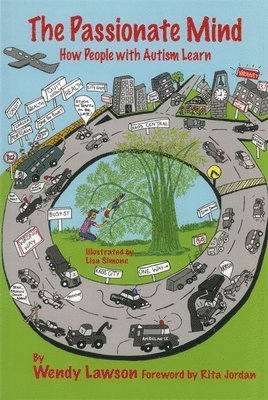
    Passionate Mind

    How People with Autism Learn

    AvWenn Lawson

    Häftad, Engelska, 2010

    289 kr

    Skickas . Fri frakt över 249 kr.

    Beskrivning

    In entirely accessible terms, Wendy Lawson lays out her groundbreaking theory of Single Attention and Associated Cognition in Autism (SAACA), an approach that explains autism in terms of the unique learning style of individuals on the autism spectrum. She shows that whereas neurotypical people can easily shift their attention from one interest to another, those on the autism spectrum tend to focus on a single theme at any one time. This leads to a deep, intense attention. Wendy describes practical outcomes for individuals, families, educators and employers. She shows that when this unique learning style is understood, valued and accommodated, individuals on the autism spectrum can be empowered to achieve their fullest potential.This is an essential read for anyone with a personal or professional interest in autism, including individuals on the spectrum and their families, educators, clinical practitioners, researchers, occupational therapists, and other professionals.

    Produktinformation

    • Utgivningsdatum:2010-09-15
    • Mått:154 x 232 x 15 mm
    • Vikt:331 g
    • Format:Häftad
    • Språk:Engelska
    • Antal sidor:224
    • Förlag:Jessica Kingsley Publishers
    • Illustratör:Lisa Simone
    • ISBN:9781849051217

    Utforska kategorier

    • Autism och Aspergers syndrom inom Medicin

    Mer om författaren

    Dr Wenn B. Lawson PhD, CPsychol is a lecturer and author. Since being diagnosed with autism in 1994, Wenn is passionately committed to campaigning for the rights of people on the autism spectrum. In 2008 Wenn was awarded fourth place in the 'Victorian Australian of the Year' awards.

    Recensioner i media

    this book is a essential and accessible read for all interested in the field of autism studies, particularly psychologists, but also for other professionals, who are often presented with the theories so roundly criticised in this text. As an autistic researcher myself, this book is not only a welcome addition to the lexicon of work on the psychology of autism, but an inspiration for future research.

    Innehållsförteckning

    • Acknowledgements. Foreword by Professor Rita Jordan. 1.Introduction. The reasons for writing this book. The power of words. Brain configuration. What to expect in this text. The role of attention and interest. 2. The Autism Spectrum: Where we are we now?. Introduction. What does autism spectrum look like? Gender. Autism spectrum strengths. Learning style. Sensory differences. 3. Cognitive theories of autism spectrum. Introduction. Cognition and cognitive theory. Considering theory in autism spectrum. Attention and interest. 4. Cognitive theory: Theory of mind. Introduction. Definition. Foundations for theory of mind. Components of theory of mind. Application to child development. Development of theory of mind. Difficulties with a rigid view of theory of mind development. The most noted test of theory of mind. Theory of mind research over time. Questions concerning theory of mind theory. Other potential questions. Summary. 5. Cognitive theory: Executive functioning. Introduction. Definition. Foundations for executive functioning. Components of executive functioning. Application to child development. Development of executive functioning. Research over time. Executive functioning and theory of mind. Questions concerning executive functioning and the autism spectrum. Other questions and limitations. Summary. 6. Cognitive theory: Weak central coherence. Introduction. Definition. Foundations for weak central coherence theory . Components of weak central coherence theory. Application in the neurotypical and autism spectrum population. Research over time. Limitations of weak central coherence theory. Summary. 7. Cognitive theory: Enhanced perceptual functioning. Introduction. Definition. Foundations for enhanced perceptual functioning theory. Components of enhanced perceptual functioning. Research over time. Comparison with other cognitive theories. Limitations of enhanced perceptual functioning theory. Summary. 8. An alternative cognitive theory: single attention and associated cognition in autism. Introduction. Definitions. Monotropism as a foundation for SAACA. Attention. Attention and Brain Configuration. Monotropism and the sensory system. Monotropism and interest. Attention, motivation and interest. Triad of impairments or product of monotropic attention? Processing style. Monotropism and learning style. Complex cognitive skills coupled with interest and attention. Cognitive components of SAACA. Monotropism and literality. Monotropism and thinking in closed concepts. Monotropism: context and scale. Monotropism: timing, sequencing and predicting. Monotropism and non social priorities. Summary. 9. The relevance of SAACA. Introduction. Everyday experiences for autism spectrum individuals. When things change. The concept of time. SAACA's explanation of why autism spectrum and neurotypical perception are different. Case studies. Autism spectrum comprehension. Problems with autism spectrum comprehension. (if using a neurotypical lens). What might it mean when an expectation is not fulfilled? Problem solving ideas using SAACA. Tom's story - An extended case study. Why does Tom have difficulties? Can we help Tom cope with change? When and how do we execute an intervention for Tom? What about generalising Tom's learning? Reasoning behind using IT, visuals and structure. Neurotypical parenting. Summary. 10. Looking to the future. A different learning style. Completing tasks. Normality. It's in everyone's interest. Experiments to refute or support SAACA. Limitations of SAACA. List of publications. References. Appendix A. Appendix B. Appendix C. Appendix D. Appendix E. Index.