• Fri frakt över 249 kr
  • •
  • Snabba leveranser
  • •
  • Billiga böcker
Kundservice

Du är på sajten för privatpersoner.

Företag, bibliotek eller offentlig verksamhet?

Du handlar på classic.bokus.com, där alla dina funktioner finns intakta.
Till classic.bokus.com
Bokus logotyp. Gå till startsidan.
  • Erbjudanden
  • Nyheter
  • Student
  • Topplistor
  • Barn & ungdom
  • Bokus Play
  • E-böcker
  • Pocketböcker
  • Spel & pussel

10% rabatt på allt med kod: NYSTART10 →

Sidfot

Mina sidor

    Hjälp

    • Kundservice
    • Vanliga frågor och svar
    • Frakt och leverans
    • Retur vid ångerrätt
    • Reklamera vara
    • Betalning
    • Köpvillkor
    • Allmänna villkor
    • Information om webbplatsens tillgänglighet

    Om Bokus

    • Om oss
    • Pressrum
    • För studenter
    • För företag
    • För bibliotek och offentlig verksamhet
    • För leverantörer
    • Hållbarhet

    Populärt

    • Aktuella erbjudanden
    • Presentkort
    • Studentlitteratur
    • Nya böcker
    • Topplistor
    • Signerade böcker
    • Engelska böcker

    Inspiration

    • Boktips
    • BookTok
    • Populära bokserier
    • Barnbokskaraktärer
    • Populära författare
    Logotyp för Bokus
    Följ oss på Facebook (extern länk)Följ oss på Instagram (extern länk)Följ oss på YouTube (extern länk)Följ oss på TikTok (extern länk)
    bokus @ CookiesAnpassa cookiesIntegritetspolicyKöpvillkor
    Till Citymail hemsida (extern länk)Till Budbee hemsida (extern länk)Till Postnord hemsida (extern länk)Till Schenker hemsida (extern länk)Till Early Bird hemsida (extern länk)Till Walleys hemsida (extern länk)
    1. Juridik
    2. Särskilda rättsområden
    3. Rättsordning

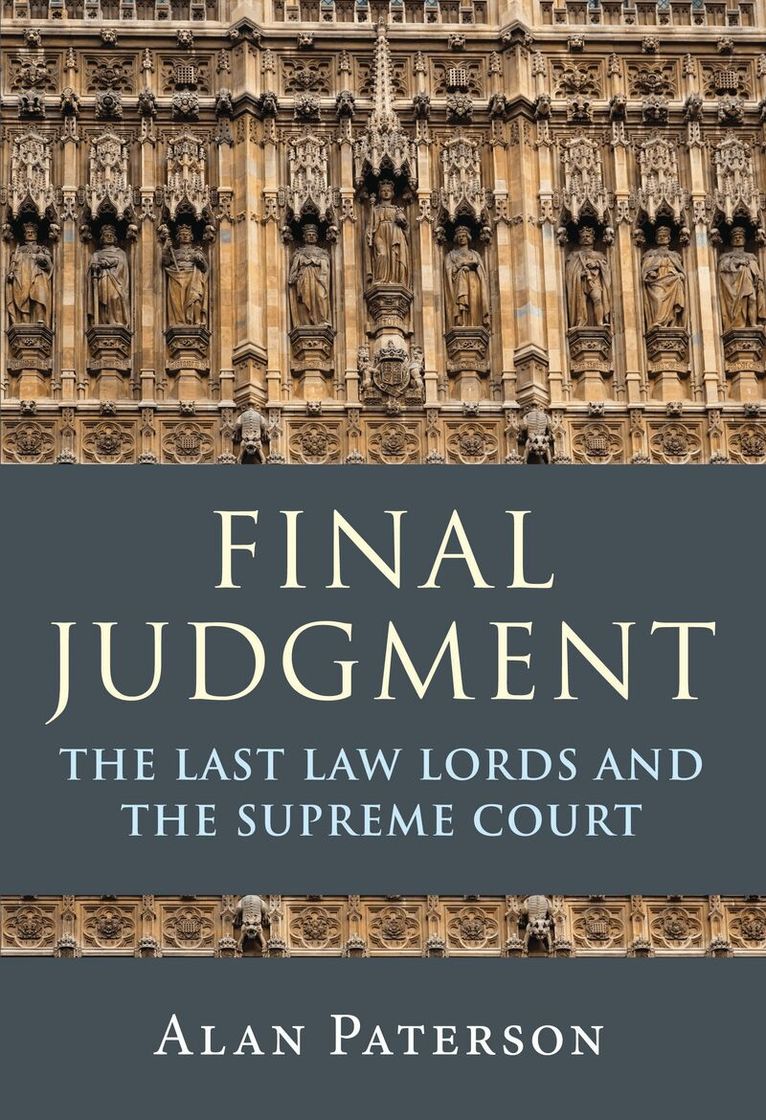
    Final Judgment

    The Last Law Lords and the Supreme Court

    AvAlan Paterson

    Inbunden, Engelska, 2013

    837 kr

    Beställningsvara. Skickas inom 10-15 vardagar. Fri frakt över 249 kr.

    Fler format och utgåvor

    Häftad

    300 kr

    E-bok

    320 kr

    E-bok

    320 kr

    Beskrivning

    Winner of the Inner Temple book prize 2015 and the Socio-Legal Studies Association Book prize 2014/15The House of Lords, for over 300 years the UK's highest court, was transformed in 2009 into the UK Supreme Court. This book provides a compelling and unrivalled view into the workings of the Court during its final decade, and into the formative years of the Supreme Court. Drawing on over 100 interviews, including more than 40 with Law Lords and Justices, and uniquely, some of their judicial notebooks, this is a landmark study of appellate judging 'from the inside' by an author whose earlier work on the House of Lords has provided a scholarly benchmark for over 30 years.The book demonstrates that appellate decision-making in the UK's final court remains a social and collective process, primarily because of the dialogues which take place between the judges and the key groups with which they interact when reaching their decisions. As the book shows, the forms of dialogue are now more varied, yet the most significant dialogues continue to be with their fellow Law Lords and Justices, and with counsel. To these, new dialogues have been added, namely those with foreign courts (especially Strasbourg) and with judicial assistants, which have subtly altered the tenor and import of their other dialogues. The research reveals that, unlike the English Court of Appeal, the House of Lords in its last decade was only intermittently collegial since Lord Bingham's philosophy of appellate judging left opinion writing, concurrences and dissents largely to individual preference. In the Supreme Court, however, there has been a marked shift to team working and collective decision-making bringing with it challenges and occasional tensions not seen in the final years of the House of Lords. The work shows that effectiveness in group-decision making in the final court turns in part on the stages when dialogues occur, in part on the geography of the court and in part on the task leadership and social leadership skills of the judges involved in particular cases. The passing of the Human Rights Act and the expansion in judicial review over the last 30 years have dramatically altered the two remaining dialogues - those with Parliament and with the Executive. With the former, the dialogue has grown more distant, with the latter, more problematic, than was the case 40 years ago. The last chapter rehearses where the changing dialogues have left the UK's final court. Ironically, despite the oft applauded commitment of the new Court to public visibility, the book concludes that even greater transparency in the dialogue with the public may be required.'The way appellate judges at the highest level behave to each other, to counsel, with other branches of government and with other courts is brought under closer scrutiny in this book than ever before…The remarkable width and depth of his examination…has resulted in a work of real scholarship, which all those who are interested in how appellate courts work all over the common law world will find especially valuable.'From the foreword by Lord Hope of Craighead KT'Alan Paterson's knowledge and interest in the Supreme Court, coupled with his expertise as a lawyer who understands the legal system and the judicial process, make him a perfect chronicler and assessor of what the Court's role is and what it should be, and how it functions and how it might improve.'Lord Neuberger, President of the Supreme Court

    Produktinformation

    • Utgivningsdatum:2013-11-20
    • Mått:156 x 234 x 15 mm
    • Vikt:694 g
    • Format:Inbunden
    • Språk:Engelska
    • Antal sidor:366
    • Förlag:Bloomsbury Publishing PLC
    • ISBN:9781849463836

    Utforska kategorier

    • Rättsordning inom Juridik

    Mer om författaren

    Alan Paterson, LLB (Edin), DPhil (Oxon), Solicitor, OBE, FRSA, FRSE is a Professor of Law and Director of the Centre for Professional Legal Studies at the Strathclyde University Law School. His research has focused on the legal profession, access to justice, poverty legal services and the judiciary.

    Recensioner i media

    ...an admirably researched, readable and fascinating addition to the growing literature on how judges go about their work.

    Innehållsförteckning

    • 1: Introduction, Context and Methodology Sources and Methodology Judicial Notebooks Elite Interviews The Drawbacks of Oral History Definitions 2: The Dialogue with Counsel Introduction The Context of the Dialogue Between Counsel and the Judges in the Final Court Expectations which Constrain Initiating the DialogueThe Courtroom Dialogue How has the Dialogue Between Counsel and The Court Changed? Have the Qualities of Good Appellate Advocacy Changed? Persuasive Advocacy Robustness and Resilience Courage Timing Written Advocacy Does Advocacy Matter in the Final Court? Case Studies in Effective Advocacy Factors Which Make a Difference Conclusion 3: Dialogues with Colleagues—The Stages for Discourse Introduction The Preparatory Stages Laying the Groundwork Involvement in Permission to Appeal Decisions Being Chosen: The Selection of the Hearing Panel Doing the Homework: Reading of the Preliminary Materials The Oral Hearing Judicial Dialogues in the Courtroom Conclaves Off-stage: Dialogue Outside the Courtroom The First Conference Sharing of Preliminary Conclusions and Discussion The Allocation of the Lead Judgment Implications for the Future The Drafting Stage Order and Production of Circulation Multiple Judgments and the Pursuit of Unity Dissenting Opinions Circulation Time Conclusion 4: Dialogues with Colleagues—Efficacy in Judicial Dialogues Introduction Context Stages Time and Timing The Composition of the Panel Approaches to Collective Decision-Making: The Art of Persuasion Engagement of Judgments Team-working Leadership in the House of Lords Dissents, Individualism and Collegiality Task Leadership and the US Supreme Court Social Leadership Leadership Skills in the Supreme CourtSocial Leadership in the Supreme Court Geography Conclusion 5: Inter-Judicial Dialogues in Practice Voting Relationships Changes of MindThe Bingham Era 2000–09 The UK Supreme Court 2009–13 Conclusion 6: Wider Dialogues Old and New The Dialogue with the Court of Appeal The Dialogue with Academics Dialogues with Courts Overseas The Dialogue with Strasbourg Scots Appeals and London: A Fraught Relationship? Deference The Devolution Issues Jurisdiction Conclusion The Dialogue with Judicial Assistants The Job of the Judicial Assistant 7: The Dialogue with Other Branches of Government Setting the Scene The Dialogue with Parliament Judicial Activism and its Drawbacks Hard Cases Make Bad Law Justice, Certainty and Fairness Drawing the Line Who Really Draws the Line? Where Should the Lines be Drawn? Arguments from Parliamentary Activity and Inactivity Lines of Communication Conclusion The Dialogue with the Executive Intra-governmental Relations Attempts by the Executive to Engage with the Court Accountability The Challenge of Accountability 8: Final Reflections