• Fri frakt över 249 kr
  • •
  • Snabba leveranser
  • •
  • Billiga böcker
Kundservice

Du är på sajten för privatpersoner.

Företag, bibliotek eller offentlig verksamhet?

Du handlar på classic.bokus.com, där alla dina funktioner finns intakta.
Till classic.bokus.com
Bokus logotyp. Gå till startsidan.
  • Erbjudanden
  • Student
  • Topplistor
  • Barn & ungdom
  • Bokus Play
  • E-böcker
  • Ljudböcker
  • Pocketböcker
  • Spel och pussel

5% studentrabatt – använd koden KURSBOK27 →

Sidfot

Mina sidor

    Hjälp

    • Kundservice
    • Vanliga frågor och svar
    • Frakt och leverans
    • Retur vid ångerrätt
    • Reklamera vara
    • Betalning
    • Köpvillkor
    • Allmänna villkor
    • Information om webbplatsens tillgänglighet

    Om Bokus

    • Om oss
    • Pressrum
    • För studenter
    • För företag
    • För bibliotek och offentlig verksamhet
    • För leverantörer
    • Hållbarhet

    Populärt

    • Aktuella erbjudanden
    • Presentkort
    • Studentlitteratur
    • Nya böcker
    • Topplistor
    • Signerade böcker
    • Engelska böcker

    Inspiration

    • Boktips
    • BookTok
    • Barnbokskaraktärer
    • Populära författare
    Logotyp för Bokus
    Följ oss på Facebook (extern länk)Följ oss på Instagram (extern länk)Följ oss på YouTube (extern länk)Följ oss på TikTok (extern länk)
    bokus @ CookiesAnpassa cookiesIntegritetspolicyKöpvillkor
    Till Citymail hemsida (extern länk)Till Budbee hemsida (extern länk)Till Postnord hemsida (extern länk)Till Schenker hemsida (extern länk)Till Early Bird hemsida (extern länk)Till Walleys hemsida (extern länk)
    1. Juridik
    2. Särskilda rättsområden
    3. Författningsrätt och förvaltningsrätt

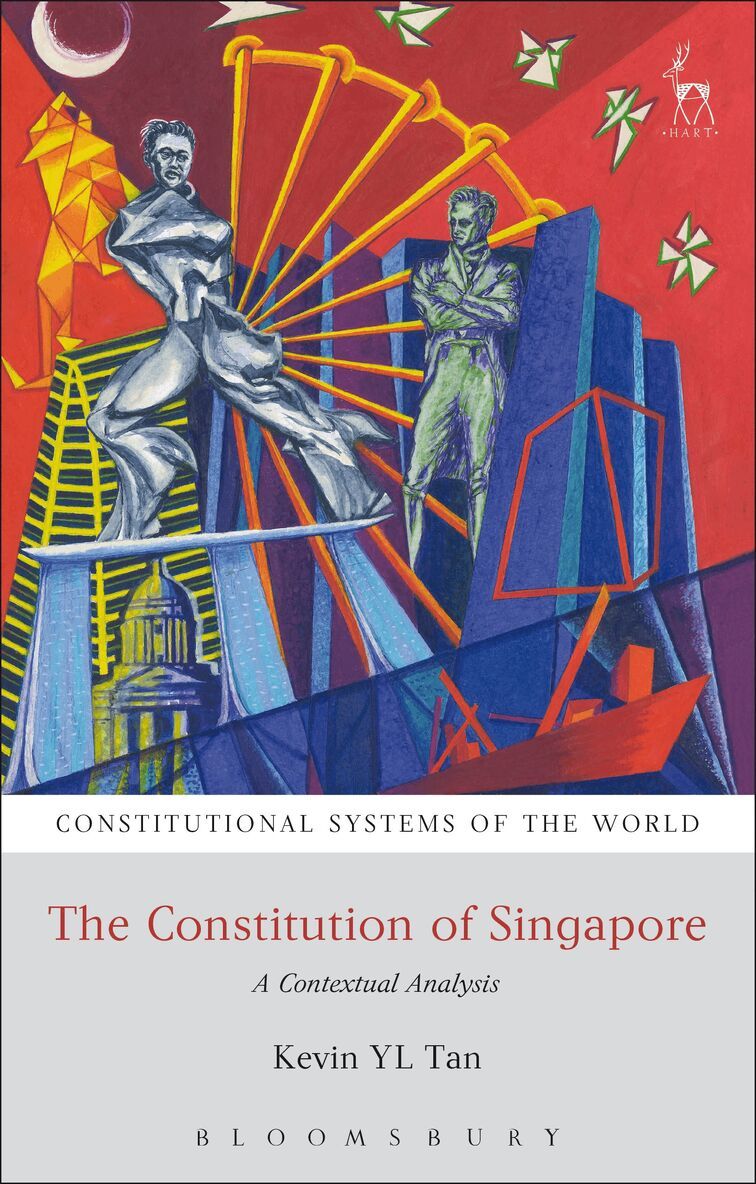
    Constitution of Singapore

    A Contextual Analysis

    AvKevin YL Tan,Peter Leyland

    Häftad, Engelska, 2015

    Del i serien Constitutional Systems of the World

    362 kr

    Beställningsvara. Skickas inom 10-15 vardagar. Fri frakt över 249 kr.

    Fler format och utgåvor

    E-bok

    389 kr

    E-bok

    389 kr

    Beskrivning

    Singapore’s Constitution was hastily cobbled together after her secession from the Federation of Malaysia in 1965. In the subsequent 50 years, the Constitution has been amended many times to evolve a Constitution like no other in the world. Outwardly, Singapore has a Westminster-type constitutional democracy, with an elected legislature, fundamental liberties and safeguards to ensure the independence of the judiciary. On closer inspection, the Constitution displays many innovative and unusual characteristics. Most notable among them are the various types of Members of Parliament that have been introduced since the mid-1980s, the office of the Elected President and the fact that there is no constitutional right to property. This volume seeks to explain the nature and context of these constitutional innovations in the context of a pluralistic, multi-ethnic state obsessed with public order and security. The volatile racial mix of Singapore, with its majority Chinese population nestled in a largely Malay/Islamic world, compels the state to search for ethnic management solutions through the Constitution to guarantee to the Malays and other ethnic minorities their status in the polity. In addition, it examines how the concept of the rule of law is perceived by the strong centrist state governed by a political party that has been in power since 1959 and continues to hold almost hegemonic power.

    Produktinformation

    • Utgivningsdatum:2015-03-26
    • Mått:138 x 214 x 16 mm
    • Vikt:360 g
    • Format:Häftad
    • Språk:Engelska
    • Serie:Constitutional Systems of the World
    • Antal sidor:276
    • Förlag:Bloomsbury Publishing PLC
    • ISBN:9781849463966

    Utforska kategorier

    • Författningsrätt och förvaltningsrätt inom Juridik

    Mer om författaren

    Kevin YL Tan is a leading scholar of Singapore's constitution and has written and edited over 30 books on the law, politics and history of Singapore. He is currently Adjunct Professor at both the Faculty of Law, National University of Singapore and the S Rajaratnam School of International Studies, Nanyang Technological University.

    Recensioner i media

    I thoroughly recommend this work to all those who would like to understand not only the Constitution itself, but the reasons behind its structure and the laws it supports. It is ideal for foreigner and local alike.

    Innehållsförteckning

    • INTRODUCTION I. General II. Towards Independence and Three Imperatives A. Economic Growth B. Managing Ethnicity C. Political Dominance III. Organisation of this Book 1. A BRIEF CONSTITUTIONAL HISTORY I. Introduction II. The Straits Settlements Period (1819–1942) A. The Founding of Modern Singapore B. Early Administration of the Straits Settlements C. Becoming a Colony Proper III. The Japanese Occupation (1942–45) IV. The Colony of Singapore (1946–58) V. The Rendel Constitution VI. Constitutional Talks and Self-government (1956–58) VII. Merger and Separation (1963–65) A. The ‘Battle for Merger’B. The Rift between Singapore and the Federation C. The 1964 Racial RiotsVIII. Post-1965 Developments A. The Aftermath of Independence B. The Wee Cong Jin Commission C. Changes to the Judiciary D. Entrenching Singapore’s Sovereignty E. Changes to the Parliamentary System F. The Elected President G. Amendment to Citizenship Laws IX. Conclusion 2. CONSTITUTIONALISM IN SINGAPORE I. Introduction II. The Constitution as Supreme Law A. The Amendment Regime B. Can the Constitution be Impliedly Amended? C. The Basic Features Doctrine III. Separation of Powers IV. Constitutionalism and the Rule of Law V. Constitutional Culture 3. PARLIAMENT AND REPRESENTATION I. A Brief Historical Outline II. Parliament and the Problem of Representation A. Ethnic Representation B. The Group Representation Constituencyand Town Councils III. The Revival of Local Government? A. Town Councils as Local Government B. The Community Development Councils (CDCs) C. GRCs as ‘Fixed Deposit’ SeatsIV. Qualifications of Members V. Duties of Members VI. Parliamentary Privilege A. Life of Parliament and Vacancies VII. Principal Officers of Parliament A. The Speaker B. The Clerk of Parliament C. The Whip D. Leader of the House VIII. Parliament’s Committees A. Committee of the Whole House B. Select Committees C. Sessional Committees D. Government Parliamentary Committees (GPCs) IX. The Conduct of Elections A. Nomination DayB. Campaigning C. Polling Day D. Political Donations X. Concluding Thoughts 4. LAW-MAKING I. Introduction II. Rule Formulation III. Introduction of Bills in Parliament A. Government Bills B. Private Members’ Bills IV. The Legislative Process A. The First Reading B. The Second Reading C. The Committee Stage D. The Third Reading V. The Presidential Council for Minority Rights and Presidential Assent A. Role of the Elected President VI. Executive Law-making A. Subsidiary Legislation B. Other Forms of Executive Rule-makingVII. Legislative Powers in an Emergency 5. THE EXECUTIVE I. Introduction II. Singapore’s Prime Minister III. The Cabinet and its Ministers IV. Unique Features of Singapore’s Cabinet V. Ministerial Salaries VI. Code of Conduct for Ministers VII. Policy Formulation, Decision-making and Collective Responsibility VIII. The Attorney-General IX. The Executive: An Elected Dictatorship? 6. THE ELECTED PRESIDENT I. Introduction II. Singapore’s Presidential Executive:A Short History III. The President’s Traditional Discretionary Powers A. Appointment and Dismissal of the Prime Minister B. Proroguing and Dissolving Parliament C. Discretion during an Emergency D. Justiciability of the President’s Discretion IV. The Elected President A. The Rationale and the Initial Proposals B. The Second White Paper V. The Elected President Scheme in 1991 A. Presidential Elections B. Term of Office, Powers and ImmunitiesC. Removal of the President D. Entrenchment of Office E. Constitutional Reference No 1 of 1995 VI. Post-1991 Changes A. President to State Reasons for Spending Reserves B. Transfer of Surpluses C. Advisory Capacity of the Supreme Court D. Reduction of Veto Powers VII. ‘Loans’ under Article 144(1) VIII. The President Exercises his Discretion IX. Some Unique Aspects of the Presidency7. THE JUDICIARYI. Introduction II. Judicial Power: Meaning, Nature, Content and Scope III. Constitution of Singapore’s Judiciary A. The Court of AppealB. The High Court C. Special Constitutional Tribunal D. The State Courts E. The Syariah Court IV. Judicial Independence A. Appointment and Tenure of Judges B. Security of Remuneration C. Shortage of Judges: Judicial Commissioners and Supernumerary Judges D. Judicial Independence and the Power to Punish for Contempt V. Jurisdiction of the CourtsA. Original and Appellate Jurisdiction B. Inherent Jurisdiction C. Supervisory Jurisdiction D. Revision Jurisdiction VI. Establishing Jurisdiction and Locus Standi VII. Judicial Control of Administrative ActionA. Precedent or Jurisdictional Facts B. Errors of Law C. The Control of Substantive Direction D. The Grounds of Judicial Review VIII. Limits on Judicial Review A. Political Questions B. Legislative Prohibition: Outer Clauses C. Laches D. Judgments of Superior Courts E. Res JudicataIX. Public Law Remedies X. Doctrine of Prospective Overruling XI. Conclusion 8. FUNDAMENTAL RIGHTS I. Introduction II. The Rendel Constitution III. The Reid Commission in Malaya IV. Entrenching Rights in Post-Independence Singapore A. A Patchwork Constitution V. The Right to Property in Singapore A. The Land Acquisition Problem B. Constitutional Difficulties C. The Land Acquisition Act 1966 VI. Preventive Detention A. Background to Executive Detention in Singapore B. The Wee Chong Jin Commission VII. Fundamental Liberties under Singapore’s Constitution VIII. Interpreting Fundamental Liberties A. Westminster Constitutions B. The Interpretation of Rights in Light of International Legal InstrumentsC. The ‘Four Walls’ Doctrine and Beyond D. Balancing of Rights: Between State and Individual 9. CONCLUSION I. Three Leitmotifs II. Regime Dominance A. Power and Governance B. Consolidating Party and State C. Regime Hegemony III. Economic Growth and Development A. Striving for Economic Legitimacy B. The Prevailing Economic Milieu C. The Power to Succeed D. Constitutional and Legal Regime of Public Enterprises E. Economic Development and State Power F. Disciplining Labour IV. Management of Ethnicity and Religious Diversity A. Strategies B. The Wee Chong Jin Commission’s Recommendations C. Malay Interests D. Group Representation Constituencies V. Conclusion