• Fri frakt över 249 kr
  • •
  • Snabba leveranser
  • •
  • Billiga böcker
Kundservice

Du är på sajten för privatpersoner.

Företag, bibliotek eller offentlig verksamhet?

Du handlar på classic.bokus.com, där alla dina funktioner finns intakta.
Till classic.bokus.com
Bokus logotyp. Gå till startsidan.
  • Erbjudanden
  • Nyheter
  • Student
  • Topplistor
  • Barn & ungdom
  • Bokus Play
  • E-böcker
  • Pocketböcker
  • Spel & pussel

10% rabatt på allt med kod: NYSTART10 →

Sidfot

Mina sidor

    Hjälp

    • Kundservice
    • Vanliga frågor och svar
    • Frakt och leverans
    • Retur vid ångerrätt
    • Reklamera vara
    • Betalning
    • Köpvillkor
    • Allmänna villkor
    • Information om webbplatsens tillgänglighet

    Om Bokus

    • Om oss
    • Pressrum
    • För studenter
    • För företag
    • För bibliotek och offentlig verksamhet
    • För leverantörer
    • Hållbarhet

    Populärt

    • Aktuella erbjudanden
    • Presentkort
    • Studentlitteratur
    • Nya böcker
    • Topplistor
    • Signerade böcker
    • Engelska böcker

    Inspiration

    • Boktips
    • BookTok
    • Populära bokserier
    • Barnbokskaraktärer
    • Populära författare
    Logotyp för Bokus
    Följ oss på Facebook (extern länk)Följ oss på Instagram (extern länk)Följ oss på YouTube (extern länk)Följ oss på TikTok (extern länk)
    bokus @ CookiesAnpassa cookiesIntegritetspolicyKöpvillkor
    Till Citymail hemsida (extern länk)Till Budbee hemsida (extern länk)Till Postnord hemsida (extern länk)Till Schenker hemsida (extern länk)Till Early Bird hemsida (extern länk)Till Walleys hemsida (extern länk)
    1. Juridik
    2. Internationell rätt

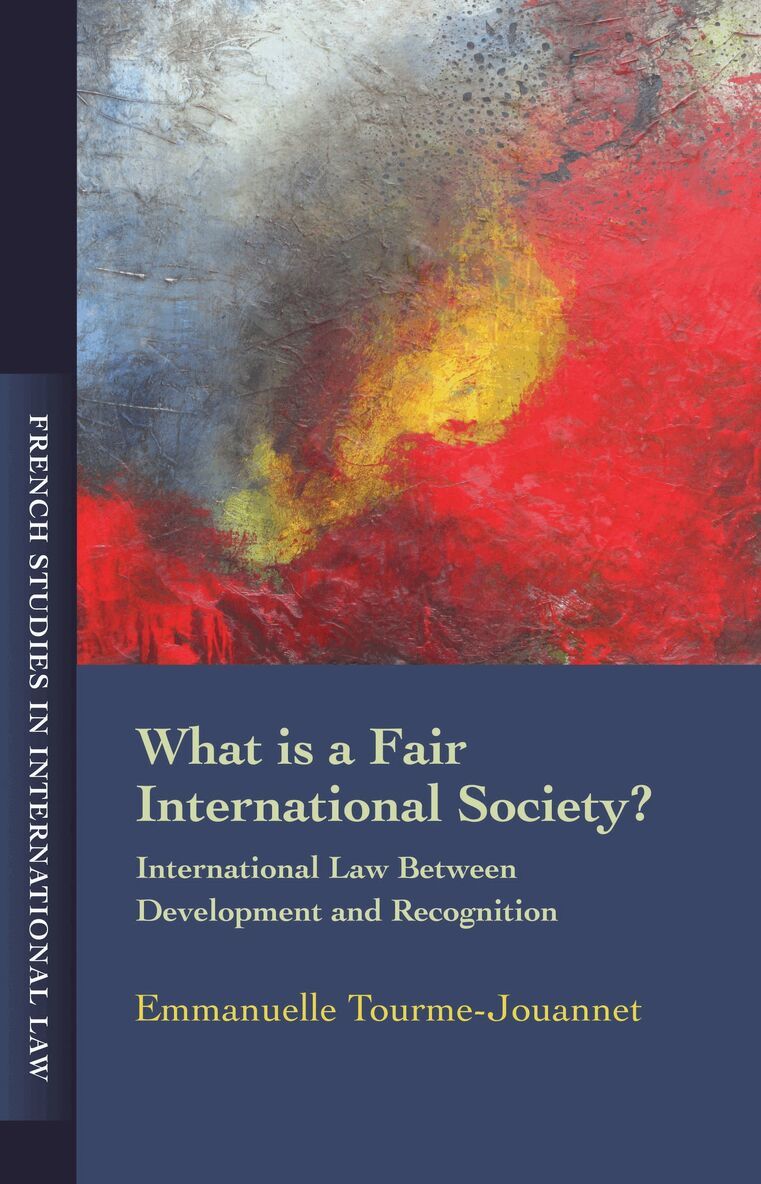
    What is a Fair International Society?

    International Law Between Development and Recognition

    AvEmmanuelle Tourme Jouannet,Emmanuelle Tourme Jouannet

    Häftad, Engelska, 2013

    Del i serien French Studies in International Law

    568 kr

    Beställningsvara. Skickas inom 10-15 vardagar. Fri frakt över 249 kr.

    Fler format och utgåvor

    E-bok

    611 kr

    E-bok

    611 kr

    Beskrivning

    Today's world is post-colonial and post-Cold War. These twin characteristics explain why international society is also riddled with the two major forms of injustice which Nancy Fraser identified as afflicting national societies. First, the economic and social disparities between states caused outcry in the 1950s when the first steps were taken towards decolonisation. These inequalities, to which a number of emerging states now contribute, are still glaring and still pose the problem of the gap between formal equality and true equality. Second, international society is increasingly confronted with culture- and identity-related claims, stretching the dividing line between equality and difference. The less-favoured states, those that feel stigmatised, but also native peoples, ethnic groups, minorities and women now aspire to both legal recognition of their equal dignity and the protection of their identities and cultures. Some even seek reparation for injustices arising from the past violation of their identities and the confiscation of their property or land. In answer to these two forms of claim, the subjects of international society have come up with two types of remedy encapsulated in legal rules: the law of development and the law of recognition. These two sets of rights are neither wholly autonomous and individualised branches of law nor formalised sets of rules. They are imperfect and have their dark side. Yet they can be seen as the first milestones towards what might become a fairer international society; one that is both equitable (as an answer to socio-economic injustice) and decent (as an answer to cultural injustice). This book explores this evolution in international society, setting it in historical perspective and examining its presuppositions and implications.

    Produktinformation

    • Utgivningsdatum:2013-08-14
    • Mått:154 x 232 x 16 mm
    • Vikt:400 g
    • Format:Häftad
    • Språk:Engelska
    • Serie:French Studies in International Law
    • Antal sidor:252
    • Förlag:Bloomsbury Publishing PLC
    • ISBN:9781849464307

    Utforska kategorier

    • Internationell rätt inom Juridik

    Mer om författaren

    Emmanuelle Tourme-Jouannet is now Professor at Sciences Po Law School, Paris. Her main publications include Le droit international (Paris, PUF, Collection 'Que sais-je ?', 2013) The Liberal-Welfarist Law of Nations. A History of International Law (Cambridge University Press, 2012) and Emer de Vattel et l'émergence doctrinale du droit international classique (Paris, Pedone, 1998).

    Recensioner i media

    …a sophisticated and thought-provoking piece of international legal scholarship.

    Innehållsförteckning

    • Introduction Part I: International Law and Development: An Equitable International Society? 1 Classical International Law and Development I The Development Paradigm A The Development Era B Disagreements over Development. Theories of 'Underdevelopment' II The Emergence and Evolution of International Development Law – NIEO A Classical International Development Law B The Third World: A Reformist Project for the World C The New International Economic Order (NIEO) III Ultraliberal Reaction and the Impact of Economic Globalisation A The NIEO Abandoned and the Neoliberal Model Triumphant B Law Devalued and the Human Ends of Economics Overlooked 2 The New International Development Law I The Human Ends of Development A Human Development B Human Rights and Development: Two Converging Objectives C States' Responsibility for Inadequate Development of their Populations D The Right to Development E Social Development F Good Governance: Democracy and Human Rights G The Contemporary Dominance of the Liberal Model II Sustainable Development A A New Development Paradigm? B The Law Relating to Sustainable Development III The Fight Against Poverty A The Contemporary Turning Point B Contribution and Limits3 An Appraisal I The Practices of Classical and New International Development Law A Classical International Development Law B New International Development Law II The Fight Against Poverty III General Appraisal: International Development Law and International Economic Law 4 Prospects and Alternatives I Solutions Relating to the Existing Legal and Economic Order A Solution One B Solution Two C Solution Three II The Possible Implementation of a New Economic Order? III The Principle of Equality in Question: From Formal Equality to Equity IV Conclusion Part II: International Law and Recogition: A Decent International Society? 5 The Evolution of Recognition Internationally I From the International Law of Civilised Nations to Postcolonial International Law A The International Law of Civilised Nations B Postcolonial International Law C The Limits of the Process of Recognition II Cultures and Identities During and After the Cold War A During the Cold War B After the Cold War III International Law and Recognition A A New Paradigm B A New Body of Law 6 Law and Cultural Diversity I From Cultural Exception to the Diversity of Cultural Expressions A Cultural Exception B The Diversity of Cultural Expressions: The 2005 UNESCO Convention II Difficulties and Questions 7 Recognition through Rights I Rights of Minorities and Indigenous Peoples A Rights of Minorities B Rights of Indigenous Peoples II Cultural Rights III Human Rights A Historical Development B Discussions and Solutions IV Women's Rights A The Principle of Equality and the Fight against Discrimination B Post-Cold War Developments: New Demands Relating to Gender and the Androcentric Character of International Law 8 Reparations for Historical Wrongs: The Lessons of Durban I Durban's Failures, Breakthrough and Questions A The Background B Questions on Compensation for Historical Losses II The Paradigm of Recognition and the Limits of Resort to Law 9 The Law of Recognition versus International Development Law and International Economic Law I Intersecting Situations and Demands II The Law of Recognition and Development Law III The Law of Recognition and International Economic Law Conclusion I An Equitable and Decent International Society?