• Fri frakt över 249 kr
  • •
  • Snabba leveranser
  • •
  • Billiga böcker
Kundservice

Du är på sajten för privatpersoner.

Företag, bibliotek eller offentlig verksamhet?

Du handlar på classic.bokus.com, där alla dina funktioner finns intakta.
Till classic.bokus.com
Bokus logotyp. Gå till startsidan.
  • Erbjudanden
  • Nyheter
  • Student
  • Topplistor
  • Barn & ungdom
  • Bokus Play
  • E-böcker
  • Pocketböcker
  • Spel & pussel

10% studentrabatt med kod TERM26

Sidfot

Mina sidor

    Hjälp

    • Kundservice
    • Vanliga frågor och svar
    • Frakt och leverans
    • Retur vid ångerrätt
    • Reklamera vara
    • Betalning
    • Köpvillkor
    • Allmänna villkor
    • Information om webbplatsens tillgänglighet

    Om Bokus

    • Om oss
    • Pressrum
    • För studenter
    • För företag
    • För bibliotek och offentlig verksamhet
    • För leverantörer
    • Hållbarhet

    Populärt

    • Aktuella erbjudanden
    • Presentkort
    • Studentlitteratur
    • Nya böcker
    • Topplistor
    • Signerade böcker
    • Engelska böcker

    Inspiration

    • Boktips
    • BookTok
    • Populära bokserier
    • Barnbokskaraktärer
    • Populära författare
    Logotyp för Bokus
    Följ oss på Facebook (extern länk)Följ oss på Instagram (extern länk)Följ oss på YouTube (extern länk)Följ oss på TikTok (extern länk)
    bokus @ CookiesAnpassa cookiesIntegritetspolicyKöpvillkor
    Till Citymail hemsida (extern länk)Till Budbee hemsida (extern länk)Till Postnord hemsida (extern länk)Till Schenker hemsida (extern länk)Till Early Bird hemsida (extern länk)Till Walleys hemsida (extern länk)
    1. Juridik
    2. Särskilda rättsområden
    3. Författningsrätt och förvaltningsrätt

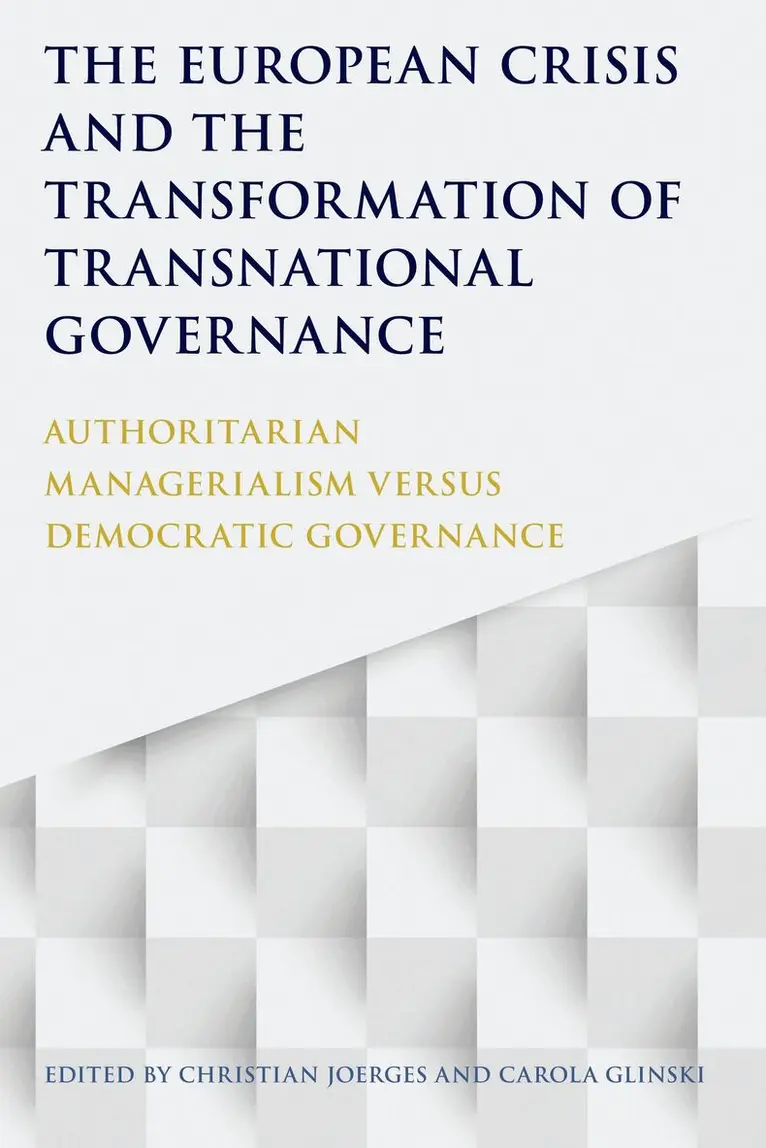
    European Crisis and the Transformation of Transnational Governance

    Authoritarian Managerialism versus Democratic Governance

    AvChristian Joerges,Carola Glinski

    Inbunden, Engelska, 2014

    1 795 kr

    Beställningsvara. Skickas inom 10-15 vardagar. Fri frakt över 249 kr.

    Beskrivning

    The debate on law, governance and constitutionalism beyond the state is confronted with new challenges. In the EU, confidence in democratic transnational governance has been shaken by the authoritarian and unsocial practices of crisis management. The ambition of this book, which builds upon many years of close co-operation between its contributors, is to promote a viable interdisciplinary alternative to these developments. “Conflicts-law constitutionalism” is a concept of transnational governance which derives democratic legitimacy from the supranational control of the external impact of national decision-making, on the one hand, and the co-operative responses to problem interdependencies on the other. The first section of the book contrasts Europe's new modes of economic governance and crisis management with the conditionality of international investments, and reflects upon the communalities and differences between emergency Europe and global exceptionalism. Subsequent sections substantiate the problématique of executive and technocratic rule, explore conflict constellations of prime importance in the fields of environmental and labour law, and discuss the impact and limits of liberalisation strategies. Throughout the book, European and transnational developments are compared and evaluated.

    Produktinformation

    • Utgivningsdatum:2014-11-13
    • Mått:156 x 234 x 15 mm
    • Vikt:816 g
    • Format:Inbunden
    • Språk:Engelska
    • Antal sidor:456
    • Förlag:Bloomsbury Publishing PLC
    • ISBN:9781849466325

    Utforska kategorier

    • Författningsrätt och förvaltningsrätt inom Juridik

    Mer om författaren

    Christian Joerges was Professor of Law and Society at the Hertie School of Governance in Berlin, and Co-Director of the Centre of European Law and Politics at the University of Bremen.Carola Glinski is a Researcher at the Collaborative Research Center 'Transformations of the State', at the University of Bremen.

    Recensioner i media

    At a time when European legal scholars are still wrestling with the theoretical and normative underpinnings of the post-crisis governance architecture, [this book] could not be more necessary.

    Innehållsförteckning

    • Chapter 1Three Transformations of Europe and the Search for a Way Out of its Crisis Christian JoergesChapter 2Compensating for Democracy’s ‘Defects’: The Case of International Investment Law David SchneidermanTwo Comments Global Exceptionalism and the Euro Crisis: Schmittian Challenges to Conflicts-Law Constitutionalism Christian Kreuder-SonnenThe Moment of Schmittian Truth: Conceiving of the State of Exception in the Wake of the Financial Crisis Ming-Sung KuoSection 2: From Social Welfare to Economic Competitiveness through Social Austerity?Chapter 3The Struggle for Union Rights Under the Euro and the Dialectics of Social Integration Florian Rödl & Raphaël CallsenChapter 4Labour Market Governance in Wake of the Crisis: Reflections and Possibilities Kerry RittichSection 3: Political Projects and the Logic of the MarketChapter 5Of Capitalist Nostalgia and Financialisation: Shareholder Primacy in the Court of Justice Harm SchepelChapter 6External Effects and Legal Constraints of the German ‘Energiewende’: A Search for Sound Responses to European Conflict ConstellationsCarola GlinskiChapter 7Re-embedding EU Governance Fields: A Research Agenda Jotte MulderPART II: A Crisis of Europe’s Regulatory Politics: The Turn to Executive FederalismSection 1: Whither the European ‘Regulatory State’?Chapter 8Challenging Executive Dominance in European Democracy Deirdre CurtinChapter 9A Technocracy of Governing: Power Without the State; Power without the Market Michelle EversonChapter 10Deliberative Supranationalism in the Euro Crisis? The European Central Bank and The European Council in Times of Conflict Henning DetersSection 2: Whither ‘Deliberative Supranationalism’?Chapter 11Comitology After Lisbon: What is Left of Comitology as We Have Praised it? Josef FalkeChapter 12Risk Regulation, GMOs, and the Challenges to Deliberation in EU Governance: Politicisation and Scientification as Co-Producing Trends Maria WeimerPart III: Deliberative Qualities of Conflict Resolution Beyond the EUChapter 13Conflict Mediation Through International Agencies: The Case of the UN Specialised Agency for Informationand Communications Technologies Olga BaturaChapter 14Professionalisation Contra Technocracy: Global Governance, Reflective Practice, and the constitutionalisation of the Transnational Sphere Martin HerbergPart IV: Contextualising Conflicts-Law ConstitutionalismChapter 15Experimenting Constitutionalism in the EU: Co-ordinating Legal Difference Through Mutual Recognition, Mutual Law and Mutual Learning Joseph CorkinChapter 16‘Conflicts Law as Europe’s Constitutional Form’ … and the Conflict of Social Norms as its Infrastructure Karl-Heinz LadeurEpilogueHow to Make it More Complicated Again? The European Constitutional Evolution between Kantian and Managerial Mindset Hauke Brunkhorst