• Fri frakt över 249 kr
  • •
  • Snabba leveranser
  • •
  • Billiga böcker
Kundservice

Du är på sajten för privatpersoner.

Företag, bibliotek eller offentlig verksamhet?

Du handlar på classic.bokus.com, där alla dina funktioner finns intakta.
Till classic.bokus.com
Bokus logotyp. Gå till startsidan.
  • Erbjudanden
  • Nyheter
  • Student
  • Topplistor
  • Barn & ungdom
  • Bokus Play
  • E-böcker
  • Pocketböcker
  • Spel & pussel

10% rabatt på allt med kod: NYSTART10 →

Sidfot

Mina sidor

    Hjälp

    • Kundservice
    • Vanliga frågor och svar
    • Frakt och leverans
    • Retur vid ångerrätt
    • Reklamera vara
    • Betalning
    • Köpvillkor
    • Allmänna villkor
    • Information om webbplatsens tillgänglighet

    Om Bokus

    • Om oss
    • Pressrum
    • För studenter
    • För företag
    • För bibliotek och offentlig verksamhet
    • För leverantörer
    • Hållbarhet

    Populärt

    • Aktuella erbjudanden
    • Presentkort
    • Studentlitteratur
    • Nya böcker
    • Topplistor
    • Signerade böcker
    • Engelska böcker

    Inspiration

    • Boktips
    • BookTok
    • Populära bokserier
    • Barnbokskaraktärer
    • Populära författare
    Logotyp för Bokus
    Följ oss på Facebook (extern länk)Följ oss på Instagram (extern länk)Följ oss på YouTube (extern länk)Följ oss på TikTok (extern länk)
    bokus @ CookiesAnpassa cookiesIntegritetspolicyKöpvillkor
    Till Citymail hemsida (extern länk)Till Budbee hemsida (extern länk)Till Postnord hemsida (extern länk)Till Schenker hemsida (extern länk)Till Early Bird hemsida (extern länk)Till Walleys hemsida (extern länk)
    1. Ekonomi och Ledarskap
    2. Nationalekonomi
    3. Miljöekonomi

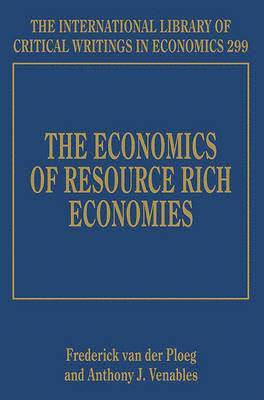
    Economics of Resource Rich Economies

    AvRick van der Ploeg,Anthony J. Venables

    Inbunden, Engelska, 2015

    Del 299 i serien The International Library of Critical Writings in Economics series

    6 925 kr

    Beställningsvara. Skickas inom 5-8 vardagar. Fri frakt över 249 kr.

    Beskrivning

    The Economics of Resource Rich Economies discusses the problems and benefits of economies rich in natural resources. After a brief look at some historical aspects, it explores the concept known as the 'Dutch Disease' and offers empirical and theoretical insights into the effects of rich natural resources on economic growth. It investigates the political economy of natural resources, issues of conflict and natural resources and a variety of policies and strategies for managing the revenue from natural resources.

    Produktinformation

    • Utgivningsdatum:2015-02-27
    • Mått:169 x 244 x undefined mm
    • Format:Inbunden
    • Språk:Engelska
    • Serie:The International Library of Critical Writings in Economics series
    • Antal sidor:840
    • Förlag:Edward Elgar Publishing Ltd
    • ISBN:9781849803915

    Utforska kategorier

    • Miljöekonomi inom Ekonomi och Ledarskap

    Mer om författaren

    Edited by Frederick van der Ploeg, Research Director and Anthony J. Venables, Director, Oxford Centre for the Analysis of Resource Rich Economies, University of Oxford, UK

    Innehållsförteckning

    • Contents:AcknowledgementsIntroductionFrederick van der Ploeg and Anthony J. VenablesPART INATURAL RESOURCES IN HISTORY 1. Paul A. David and Gavin Wright (1997), ‘Increasing Returns and the Genesis of American Resource Abundance’, Industrial and Corporate Change, 6 (2), March, 203–452. Gary D. Libecap (1978), ‘Economic Variables and the Development of the Law: The Case of Western Mineral Rights’, Journal of Economic History, 38 (2), June, 338–623. Christopher Blattman, Jason Hwang and Jeffrey G. Williamson (2007), ‘Winners and Losers in the Commodity Lottery: The Impact of Terms of Trade Growth and Volatility in the Periphery 1870–1939’, Journal of Development Economics, 82 (1), January, 156–79PART IIDUTCH DISEASE 4. W. Max Corden and J. Peter Neary (1982), ‘Booming Sector and De-Industrialisation in a Small Open Economy’, Economic Journal, 92 (368), December, 825–485. Peter Neary (1988), ‘Determinants of the Equilibrium Real Exchange Rate’, American Economic Review, 78 (1), March, 210–156. R.K. Eastwood and A.J. Venables (1982), ‘The Macroeconomic Implications of a Resource Discovery in an Open Economy’, Economic Journal, 92 (366), June, 285–997. Sweder van Wijnbergen (1984), ‘The “Dutch Disease”: A Disease After All?’, Economic Journal, 94 (373), March, 41–55 8. Frederick van der Ploeg and Anthony J. Venables (2013), ‘Absorbing a Windfall of Foreign Exchange: Dutch Disease Dynamics’, Journal of Development Economics, 103, July, 229–43PART IIIRESOURCES AND ECONOMIC GROWTH 9.Jeffrey D. Sachs and Andrew M. Warner (2001), ‘The Curse of Natural Resources’, European Economic Review, 45 (4–6), May, 827–3810. Paul Collier and Benedikt Goderis (2012), ’Commodity Prices and Growth: An Empirical Investigation’, European Economic Review, 56 (6), August, 1241–6011. Halvor Mehlum, Karl Moene and Ragnar Torvik (2006), ‘Institutions and the Resource Curse’, Economic Journal, 116 (508), January, 1–2012. Anne D. Boschini, Jan Pettersson and Jesper Roine (2007), ‘Resource Curse or Not: A Question of Appropriability’, Scandinavian Journal of Economics, 109 (3), September, 593–61713. Frederick van der Ploeg and Steven Poelhekke (2009), ‘Volatility and the Natural Resource Curse’, Oxford Economic Papers, 61 (4), October, 727–6014. Benedikt Goderis and Samuel W. Malone (2011), ‘Natural Resource Booms and Inequality: Theory and Evidence’, Scandinavian Journal of Economics, 113 (2), June, 388–417 ‘Erratum’, in Scandinavian Journal of Economics, 113 (3), September, 75415. Pedro C. Vicente (2010), ‘Does Oil Corrupt? Evidence from a Natural Experiment in West Africa’, Journal of Development Economics, 92 (1), May, 28–3816. Fernando M. Aragón and Juan Pablo Rud (2013), ‘Natural Resources and Local Communities: Evidence from a Peruvian Gold Mine’, American Economic Journal: Economic Policy, 5 (2), May, 1–25PART IVPOLITICAL ECONOMY OF NATURAL RESOURCES 17. Jørgen Juel Andersen and Silje Aslaksen (2008), ‘Constitutions and the Resource Curse’, Journal of Development Economics, 87 (2), October, 227–46 18. Jean-Marie Baland and Patrick Francois (2000), ‘Rent-seeking and Resource Booms’, Journal of Development Economics, 61 (2), April, 527–4219. Erwin H. Bulte, Richard Damania and Robert T. Deacon (2005), ‘Resource Intensity, Institutions, and Development’, World Development, 33 (7), July, 1029–44 20. Roland Hodler (2006), ‘The Curse of Natural Resources in Fractionalized Countries’, European Economic Review, 50 (6), August, 1367–8621. James A. Robinson, Ragnar Torvik and Thierry Verdier (2006), ‘Political Foundations of the Resource Curse’, Journal of Development Economics, 79 (2), April, 447–6822. Aaron Tornell and Philip R. Lane (1999), ‘The Voracity Effect’, American Economic Review, 89 (1), March, 22–4623. Ragnar Torvik (2002), ‘Natural Resources, Rent Seeking and Welfare’, Journal of Development Economics, 67 (2), April, 455–7024. Francesco Caselli and Tom Cunningham (2009), ‘Leader Behaviour and the Natural Resource Curse’, Oxford Economic Papers, 61 (4), October, 628–50PART VCONFLICT AND NATURAL RESOURCES 25. Paul Collier and Anke Hoeffler (2004), ‘Greed and Grievance in Civil War’, Oxford Economic Papers, 56 (4), October, 563–9526. James D. Fearon (2005), ‘Primary Commodity Exports and Civil War’, Journal of Conflict Resolution, 49 (4), August, 483–50727. Joshua D. Angrist and Adriana D. Kugler (2008), ‘Rural Windfall or a New Resource Curse? Coca, Income, and Civil Conflict in Colombia’, Review of Economics and Statistics, XC (2), May, 191–21528. Ernesto Dal Bó and Pedro Dal Bó (2011), ‘Workers, Warriors, and Criminals: Social Conflict in General Equilibrium’, Journal of the European Economic Association, 9 (4), August, 646–7729. Oeindrila Dube and Juan F. Vargas (2013), ‘Commodity Price Shocks and Civil Conflict: Evidence from Colombia’, Review of Economic Studies, 80 (4), October, 1384–42130. Frederick van der Ploeg and Dominic Rohner (2012), ‘War and Natural Resource Exploitation’, European Economic Review, 56 (8), November, 1714–29PART VIRESOURCE REVENUE MANAGEMENT 31. John M. Hartwick (1977), ‘Intergenerational Equity and the Investing of Rents from Exhaustible Resources’, American Economic Review, 67 (5), December, 972–432. Avinash Dixit, Peter Hammond and Michael Hoel (1980), ‘On Hartwick’s Rule for Regular Maximin Paths of Capital Accumulation and Resource Depletion’, Review of Economic Studies, XLVII (3), April, 551–633. Kenneth J. Arrow, Partha Dasgupta and Karl-Göran Mäler (2003), ‘The Genuine Savings Criterion and the Value of Population’, Economic Theory, 21 (2–3), March, 217–2534. J.A Sefton and M.R. Weale (2006), ‘The Concept of Income in a General Equilibrium’, Review of Economic Studies, 73 (1), January, 219–4935. Frederick van der Ploeg and Anthony J. Venables (2011), ‘Harnessing Windfall Revenues: Optimal Policies for Resource-Rich Developing Economies‘, Economic Journal, 121 (551), March, 1–3036. Ton S. van den Bremer and Frederick van der Ploeg (2013), ‘Managing and Harnessing Volatile Oil Windfalls’, IMF Economic Review, 61 (1), 130–6737. Frederick van der Ploeg (2010), ‘Voracious Transformation of a Common Natural Resource into Productive Capital’, International Economic Review, 51 (2), May, 365–81 Index