• Fri frakt över 249 kr
  • •
  • Snabba leveranser
  • •
  • Billiga böcker
Kundservice

Du är på sajten för privatpersoner.

Företag, bibliotek eller offentlig verksamhet?

Du handlar på classic.bokus.com, där alla dina funktioner finns intakta.
Till classic.bokus.com
Bokus logotyp. Gå till startsidan.
  • Erbjudanden
  • Nyheter
  • Student
  • Topplistor
  • Barn & ungdom
  • Bokus Play
  • E-böcker
  • Pocketböcker
  • Spel & pussel

10% rabatt på allt med kod NYSTART10 →

Sidfot

Mina sidor

    Hjälp

    • Kundservice
    • Vanliga frågor och svar
    • Frakt och leverans
    • Retur vid ångerrätt
    • Reklamera vara
    • Betalning
    • Köpvillkor
    • Allmänna villkor
    • Information om webbplatsens tillgänglighet

    Om Bokus

    • Om oss
    • Pressrum
    • För studenter
    • För företag
    • För bibliotek och offentlig verksamhet
    • För leverantörer
    • Hållbarhet

    Populärt

    • Aktuella erbjudanden
    • Presentkort
    • Studentlitteratur
    • Nya böcker
    • Topplistor
    • Signerade böcker
    • Engelska böcker

    Inspiration

    • Boktips
    • BookTok
    • Populära bokserier
    • Barnbokskaraktärer
    • Populära författare
    Logotyp för Bokus
    Följ oss på Facebook (extern länk)Följ oss på Instagram (extern länk)Följ oss på YouTube (extern länk)Följ oss på TikTok (extern länk)
    bokus @ CookiesAnpassa cookiesIntegritetspolicyKöpvillkor
    Till Citymail hemsida (extern länk)Till Budbee hemsida (extern länk)Till Postnord hemsida (extern länk)Till Schenker hemsida (extern länk)Till Early Bird hemsida (extern länk)Till Walleys hemsida (extern länk)
    1. Skönlitteratur
    2. Poesi

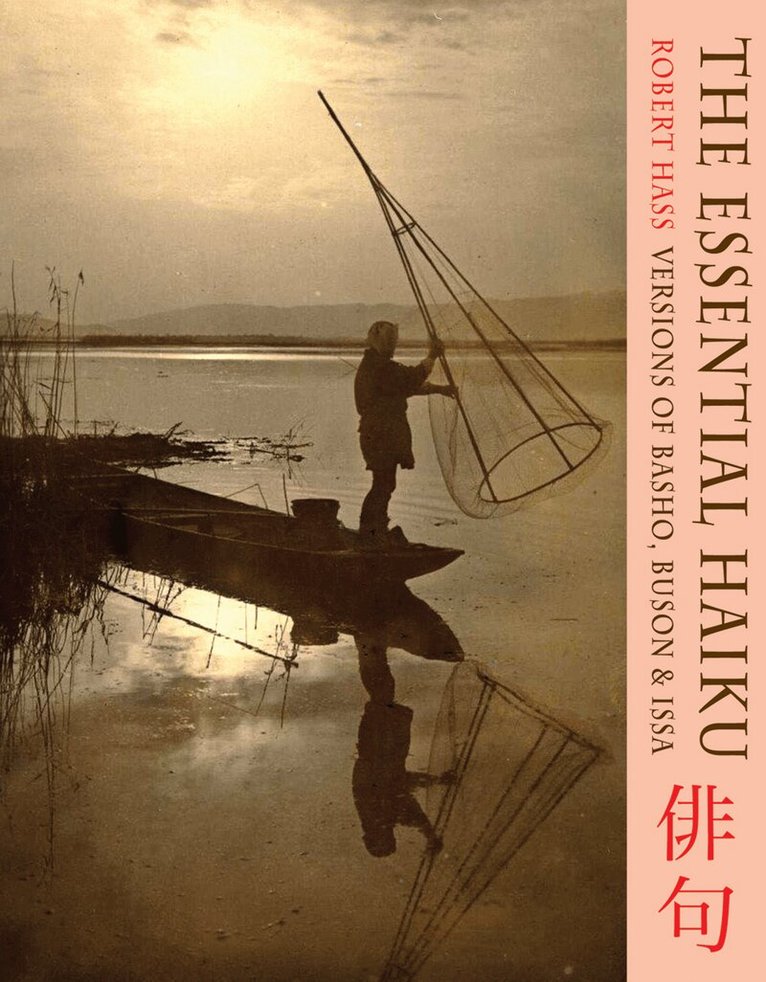
    Essential Haiku

    Versions of Basho, Buson and Issa

    AvRobert Hass

    Häftad, Engelska, 2013

    244 kr

    Skickas . Fri frakt över 249 kr.

    Beskrivning

    The Essential Haiku brings together Robert Hass's beautifully fresh translations of the three great masters of the Japanese haiku tradition: Matsuo Basho (1644-94), the ascetic and seeker, and the haiku poet most familiar to English readers; Yosa Buson (1716-83), the artist, a painter renowned for his visually expressive poetry; and Kobayashi Issa (1763-1827), the humanist, whose haiku are known for their poignant or ironic wit. Each haiku master's section of the book is prefaced with an eloquent and informative introduction by Robert Hass, followed by a selection of over 100 poems and then by other poetry or prose by the poet, including journals and nature writing. Opening with Hass's superb introductory essay on haiku, the book concludes with a section devoted to Basho's writings and conversations on poetry. The seventeen-syllable haiku form is rooted in a Japanese tradition of close observation of nature, of making poetry from subtle suggestion. Each haiku is a meditation, a centring, a crystalline moment of realisation. Reading them has a way of bringing about calm and peace within the reader. The symbolism of the seasons and the Japanese habit of mind blend together in these poems to create an alchemy of reflection that is unsurpassed in literature. Infused by its great practitioners with the spirit of Zen Buddhism, the haiku served as an example of the power of direct observation to the first generation of American modernist poets like Ezra Pound and William Carlos Williams as well as an example of spontaneity and Zen alertness to the new poets of post-war America and Britain. Universal in its appeal, Robert Hass's The Essential Haiku is the definitive introduction to haiku and its greatest poets, and has been a bestseller in America for twenty years. 'I know that for years I didn't see how deeply personal these poems were or, to say it another way, how much they have the flavour - Basho might have said "the scent" - of particular human life, because I had been told and wanted to believe that haiku were never subjective. I think it was D.H. Lawrence who said the soul can get to heaven in one leap but that, if it does, it leaves a demon in its place. Better to sink down through the level of these poems - their attention to the year, their ideas about it, the particular human consciousness the poems reflect, Basho's profound loneliness and sense of suffering, Buson's evenness of temper, his love for the materials of art and for the colour and shape of things, Issa's pathos and comedy and anger' - Robert Hass.

    Produktinformation

    • Utgivningsdatum:2013-05-30
    • Mått:156 x 234 x 22 mm
    • Vikt:486 g
    • Format:Häftad
    • Språk:Engelska
    • Antal sidor:320
    • Förlag:Bloodaxe Books Ltd
    • ISBN:9781852249724
    • Översättare:Robert Hass

    Utforska kategorier

    • Poesi inom Skönlitteratur

    Mer om författaren

    Robert Hass was born in 1941 in San Francisco. He served as US Poet Laureate in 1995-97. His many awards include a Pulitzer Prize and a National Book Award for Time and Materials (2007), and the National Book Critics Circle Award for Sun Under Wood (1996). His first collection Field Guide was selected by Stanley Kunitz for the Yale Younger Poets Series in 1973. His latest book of poetry is The Apple Trees at Olema: New & Selected Poems (Ecco, USA, 2010; Bloodaxe Books, UK, 2011). Hass also worked with Czeslaw Milosz to translate a dozen books of Milosz's poetry, including Treatise on Poetry and, most recently, A Second Space. His translations of the Japanese haiku masters have been collected in The Essential Haiku: Versions of Basho, Buson, and Issa. His books of essays include Twentieth Century Pleasures: Prose on Poetry (1984) and Now and Then: The Poet's Choice Columns (2007). He lives in northern California with his wife, the poet Brenda Hillman, and teaches at the University of California at Berkeley.

    Innehållsförteckning

    • 9 IntroductionI. BASHO 21 Matsuo Basho27 Poems65 ‘The Hut of the Phantom Dwelling’ (tr. Burton Watson)69 The Saga Diary (prose tr. Etsuko Terasaki)II. BUSON85 Yosa Buson91 Poems129 Long Poems137 from New Flower Picking (tr. Yuki Sawa & Edith M. Shiffert)III. ISSA145 Kobayashi Issa149 Poems185 from Journal of My Father’s Last Days (tr. Robert N. Huey)205 from A Year of My Life (prose tr. Nobuyuki Yausa)IV. BASHO ON POETRY219 Learn from the Pine225 from Kyorai’s Conversations with Basho (tr.Jonathan Keene)237 Notes292 A Note on Haikai, Hokku, and Haiku301 A Note on Translation311 Further Reading316 Acknowledgements317 Copyright Acknowledgments320 Biographical note