• Fri frakt över 249 kr
  • •
  • Snabba leveranser
  • •
  • Billiga böcker
Kundservice

Du är på sajten för privatpersoner.

Företag, bibliotek eller offentlig verksamhet?

Du handlar på classic.bokus.com, där alla dina funktioner finns intakta.
Till classic.bokus.com
Bokus logotyp. Gå till startsidan.
  • Erbjudanden
  • Nyheter
  • Student
  • Topplistor
  • Barn & ungdom
  • Bokus Play
  • E-böcker
  • Pocketböcker
  • Spel & pussel

10% rabatt på allt med kod: NYSTART10 →

Sidfot

Mina sidor

    Hjälp

    • Kundservice
    • Vanliga frågor och svar
    • Frakt och leverans
    • Retur vid ångerrätt
    • Reklamera vara
    • Betalning
    • Köpvillkor
    • Allmänna villkor
    • Information om webbplatsens tillgänglighet

    Om Bokus

    • Om oss
    • Pressrum
    • För studenter
    • För företag
    • För bibliotek och offentlig verksamhet
    • För leverantörer
    • Hållbarhet

    Populärt

    • Aktuella erbjudanden
    • Presentkort
    • Studentlitteratur
    • Nya böcker
    • Topplistor
    • Signerade böcker
    • Engelska böcker

    Inspiration

    • Boktips
    • BookTok
    • Populära bokserier
    • Barnbokskaraktärer
    • Populära författare
    Logotyp för Bokus
    Följ oss på Facebook (extern länk)Följ oss på Instagram (extern länk)Följ oss på YouTube (extern länk)Följ oss på TikTok (extern länk)
    bokus @ CookiesAnpassa cookiesIntegritetspolicyKöpvillkor
    Till Citymail hemsida (extern länk)Till Budbee hemsida (extern länk)Till Postnord hemsida (extern länk)Till Schenker hemsida (extern länk)Till Early Bird hemsida (extern länk)Till Walleys hemsida (extern länk)
    1. Ekonomi och Ledarskap
    2. Nationalekonomi
    3. Mikroekonomi

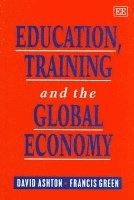
    Education, Training and the Global Economy

    AvDavid Ashton,Francis Green

    Häftad, Engelska, 1997

    536 kr

    Beställningsvara. Skickas inom 5-8 vardagar. Fri frakt över 249 kr.

    Beskrivning

    Across the industrialized and developing world, education and training are regarded as paramount to economic growth, but this view is rarely questioned or analysed. This major book is an in-depth multi-disciplinary investigation of the link between modern economies and education and training systems.Education, Training and the Global Economy takes issue with the notion that simply more or better education and training will inevitably bring economic success. The authors examine theoretical approaches to education and training before surveying empirical data and our knowledge of current skills trends in the global economy. The institutional and historical determinants of routes to low or high skill formation in industrialized economies are thoroughly considered. Particular attention is paid to the new routes to skill formation found in the dynamic Pacific Rim economies.This book will be welcomed by researchers, policymakers and students concerned with training, education and labour economics.

    Produktinformation

    • Utgivningsdatum:1997-03-20
    • Mått:156 x 234 x undefined mm
    • Format:Häftad
    • Språk:Engelska
    • Förlag:Edward Elgar Publishing Ltd
    • ISBN:9781852789732

    Utforska kategorier

    • Mikroekonomi inom Ekonomi och Ledarskap
    • Pedagogik inom Psykologi och pedagogik

    Mer om författaren

    David Ashton, formerly of Cardiff University and Francis Green, Institute of Education, London, UK

    Recensioner i media

    'This is a very important book. It debunks the "Say's Law" of education which is so popular now among free market enthusiasts: that the supply of educated people automatically creates the demand necessary to employ it. The authors show that for the educated to excel requires a carefully cultivated socio-economic and political environment.'

    Innehållsförteckning

    • Contents: 1. Introduction and Overview: Capitalism and Skill Formation 2. Education, Training and Industrialized Economies 3. Education, Training and Economic Performance: the Empirical Evidence 4. Global Economic Transformation and Skill Trends 5. A Theory of Skill Formation Systems 6. The Low-Skills Route 7. The High-Skills Routes 8. Conclusion: A Framework for Policy Analysis Bibliography Index