• Fri frakt över 249 kr
  • •
  • Snabba leveranser
  • •
  • Billiga böcker
Kundservice

Du är på sajten för privatpersoner.

Företag, bibliotek eller offentlig verksamhet?

Du handlar på classic.bokus.com, där alla dina funktioner finns intakta.
Till classic.bokus.com
Bokus logotyp. Gå till startsidan.
  • Erbjudanden
  • Student
  • Topplistor
  • Barn & ungdom
  • Bokus Play
  • E-böcker
  • Ljudböcker
  • Pocketböcker
  • Spel & pussel

10% rabatt på allt med kod NYSTART10 →

Sidfot

Mina sidor

    Hjälp

    • Kundservice
    • Vanliga frågor och svar
    • Frakt och leverans
    • Retur vid ångerrätt
    • Reklamera vara
    • Betalning
    • Köpvillkor
    • Allmänna villkor
    • Information om webbplatsens tillgänglighet

    Om Bokus

    • Om oss
    • Pressrum
    • För studenter
    • För företag
    • För bibliotek och offentlig verksamhet
    • För leverantörer
    • Hållbarhet

    Populärt

    • Aktuella erbjudanden
    • Presentkort
    • Studentlitteratur
    • Nya böcker
    • Topplistor
    • Signerade böcker
    • Engelska böcker

    Inspiration

    • Boktips
    • BookTok
    • Populära bokserier
    • Barnbokskaraktärer
    • Populära författare
    Logotyp för Bokus
    Följ oss på Facebook (extern länk)Följ oss på Instagram (extern länk)Följ oss på YouTube (extern länk)Följ oss på TikTok (extern länk)
    bokus @ CookiesAnpassa cookiesIntegritetspolicyKöpvillkor
    Till Citymail hemsida (extern länk)Till Budbee hemsida (extern länk)Till Postnord hemsida (extern länk)Till Schenker hemsida (extern länk)Till Early Bird hemsida (extern länk)Till Walleys hemsida (extern länk)
    1. Historia och arkeologi
    2. Historia
    3. Historia: särskilda händelser och ämnen
    4. Kolonialism och imperialism

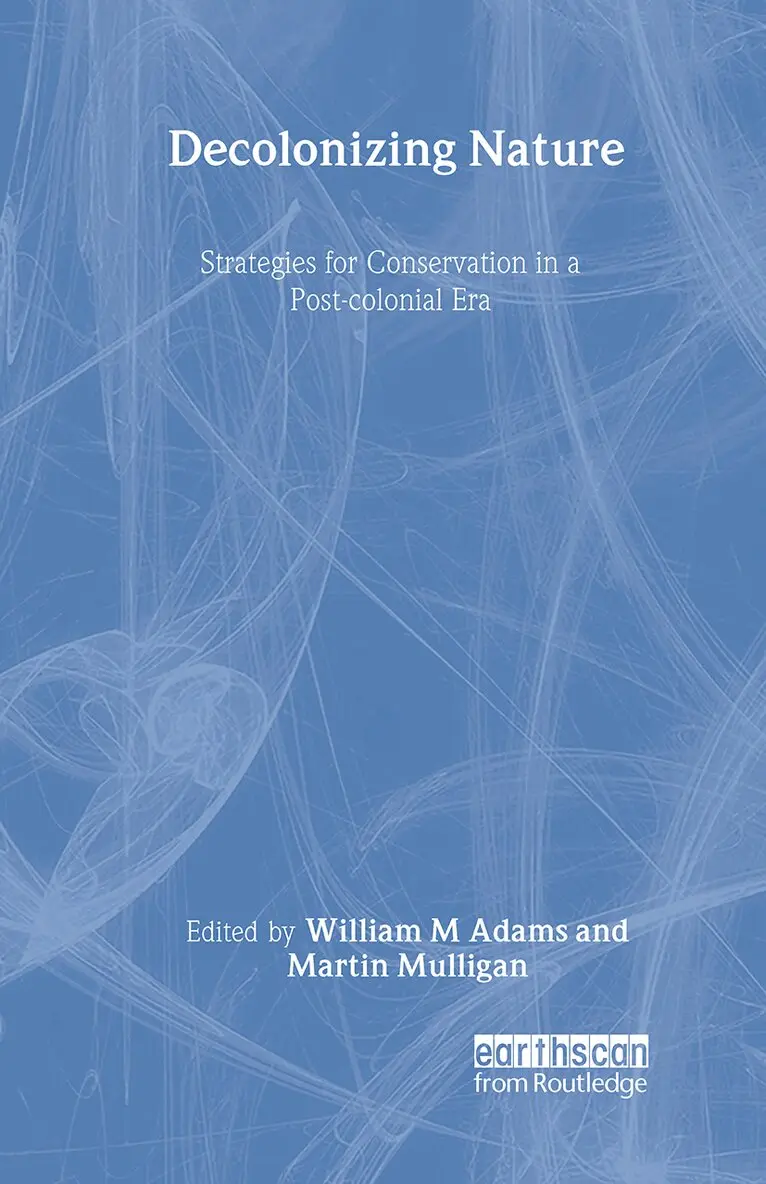
    Decolonizing Nature

    Strategies for Conservation in a Post-colonial Era

    AvWilliam Adams,Martin Mulligan

    Inbunden, Engelska, 2002

    2 498 kr

    Beställningsvara. Skickas inom 5-8 vardagar. Fri frakt över 249 kr.

    Fler format och utgåvor

    Häftad

    717 kr

    Beskrivning

    British imperialism was almost unparalleled in its historical and geographical reach, leaving a legacy of entrenched social transformation in nations and cultures in every part of the globe. Colonial annexation and government were based on an all-encompassing system that integrated and controlled political, economic, social and ethnic relations, and required a similar annexation and control of natural resources and nature itself. Colonial ideologies were expressed not only in the progressive exploitation of nature but also in the emerging discourses of conservation.At the start of the 21st century, the conservation of nature is of undiminished importance in post-colonial societies, yet the legacy of colonial thinking endures. What should conservation look like today, and what (indeed, whose) ideas should it be based upon?Decolonizing Nature explores the influence of the colonial legacy on contemporary conservation and on ideas about the relationships between people, polities and nature in countries and cultures that were once part of the British Empire. It locates the historical development of the theory and practice of conservation - at both the periphery and the centre - firmly within the context of this legacy, and considers its significance today. It highlights the present and future challenges to conservationists of contemporary global neo-colonialismThe contributors to this volume include both academics and conservation practitioners. They provide wide-ranging and insightful perspectives on the need for, and practical ways to achieve new forms of informed ethical engagement between people and nature.

    Produktinformation

    • Utgivningsdatum:2002-11-01
    • Mått:156 x 234 x undefined mm
    • Vikt:640 g
    • Format:Inbunden
    • Språk:Engelska
    • Antal sidor:320
    • Förlag:Taylor & Francis Ltd
    • ISBN:9781853837500

    Utforska kategorier

    • Kolonialism och imperialism inom Historia och arkeologi
    • Nationell befrielse och självständighet inom Historia och arkeologi

    Mer om författaren

    Bill Adams is reader in Conservation and Development at the University of Cambridge and author of Future Nature: a vision for conservation and, Green Development: environment and sustainability in the Third World. Martin Mulligan is Senior Lecturer at the University of Western Sydney and co-author (with Stuart Hill) of Ecological Pioneers: a social history of Australian ecological thought and action as well as general editor of the journal Ecopolitics: thought & action.

    Recensioner i media

    'Prepare to have your comfortable assumptions challenged.' Bulletin of the British Ecological Society'This is an important book which argues conservationists to understand and move beyond the colonial baggage still influencing their work.' ECOS 'This book provides readers with a greater perspective on the history and significance of worldwide conservation policies that guide world leaders today when issues of sustainability are before them' Marilyn K. Alaimo, garden writer and library volunteer, Chicago Botanic Garden. Current Books on Gardening and Botany, June 2004. 'Decolonizing Nature presents current and future directions for conservation planning in the developed and developing worlds.' Brian H. King, University of Colorado, Boulder. Geographical Reviews.

    Innehållsförteckning

    • Introduction * Nature and the Colonial Mind * Decolonizing Relationships with Nature * The 'Wild', the Market, and the Native: Indigenous People Face New Forms of Global Colonization * Sharing South African National Parks: Community Land and Conservation in a Democratic South Africa * Devolving the Expropriation of Nature: The 'Devolution' of Wildlife Management in Southern Africa * Decolonizing Highland Conservation * Responding to Place in a Post-colonial Era: Reflections on the Australian Experience * When Nature Won't Stay Still: Conservation, Equilibrium and Control * Beyond Preservation: The Challenge of Ecological Restoration * Feet to the Ground in Storied Landscapes: Disrupting the Colonial Legacy with a Poetic Politics * Conclusions * Index