• Fri frakt över 249 kr
  • •
  • Snabba leveranser
  • •
  • Billiga böcker
Kundservice

Du är på sajten för privatpersoner.

Företag, bibliotek eller offentlig verksamhet?

Du handlar på classic.bokus.com, där alla dina funktioner finns intakta.
Till classic.bokus.com
Bokus logotyp. Gå till startsidan.
  • Erbjudanden
  • Student
  • Topplistor
  • Barn & ungdom
  • Bokus Play
  • E-böcker
  • Ljudböcker
  • Pocketböcker
  • Spel och pussel

5% studentrabatt – använd koden KURSBOK27 →

Sidfot

Mina sidor

    Hjälp

    • Kundservice
    • Vanliga frågor och svar
    • Frakt och leverans
    • Retur vid ångerrätt
    • Reklamera vara
    • Betalning
    • Köpvillkor
    • Allmänna villkor
    • Information om webbplatsens tillgänglighet

    Om Bokus

    • Om oss
    • Pressrum
    • För studenter
    • För företag
    • För bibliotek och offentlig verksamhet
    • För leverantörer
    • Hållbarhet

    Populärt

    • Aktuella erbjudanden
    • Presentkort
    • Studentlitteratur
    • Nya böcker
    • Topplistor
    • Signerade böcker
    • Engelska böcker

    Inspiration

    • Boktips
    • BookTok
    • Barnbokskaraktärer
    • Populära författare
    Logotyp för Bokus
    Följ oss på Facebook (extern länk)Följ oss på Instagram (extern länk)Följ oss på YouTube (extern länk)Följ oss på TikTok (extern länk)
    bokus @ CookiesAnpassa cookiesIntegritetspolicyKöpvillkor
    Till Citymail hemsida (extern länk)Till Budbee hemsida (extern länk)Till Postnord hemsida (extern länk)Till Schenker hemsida (extern länk)Till Early Bird hemsida (extern länk)Till Walleys hemsida (extern länk)
    1. Naturvetenskap och teknik
    2. Teknik och industri
    3. Elektronik och kommunikationer

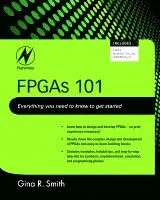
    FPGAs 101

    Everything you need to know to get started

    AvGina Smith

    Häftad, Engelska, 2010

    467 kr

    Beställningsvara. Skickas inom 10-15 vardagar. Fri frakt över 249 kr.

    Fler format och utgåvor

    E-bok

    474 kr

    Beskrivning

    FPGAs (Field-Programmable Gate Arrays) can be found in applications such as smart phones, mp3 players, medical imaging devices, and for aerospace and defense technology. FPGAs consist of logic blocks and programmable interconnects. This allows an engineer to start with a blank slate and program the FPGA for a specific task, for instance, digital signal processing, or a specific device, for example, a software-defined radio. Due to the short time to market and ability to reprogram to fix bugs without having to respin FPGAs are in increasingly high demand. This book is for the engineer that has not yet had any experience with this electrifying and growing field. The complex issue of FPGA design is broken down into four distinct phases - Design / Synthesis / Simulation / Place & Route. Numerous step-by-step examples along with source code accompany the discussion. A brief primer of one of the popular FPGA and hardware languages, VHDL, is incorporated for a simple yet comprehensive learning tool. While a general technology background is assumed, no direct hardware development understanding is needed. Also, included are details on tool-set up, verifaction techniques, and test benches. Reference material consists of a quick reference guide, reserved words, and common VHDL/FPGA terms.

    • Learn how to design and develop FPGAs -- no prior experience necessary!
    • Breaks down the complex design and development of FPGAs into easy-to-learn building blocks
    • Contains examples, helpful tips, and step-by-step tutorials for synthesis, implementation, simulation, and programming phases

    Produktinformation

    • Utgivningsdatum:2010-03-25
    • Mått:191 x 235 x 24 mm
    • Vikt:430 g
    • Format:Häftad
    • Språk:Engelska
    • Antal sidor:245
    • Förlag:Elsevier Science
    • ISBN:9781856177061

    Utforska kategorier

    • Elektronik och kommunikationer inom Naturvetenskap och teknik
    • Systemvetenskap och AI inom Data och IT

    Recensioner i media

    "FPGAs 101 provides somebody who has very little exposure to FPGAs or VHDL, but some familiarity with digital design, with an introduction to FPGA design. The first chapter, ‘Getting Started,’ provides a beginner’s overview of programming, including how to name variables correctly, how to leave good comments, and how to find a good text editor. Later in the chapter, Smith begins an overview of the hardware description language, which extends until the end of Chapter 2. These chapters are written for those with no VHDL experience and are intended to provide a learn-by-example tutorial for implementing simple digital designs using VHDL, such as combinational logic circuits, flops, and counters." --reviewed on the Ethical Hacker website

    Innehållsförteckning

    • Getting Started; Simple Designs; FPGA Development Phases; Design Phase; Simulation; Synthesis; Implementation; Programming