Du är på sajten för privatpersoner.
243 kr
Skickas . Fri frakt över 249 kr.
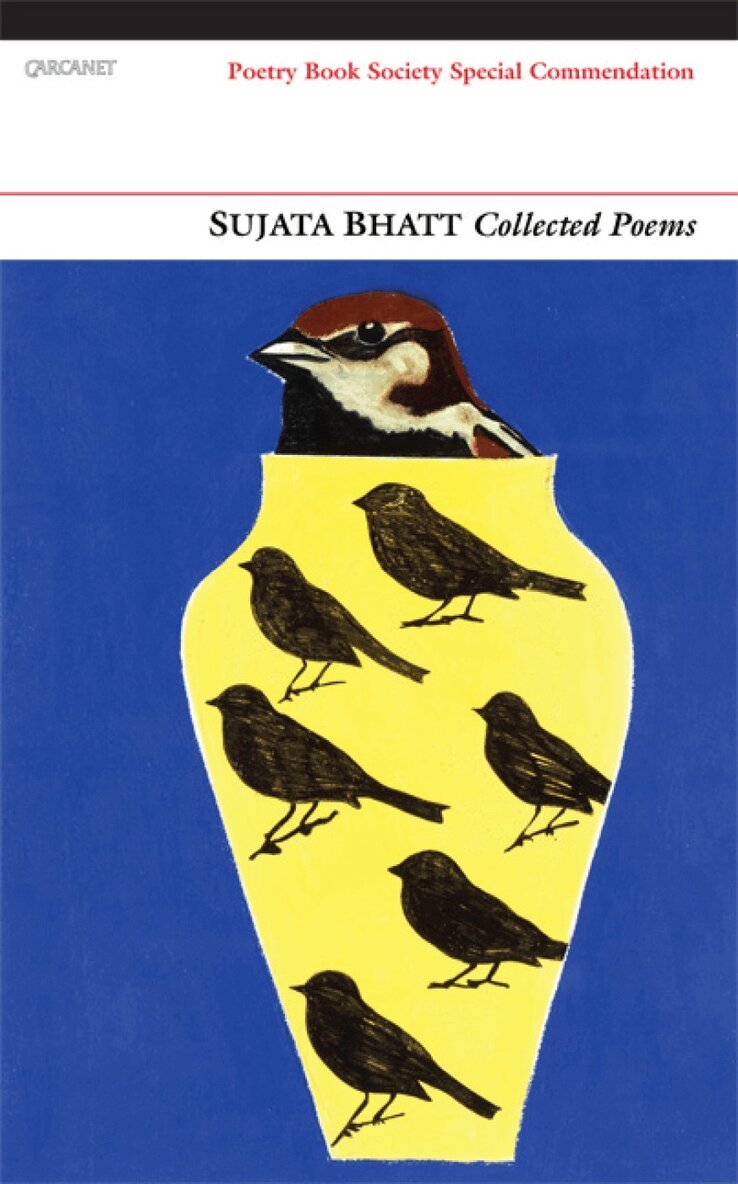
Sujata Bhatt was born in Ahmedabad, India. She grew up in Pune (India) and in the United States. She received her MFA from the Writers’ Workshop at the University of Iowa. To date, she has published eight collections of poetry with Carcanet Press. She received the Commonwealth Poetry Prize (Asia) and the Alice Hunt Bartlett Award for her first collection, Brunizem (1988). Subsequent collections include Monkey Shadows (PBS Recommendation, 1991), The Stinking Rose (shortlisted for the Forward Poetry Prize, 1995), Point No Point (1997), Augatora (PBS Recommendation, 2000), A Colour for Solitude (2002), Pure Lizard (shortlisted for the Forward Poetry Prize, 2008), and Collected Poems (PBS Special Commendation, 2013). She received a Cholmondeley Award in 1991, the Italian Tratti Poetry Prize in 2000, and the German Literature Award, Das neue Buch, in 2008. In 2014 she was the first recipient of the Mexican International Poetry Prize, Premio Internacional de Poesía Nuevo Siglo de Oro 1914–2014. She has translated poetry from Gujarati and German into English. She has been a Lansdowne Visiting Writer at the University of Victoria, in British Columbia, a Visiting Fellow at Dickinson College in Pennsylvania, and more recently was Poet-in-Residence at the Poetry Archive in London and at the Heinrich Böll Cottage on Achill Island, Ireland. Her work has been widely anthologised, broadcast on radio and television, and has been translated into more than twenty languages. Currently, she divides her time between Germany and elsewhere.
'Here is a chance to see Sujata Bhatt's favourite themes strengthened by re-gathering. A common theme is language, the very stuff of poetry, given special insight by her travels and her multilingual experience. In India, she says, it is 'a sin to be rude to a book'; 'The Stare' considers two babies, human and monkey, gazing at each other curiously, one with language, the other with' who knows? Elsewhere she considers the loss of her mother tongue, 'dead' in her mouth but returning to her in dreams. A broad-minded, humane, imaginative book.'Gillian Clarke, National Poet of Wales