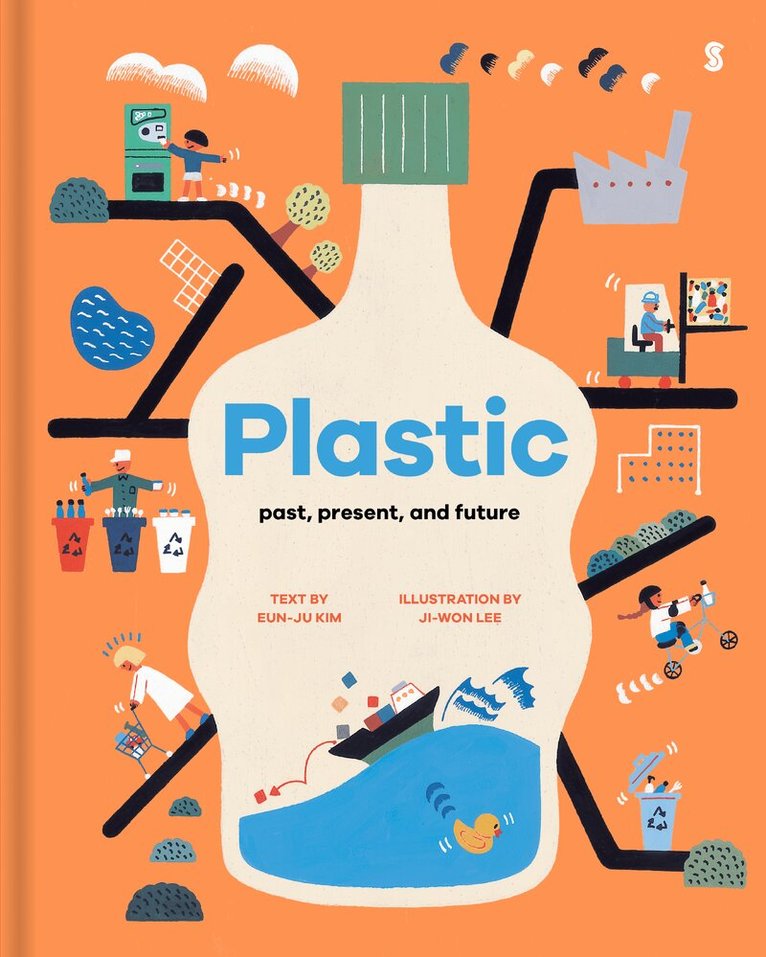
Plastic
past, present, and future
119 kr
Tillfälligt slut
Du är på sajten för privatpersoner.
119 kr
Tillfälligt slut
Eun-ju Kim has been writing children’s books for a long time since studying physics and early childhood education in college.Ji-won Lee studied illustration and has been working as an illustrator of children’s books.Joungmin Lee Comfort is a translator who enjoys children’s literature as much as her kids do. She is delighted to have translated Plastic: past, present, and future, and looks forward to helping spread more Korean children’s literature around the world.
‘[R]eaders are launched into a close examination of plastic — how it came to be, how it’s made and used, and how it has changed the world, for better and for worse. The book objectively presents the petroleum-based substance’s contributions to the field of medicine and to the accessibility of manufactured goods alongside its increasingly harsh toll on the environment ... Lee’s boldly coloured digital illustrations attractively and neatly chart out complex phenomena such as microplastics consumption.’ STARRED REVIEW
Du är på sajten för privatpersoner.
119 kr
Tillfälligt slut
Eun-ju Kim has been writing children’s books for a long time since studying physics and early childhood education in college.Ji-won Lee studied illustration and has been working as an illustrator of children’s books.Joungmin Lee Comfort is a translator who enjoys children’s literature as much as her kids do. She is delighted to have translated Plastic: past, present, and future, and looks forward to helping spread more Korean children’s literature around the world.
‘[R]eaders are launched into a close examination of plastic — how it came to be, how it’s made and used, and how it has changed the world, for better and for worse. The book objectively presents the petroleum-based substance’s contributions to the field of medicine and to the accessibility of manufactured goods alongside its increasingly harsh toll on the environment ... Lee’s boldly coloured digital illustrations attractively and neatly chart out complex phenomena such as microplastics consumption.’ STARRED REVIEW