Du är på sajten för privatpersoner.
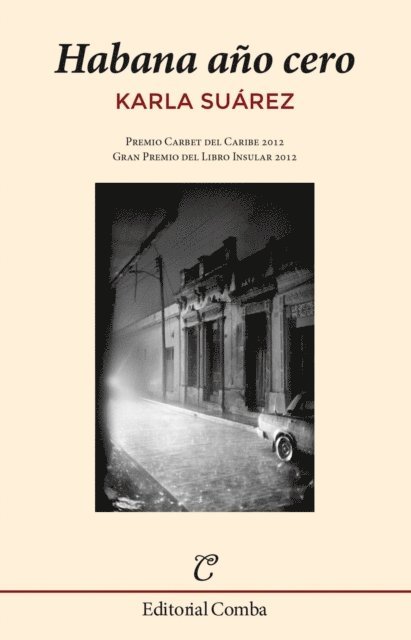
Karla Suárez Karla Suárez was born in Havana in 1969. Since her childhood, she has been passionate about mathematics, writing stories, and music. She studied classical guitar and has a degree in electronic engineering, a profession she continues to develop. Suárez is the author of five collections of short stories and four novels. Her novels received many awards, such as the Lengua de Trapo Prize for her 1999 debut novel Silencios (Silences ); and the Prix Carbet of the Caribbean and Tout-Monde and the Insular Book Prize, both in France, in 2012. Many of her stories have appeared in anthologies and magazines published in Europe, the United States, and Latin America. Several of her stories have been adapted for television and theatre. Suárez has received several creative grants, including the one awarded by the National Book Center of France (CNL). In 2007, she was selected by the Hay Festival and Bogota World Book Capital, as one of 39 representative young writers of Latin America. She lives in Lisbon, where she coordinates the Reading Club of the Cervantes Institute and works as a writing teacher at the Writers’ School in Madrid. Christina MacSweeney is an award-winning literary translator, working mainly in the areas of Latin American fiction, essays, poetry, and hybrid texts. She has translated works by such authors as Valeria Luiselli, Daniel Saldaña París, Julián Herbert, Karla Suárez and Elvira Navarro. She has also contributed to anthologies of Latin American literature and published shorter translations, articles, interviews and collaborations on a wide variety of platforms. Her most recent translations are Jazmina Barrera’s Cross-Stitch (shortlisted for the Queen Sofía Institute Translation Prize) and Clyo Mendoza’s Fury. In 2024, she was granted a Sundial Literary Translation Award for her translation of Verónica Gerber Bicecci’s The Company.
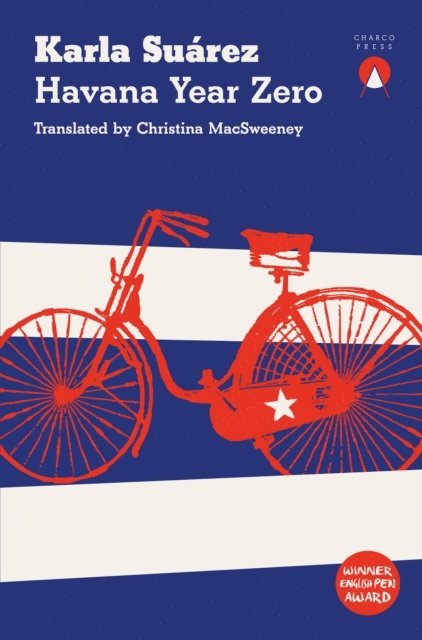
English PEN (Award)Carbet de la Caraïbe et du Tout-monde (Winner)Insular Book Award (Winner)"A breezy, engaging and cunningly plotted tour of a resilient city and culture. (4 stars)" —The Arts Desk"A terrifically enjoyable read." —Irish Times"Equal parts historical novel, comedy of errors and detective story, Suárez portrays with extraordinary voluptuousity and suggestiveness one of the toughest periods of this Caribbean island." —El Mundo"An astonishing novel." —Le Figaro Littéraire"'The Name of the Rose' Cuban-style...A masterpiece." —Marie Claire"A brilliant, intense mystery." —BookBlast"A delightfully unusual detective story." —Shiny New Books"Suarez’s prose, and Christina MacSweeney’s translation, is conversational, beautifully written and manages wonderfully to evoke Havana as a city in crisis without the situation seeming hopeless." —The Sock Drawer"A magisterial and innovative demonstration of first-person narration." —Reading in Translation"Suárez’s sharp, engaging prose grows organically out of a clear and unique narrative voice." —Necessary Fiction"Quirky, poignant, and very relevant for our times." —Lucy Writers"Havana Year Zero is like a set of Russian dolls; its many layers fit together in a firm and satisfying way." —Lunate"Suárez’s kaleidoscopic take on recent Cuban history is worth a look." —Publishers Weekly"‘Havana Year Zero’, is one of those few precious books that humbly offers up sentences that you take forward into the world, sharp bifurcating sentences, dissecting sentences, that swiftly bring sense to confusion, order to chaos. " —Callum Churchill, Mr B's Emporium"Suárez applies chaos theory to Cuba." —Le Temps"A brilliant, joyful and beautiful novel." —Leer"The original plot, narrated like a mathematical conundrum, and the apocalyptic portrait of Havana in 1993 are two of the great attractions of this novel." —La Libre Belgique"With incisive and restrained language, Suárez portrays a country ravaged by the economic crisis." —Le Matin d'Algérie"Rich in the ingredients typical of the best literature: a good story, with rhythm and flow, but also sensibility, elegance, intelligence and a sense of humour." —Duas margens
Du är på sajten för privatpersoner.
Karla Suárez Karla Suárez was born in Havana in 1969. Since her childhood, she has been passionate about mathematics, writing stories, and music. She studied classical guitar and has a degree in electronic engineering, a profession she continues to develop. Suárez is the author of five collections of short stories and four novels. Her novels received many awards, such as the Lengua de Trapo Prize for her 1999 debut novel Silencios (Silences ); and the Prix Carbet of the Caribbean and Tout-Monde and the Insular Book Prize, both in France, in 2012. Many of her stories have appeared in anthologies and magazines published in Europe, the United States, and Latin America. Several of her stories have been adapted for television and theatre. Suárez has received several creative grants, including the one awarded by the National Book Center of France (CNL). In 2007, she was selected by the Hay Festival and Bogota World Book Capital, as one of 39 representative young writers of Latin America. She lives in Lisbon, where she coordinates the Reading Club of the Cervantes Institute and works as a writing teacher at the Writers’ School in Madrid. Christina MacSweeney is an award-winning literary translator, working mainly in the areas of Latin American fiction, essays, poetry, and hybrid texts. She has translated works by such authors as Valeria Luiselli, Daniel Saldaña París, Julián Herbert, Karla Suárez and Elvira Navarro. She has also contributed to anthologies of Latin American literature and published shorter translations, articles, interviews and collaborations on a wide variety of platforms. Her most recent translations are Jazmina Barrera’s Cross-Stitch (shortlisted for the Queen Sofía Institute Translation Prize) and Clyo Mendoza’s Fury. In 2024, she was granted a Sundial Literary Translation Award for her translation of Verónica Gerber Bicecci’s The Company.
English PEN (Award)Carbet de la Caraïbe et du Tout-monde (Winner)Insular Book Award (Winner)"A breezy, engaging and cunningly plotted tour of a resilient city and culture. (4 stars)" —The Arts Desk"A terrifically enjoyable read." —Irish Times"Equal parts historical novel, comedy of errors and detective story, Suárez portrays with extraordinary voluptuousity and suggestiveness one of the toughest periods of this Caribbean island." —El Mundo"An astonishing novel." —Le Figaro Littéraire"'The Name of the Rose' Cuban-style...A masterpiece." —Marie Claire"A brilliant, intense mystery." —BookBlast"A delightfully unusual detective story." —Shiny New Books"Suarez’s prose, and Christina MacSweeney’s translation, is conversational, beautifully written and manages wonderfully to evoke Havana as a city in crisis without the situation seeming hopeless." —The Sock Drawer"A magisterial and innovative demonstration of first-person narration." —Reading in Translation"Suárez’s sharp, engaging prose grows organically out of a clear and unique narrative voice." —Necessary Fiction"Quirky, poignant, and very relevant for our times." —Lucy Writers"Havana Year Zero is like a set of Russian dolls; its many layers fit together in a firm and satisfying way." —Lunate"Suárez’s kaleidoscopic take on recent Cuban history is worth a look." —Publishers Weekly"‘Havana Year Zero’, is one of those few precious books that humbly offers up sentences that you take forward into the world, sharp bifurcating sentences, dissecting sentences, that swiftly bring sense to confusion, order to chaos. " —Callum Churchill, Mr B's Emporium"Suárez applies chaos theory to Cuba." —Le Temps"A brilliant, joyful and beautiful novel." —Leer"The original plot, narrated like a mathematical conundrum, and the apocalyptic portrait of Havana in 1993 are two of the great attractions of this novel." —La Libre Belgique"With incisive and restrained language, Suárez portrays a country ravaged by the economic crisis." —Le Matin d'Algérie"Rich in the ingredients typical of the best literature: a good story, with rhythm and flow, but also sensibility, elegance, intelligence and a sense of humour." —Duas margens
Du är på sajten för privatpersoner.
Karla Suárez Karla Suárez was born in Havana in 1969. Since her childhood, she has been passionate about mathematics, writing stories, and music. She studied classical guitar and has a degree in electronic engineering, a profession she continues to develop. Suárez is the author of five collections of short stories and four novels. Her novels received many awards, such as the Lengua de Trapo Prize for her 1999 debut novel Silencios (Silences ); and the Prix Carbet of the Caribbean and Tout-Monde and the Insular Book Prize, both in France, in 2012. Many of her stories have appeared in anthologies and magazines published in Europe, the United States, and Latin America. Several of her stories have been adapted for television and theatre. Suárez has received several creative grants, including the one awarded by the National Book Center of France (CNL). In 2007, she was selected by the Hay Festival and Bogota World Book Capital, as one of 39 representative young writers of Latin America. She lives in Lisbon, where she coordinates the Reading Club of the Cervantes Institute and works as a writing teacher at the Writers’ School in Madrid. Christina MacSweeney is an award-winning literary translator, working mainly in the areas of Latin American fiction, essays, poetry, and hybrid texts. She has translated works by such authors as Valeria Luiselli, Daniel Saldaña París, Julián Herbert, Karla Suárez and Elvira Navarro. She has also contributed to anthologies of Latin American literature and published shorter translations, articles, interviews and collaborations on a wide variety of platforms. Her most recent translations are Jazmina Barrera’s Cross-Stitch (shortlisted for the Queen Sofía Institute Translation Prize) and Clyo Mendoza’s Fury. In 2024, she was granted a Sundial Literary Translation Award for her translation of Verónica Gerber Bicecci’s The Company.
English PEN (Award)Carbet de la Caraïbe et du Tout-monde (Winner)Insular Book Award (Winner)"A breezy, engaging and cunningly plotted tour of a resilient city and culture. (4 stars)" —The Arts Desk"A terrifically enjoyable read." —Irish Times"Equal parts historical novel, comedy of errors and detective story, Suárez portrays with extraordinary voluptuousity and suggestiveness one of the toughest periods of this Caribbean island." —El Mundo"An astonishing novel." —Le Figaro Littéraire"'The Name of the Rose' Cuban-style...A masterpiece." —Marie Claire"A brilliant, intense mystery." —BookBlast"A delightfully unusual detective story." —Shiny New Books"Suarez’s prose, and Christina MacSweeney’s translation, is conversational, beautifully written and manages wonderfully to evoke Havana as a city in crisis without the situation seeming hopeless." —The Sock Drawer"A magisterial and innovative demonstration of first-person narration." —Reading in Translation"Suárez’s sharp, engaging prose grows organically out of a clear and unique narrative voice." —Necessary Fiction"Quirky, poignant, and very relevant for our times." —Lucy Writers"Havana Year Zero is like a set of Russian dolls; its many layers fit together in a firm and satisfying way." —Lunate"Suárez’s kaleidoscopic take on recent Cuban history is worth a look." —Publishers Weekly"‘Havana Year Zero’, is one of those few precious books that humbly offers up sentences that you take forward into the world, sharp bifurcating sentences, dissecting sentences, that swiftly bring sense to confusion, order to chaos. " —Callum Churchill, Mr B's Emporium"Suárez applies chaos theory to Cuba." —Le Temps"A brilliant, joyful and beautiful novel." —Leer"The original plot, narrated like a mathematical conundrum, and the apocalyptic portrait of Havana in 1993 are two of the great attractions of this novel." —La Libre Belgique"With incisive and restrained language, Suárez portrays a country ravaged by the economic crisis." —Le Matin d'Algérie"Rich in the ingredients typical of the best literature: a good story, with rhythm and flow, but also sensibility, elegance, intelligence and a sense of humour." —Duas margens