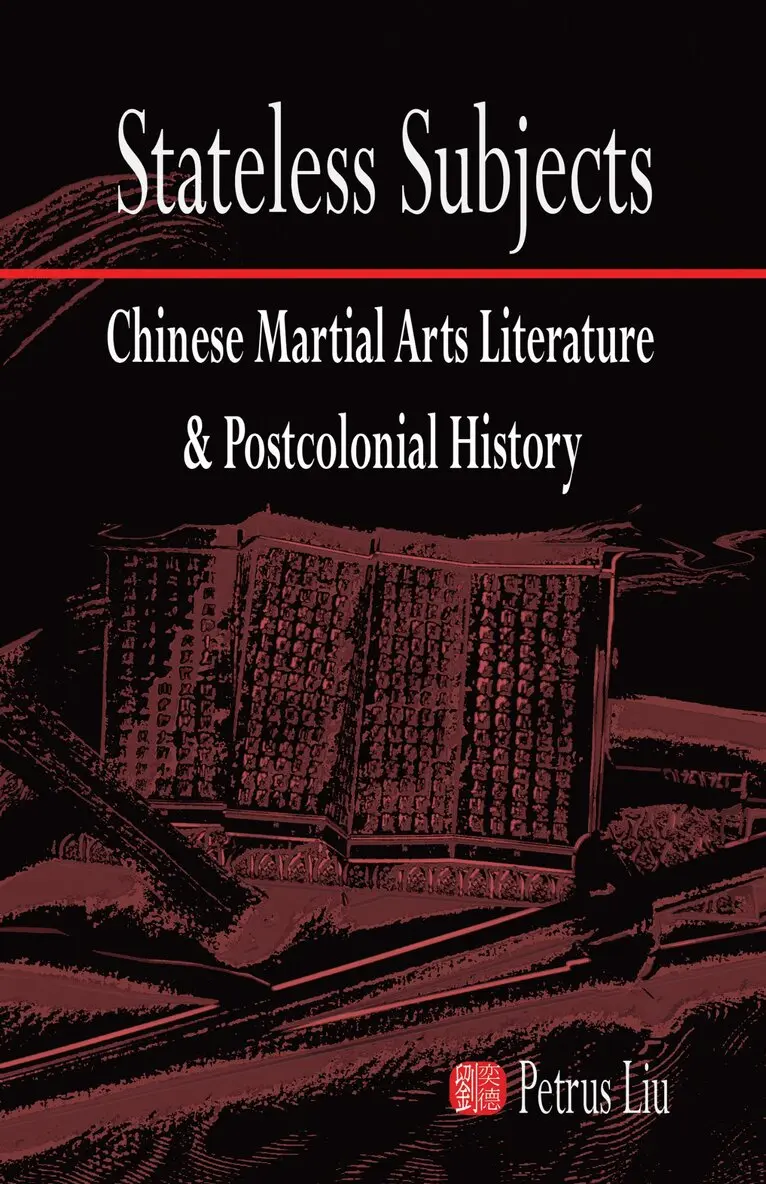
Inbunden, Engelska, 2012
Stateless Subjects
Chinese Martial Arts Literature and Postcolonial History
Av Petrus Liu
Del i serien Cornell East Asia Series
1917 kr
Beställningsvara. Skickas inom 10-15 vardagar. Fri frakt över 249 kr.
Fler format och utgåvor
Beskrivning
Produktinformation
- Utgivningsdatum: 2012-01-31
- Mått: 140 x 216 x 25 mm
- Vikt: 907 g
- Format: Inbunden
- Språk: Engelska
- Serie: Cornell East Asia Series
- Antal sidor: 300
- Förlag: Cornell University Press
- ISBN: 9781933947822
Utforska kategorier
Mer om författaren
Petrus Liu received his BA from the University of California, Berkeley, triple major in German Literature, East Asian Languages, and Comparative Literature (1997); MA and PhD in Comparative Literature (2000 and 2005). He was previously Assistant Professor of Comparative Literature at Cornell University from 2005 to 2012. He is currently Associate Professor and JY Pillay Fellow at Yale-NUS in Singapore.
Recensioner i media
Stateless Subjects, by Petrus Liu, is a well-researched book that offers innovative perspectives on the compelling subject of Chinese martial arts literature of the twentieth-century. Through excellent summaries of individual texts—both film and fiction—as well as contemplative consideration of selected historical events in the socio-political milieu during which they were produced, the author's research aims to challenge both early May Fourth (negative) views of martial arts fiction and to transcend canonical analysis of the genre 'as the ideological instrument of Chinese nationalism' (2-3). Liu provides excellent background analysis of the tensions between pop fiction and May Fourth literature, and in the process brings postmodern comparative literature perspectives to bear in his 'intervention' into the dominant May Fourth literary discourse. Readers interested in interconnections between diverse sociopolitical issues such as intellectual history, feminism in martial arts film, the Cultural Revolution, the Cold War in Asia, and tensions in Taiwan/Hong Kong martial arts literary discourse will find many points of departure for further research. Especially notable are the unorthodox subjects from the martial arts literary canon addressed in the five chapters that comprise this book, including Islam, gender issues, and homosexuality. Liu should be applauded for addressing such seemingly taboo subjects in early twentieth-century literary discourse and supplying interesting readings that demonstrate a creative comparative literature approach.(MCLC Resource Center August 2013)
Betyg & recensioner
0 recensioner
Inga recensioner tillgängliga.