Beställningsvara. Skickas inom 5-8 vardagar. Fri frakt över 249 kr.
Beskrivning
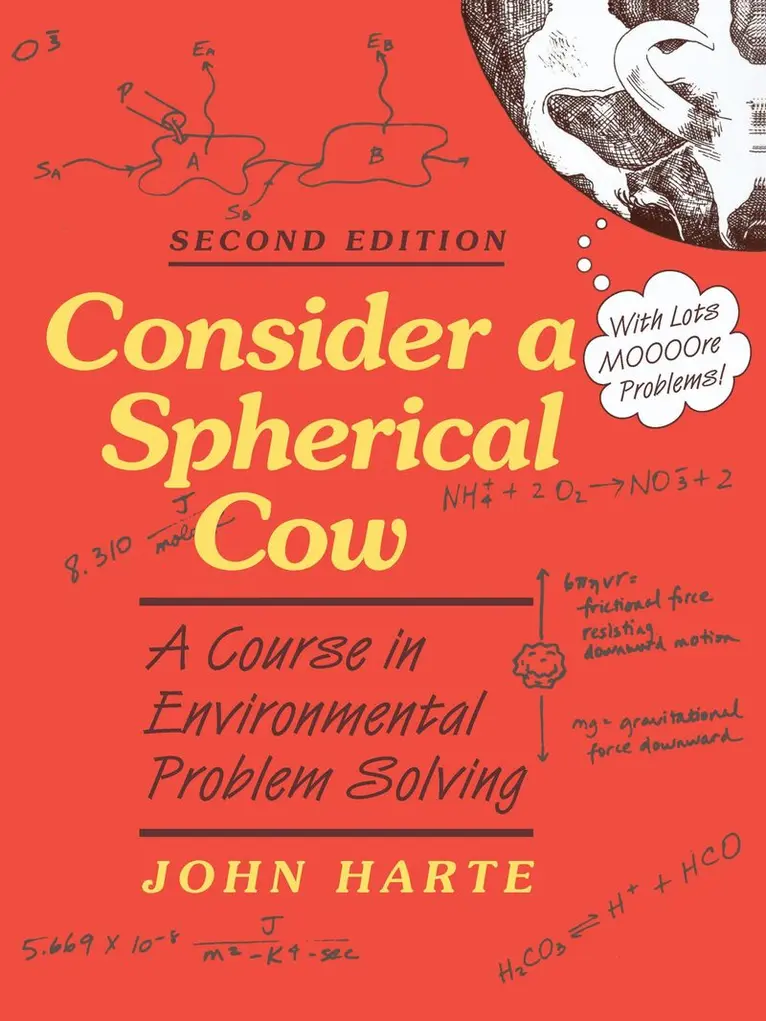
This textbook teaches how to make, and derive useful insight from, relatively simple models of many seemingly complex environmental problems facing our world today.
John Harte is a Professor of the Graduate School at the University of California, Berkeley. He did his undergraduate studies at Harvard and his PhD in theoretical physics at the University of Wisconsin. He has received a Guggenheim Fellowship, a Pew Scholars award, the Leo Szilard prize from the American Physical Society, and a George Polk award in investigative journalism. He is an elected Fellow of the California Academy of Sciences, the American Physical Society, the Ecological society of America, and the American Association for the Advancement of Science. He has also served on six National Academy of Sciences Committees and has authored over 250 scientific journal publications and eight books. John’s research focuses on ecology, climate, complexity science, and environmental policy.
Recensioner i media
"For 40 years, the best basic book for learning environmental modeling skills has been John Harte’s classic text, Consider a Spherical Cow. It is now even better. This updated and expanded new edition belongs on the bookshelf of everyone who cares about the fate of our civilization." --Paul R. Ehrlich, Stanford University "For young scientists, Harte’s book is an invaluable set of calisthenics to get the brain working across a wide range of problems. But non-scientists will enjoy this too—it will give you insights into how people think quantitatively." --Bill McKibben, author The End of Nature "Spherical Cow has been, for more than 30 years, much more than a book. It is a lantern that shows the way to a powerful and transferable problem-solving strategy: capture any problem’s key concepts in a highly simplified, quantified approximation to reality, and then perform straightforward calculations that lead you to good-enough conclusions. Cow applies this strategy to environmental problem-solving, producing accessible insights into a suite of urgent issues, ranging from rain’s acidity to population dynamics to nuclear power and toxic chemicals – the last two only in this much awaited, updated edition." --Rob Socolow, Princeton University
Innehållsförteckning
PrefaceAcknowledgmentsChapter I. Warm-Up ExercisesChapter II. Learning the Tools of the TradeProbabilitySteady State Box Models and Residence TimesThermodynmics and Energy TransferChemical Reactions and EquilibriaNon-Steady State Box ModelsChapter III. Applying Basic Tools to Complex ProblemsBiogeochemistryClimateSurvival of PopulationsToxic SubstancesRadiation and Radioactivity101 Homework ExercisesAppendix: Useful NumbersGlossaryBibliographyIndex