E-bok, Engelska, 2017
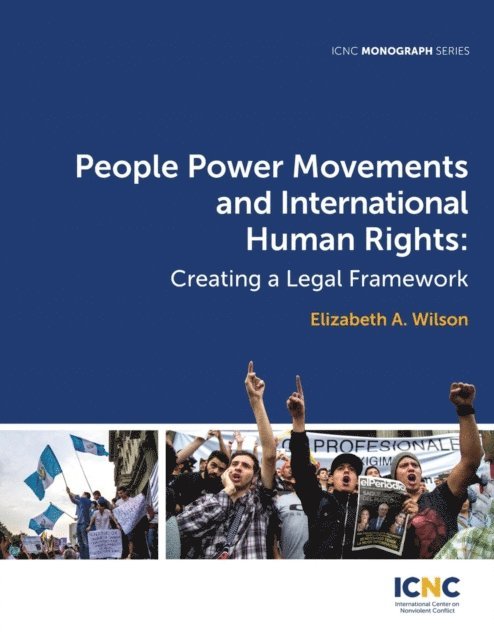
People Power Movements and International Human Rights
66 kr
Läs direkt i Bokus Reader – eller ladda ned till din enhet
Beskrivning
International human rights came into existence bottom-up, from the efforts of ordinary people to ally with each other in solidarity and demand their rights through civil resistance campaigns in support of democracy, an end to slavery and child labor, women’s rights, labor rights, and tenant rights, among other rights. Yet international law recognizes only states as the ultimate source of law. This monograph develops a novel, people-powered or “demos-centric” approach to international human rights law that acknowledges the role in lawmaking of average human beings, seeing them as both the source of rights and the most effective means of overcoming the central weakness of international law—namely, its inability to ensure that states and governments comply with the human rights obligations they supposedly undertake. Taking account of nonviolent movements and their impact on the formation and implementation of international human rights law recognizes the human agency of the supposed beneficiaries of human rights law: common people.
The monograph develops this approach using the controversial third source of law identified in Article 38 of the Statute of the International Court of Justice, namely, “general principles.”
As a source of law, “general principles” are controversial because of their theological, natural law overtones. This monograph uses nonviolent civil resistance as a means of objectifying natural law and making it usable for a secular, inclusive and multicultural international legal system. Instead of an absolute term—something that exists eternally, independent of the mind of human beings—we can see natural law as a relative term that reflects a human, creative envisioning of an alternative legal order that is not yet reflected in positive legal codes but is being created intersubjectively through the collective work of human beings engaged in nonviolent civil resistance.
The analytical framework developed in this monograph identifies four general principles that structure the human rights project: nonexploitation, nondiscrimination, nonrepression and nonviolence. These “general principles” crosscut four dimensions of law (international and domestic law, positive and natural law) and comprise a human rights ethos. Using a typology derived from these four principles, nonviolent civil resistance movements may be critically examined for how fully they manifest these human rights ethos.
The monograph thus creates an interdisciplinary research agenda for future collaboration between legal scholars and social scientists while also making a contribution to the practice of civil resistance. Scholars of civil resistance studies can be attentive to evidence that the nonviolent movements they study are manifesting a human rights ethos. Legal scholars can evaluate this evidence and incorporate it as they develop and strengthen general principles of human rights law, in order to ensure conceptual consistency across the aforementioned four dimensions of law. Doing so will enable them to recognize the potential of nonviolent civil resistance movements to aid in the “internalization” of international law into domestic legal systems. Finally, practitioners of civil resistance, although primarily using extra-legal means, can become more strategic in their reliance on human rights instruments and treaties as well as general principles in waging more effective nonviolent struggles with better chances to uphold and broaden human rights norms and successfully redress injustices, including in repressive regimes.
Produktinformation
- Utgivningsdatum: 2017-07-11
- Språk: Engelska
- Antal sidor: 166
- Filformat: EPUB
- Kopieringsskydd: LCP
- ISBN: 9781943271641
- Förlag: Distributed By Ingram Spark
Utforska kategorier
Betyg & recensioner
0 recensioner
Inga recensioner tillgängliga.