• Fri frakt över 249 kr
  • •
  • Snabba leveranser
  • •
  • Billiga böcker
Kundservice

Du är på sajten för privatpersoner.

Företag, bibliotek eller offentlig verksamhet?

Du handlar på classic.bokus.com, där alla dina funktioner finns intakta.
Till classic.bokus.com
Bokus logotyp. Gå till startsidan.
  • Erbjudanden
  • Nyheter
  • Student
  • Topplistor
  • Barn & ungdom
  • Bokus Play
  • E-böcker
  • Pocketböcker
  • Spel & pussel

10% rabatt på allt med kod: NYSTART10 →

Sidfot

Mina sidor

    Hjälp

    • Kundservice
    • Vanliga frågor och svar
    • Frakt och leverans
    • Retur vid ångerrätt
    • Reklamera vara
    • Betalning
    • Köpvillkor
    • Allmänna villkor
    • Information om webbplatsens tillgänglighet

    Om Bokus

    • Om oss
    • Pressrum
    • För studenter
    • För företag
    • För bibliotek och offentlig verksamhet
    • För leverantörer
    • Hållbarhet

    Populärt

    • Aktuella erbjudanden
    • Presentkort
    • Studentlitteratur
    • Nya böcker
    • Topplistor
    • Signerade böcker
    • Engelska böcker

    Inspiration

    • Boktips
    • BookTok
    • Populära bokserier
    • Barnbokskaraktärer
    • Populära författare
    Logotyp för Bokus
    Följ oss på Facebook (extern länk)Följ oss på Instagram (extern länk)Följ oss på YouTube (extern länk)Följ oss på TikTok (extern länk)
    bokus @ CookiesAnpassa cookiesIntegritetspolicyKöpvillkor
    Till Citymail hemsida (extern länk)Till Budbee hemsida (extern länk)Till Postnord hemsida (extern länk)Till Schenker hemsida (extern länk)Till Early Bird hemsida (extern länk)Till Walleys hemsida (extern länk)
    1. Samhälle och politik
    2. Samhälle och kultur

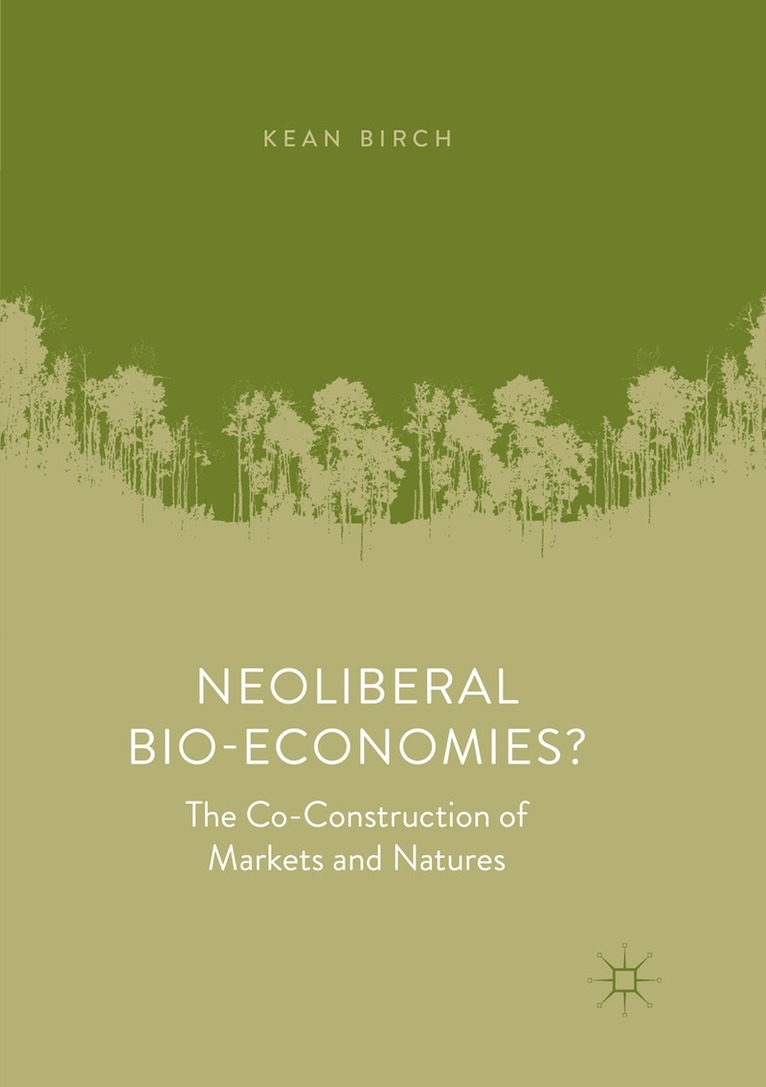
    Neoliberal Bio-Economies?

    The Co-Construction of Markets and Natures

    AvKean Birch

    Häftad, Engelska, 2018

    762 kr

    Beställningsvara. Skickas inom 10-15 vardagar. Fri frakt över 249 kr.

    Fler format och utgåvor

    Inbunden

    762 kr

    E-bok

    947 kr

    Beskrivning

    In this book, Kean Birch analyses the co-construction of markets and natures in the emerging bio-economy as a policy response to global environmental change. The bio-economy is an economic system characterized by the use of plants and other biological materials rather than fossil fuels to produce energy, chemicals, and societal goods. Over the last decade or so, numerous countries around the world have developed bio-economy strategies as a potential transition pathway to a low-carbon future. Whether this is achievable or not remains an open question, one which this book seeks to answer. In addressing this question, Kean Birch draws on over ten years of research on the bio-economy around the world, but especially in North America. He examines what kinds of markets and natures are being imagined and constructed in the pursuit of the bio-economy, and problematizes the idea that this is being driven by neoliberalism and the neoliberalization of nature(s).

    Produktinformation

    • Utgivningsdatum:2018-12-20
    • Mått:148 x 210 x 13 mm
    • Vikt:296 g
    • Format:Häftad
    • Språk:Engelska
    • Antal sidor:208
    • Förlag:Springer Nature Switzerland AG
    • ISBN:9783030082512

    Utforska kategorier

    • Samhälle och kultur inom Samhälle och politik

    Mer om författaren

    Kean Birch is a Senior Associate of the Innovation Policy Lab, University of Toronto, Canada.

    Recensioner i media

    “This study is outstanding for its erudition and summaries of research into both neoliberalism and the bio-economy. … focal depth Birch offers into the importance of materiality in the co-construction of markets and natures is particularly welcome. … Birch’s study is a salutary compass to find one’s way among the meanderings of the bio-economy and to position it in a wider discussion about the relationships between the economy and the environment, as well as indicating stimulating research avenues to explore.” (Benjamin Raimbault,Review of Agricultural, Food and Environmental Studies, Vol. 102, 2021)

    Innehållsförteckning

    • 1. Introduction.- 2. Neoliberalism.- 3. Neoliberalism and bio-economies.- 4. Background to emerging bio-economies.- 5. Imagining bio-economies.- 6. Constructing bio-economies.- 7. Legitimating bio-economies.- 8. Limits to bio-economies.- 9. Alternative Bio-economies.- 10. Conclusion.