• Fri frakt över 249 kr
  • •
  • Snabba leveranser
  • •
  • Billiga böcker
Kundservice

Du är på sajten för privatpersoner.

Företag, bibliotek eller offentlig verksamhet?

Du handlar på classic.bokus.com, där alla dina funktioner finns intakta.
Till classic.bokus.com
Bokus logotyp. Gå till startsidan.
  • Erbjudanden
  • Nyheter
  • Student
  • Topplistor
  • Barn & ungdom
  • Bokus Play
  • E-böcker
  • Pocketböcker
  • Spel & pussel

10% rabatt på allt med kod: NYSTART10 →

Sidfot

Mina sidor

    Hjälp

    • Kundservice
    • Vanliga frågor och svar
    • Frakt och leverans
    • Retur vid ångerrätt
    • Reklamera vara
    • Betalning
    • Köpvillkor
    • Allmänna villkor
    • Information om webbplatsens tillgänglighet

    Om Bokus

    • Om oss
    • Pressrum
    • För studenter
    • För företag
    • För bibliotek och offentlig verksamhet
    • För leverantörer
    • Hållbarhet

    Populärt

    • Aktuella erbjudanden
    • Presentkort
    • Studentlitteratur
    • Nya böcker
    • Topplistor
    • Signerade böcker
    • Engelska böcker

    Inspiration

    • Boktips
    • BookTok
    • Populära bokserier
    • Barnbokskaraktärer
    • Populära författare
    Logotyp för Bokus
    Följ oss på Facebook (extern länk)Följ oss på Instagram (extern länk)Följ oss på YouTube (extern länk)Följ oss på TikTok (extern länk)
    bokus @ CookiesAnpassa cookiesIntegritetspolicyKöpvillkor
    Till Citymail hemsida (extern länk)Till Budbee hemsida (extern länk)Till Postnord hemsida (extern länk)Till Schenker hemsida (extern länk)Till Early Bird hemsida (extern länk)Till Walleys hemsida (extern länk)
    1. Historia och arkeologi
    2. Arkeologi

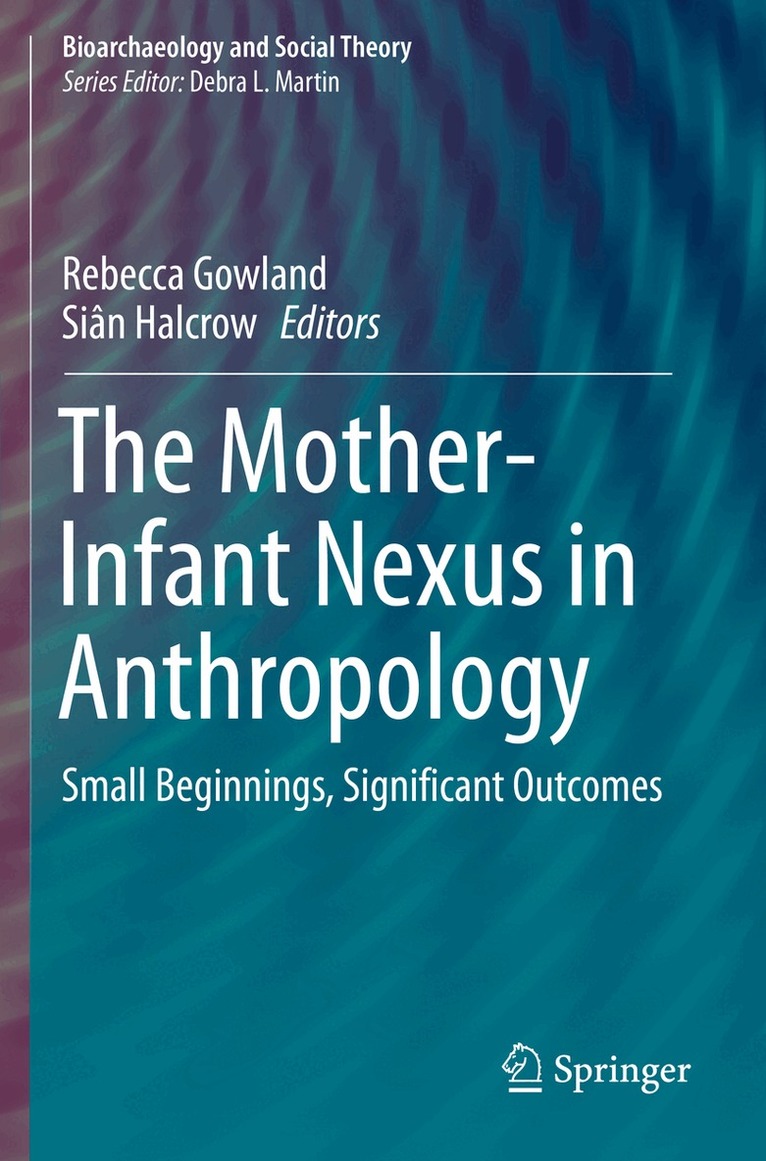
    Mother-Infant Nexus in Anthropology

    Small Beginnings, Significant Outcomes

    AvRebecca Gowland,Siân Halcrow

    Häftad, Engelska, 2020

    Del i serien Bioarchaeology and Social Theory

    1 563 kr

    Beställningsvara. Skickas inom 10-15 vardagar. Fri frakt över 249 kr.

    Beskrivning

    Over the past 20 years there has been increased research traction in the anthropology of childhood. However, infancy, the pregnant body and motherhood continue to be marginalised. This book will focus on the mother-infant relationship and the variable constructions of this dyad across cultures, including conceptualisations of the pregnant body, the beginnings of life, and implications for health. This is particularly topical because there is a burgeoning awareness within anthropology regarding the centrality of mother-infant interactions for understanding the evolution of our species, infant and maternal health and care strategies, epigenetic change, and biological and social development. This book will bring together cultural and biological anthropologists and archaeologists to examine the infant-maternal interface in past societies. It will showcase innovative theoretical and methodological approaches towards understanding societal constructions of foetal, infant and maternal bodies. It will emphasise their interconnectivity and will explore the broader significance of the mother/infant nexus for overall population well-being.

    Produktinformation

    • Utgivningsdatum:2020-11-15
    • Mått:155 x 235 x 17 mm
    • Vikt:458 g
    • Format:Häftad
    • Språk:Engelska
    • Serie:Bioarchaeology and Social Theory
    • Antal sidor:284
    • Förlag:Springer Nature Switzerland AG
    • ISBN:9783030273958

    Utforska kategorier

    • Arkeologi inom Historia och arkeologi
    • Antropologi inom Samhälle och politik

    Mer om författaren

    Rebecca Gowland is an Associate Professor in Human Bioarchaeology at the Department of Archaeology, Durham University. Her research focuses on the inter-relationship between the body and society in the past and she is particularly interested in the life course and age as an aspect of social identity. She has co-edited the Social Archaeology of Funerary Remains (2006, Oxbow) and Care in the Past: An Interdisciplinary Perspective (in press, Oxbow), and has co-authored Human Identity and Identification (2013, CUP). In addition, she has published widely in peer-reviewed journals on methodological and theoretical approaches to the study of skeletal remains. Rebecca teaches bioarchaeology, with a particular emphasis on palaeopathology, to undergraduate and postgraduate studentsSiân Halcrow is an Associate Professor in Bioarchaeology at the University of Otago, with a research focus on infant and child stress and disease in the past and social aspects of childhood. She manages the skeletal analyses on several international archaeological projects in Thailand, Laos, Cambodia, China and Chile. Dr Halcrow's research is funded through sources including the NZ Royal Society Marsden fund, University of Otago Research Grants, and Fulbright NZ. She is also a Partner Investigator on Australian Council Research Grants. She has published widely on infant and child bioarchaeology, and teaches undergraduate health science and biological anthropology courses, and a postgraduate bioarchaeological course.​

    Innehållsförteckning

    • Foreword.- Chapter 1. Introduction: The Mother/Infant Nexus in Archaeology and Anthropology.- Section 1. Infant and maternal health in bioarchaeology.- Chapter 2. Assessing early life stress in bioarchaeology: New approaches to understanding the vulnerable maternal-fetal relationship.- Chapter 3. Like Mother, Like Child: Investigating perinatal and maternal health stress in Post-Medieval London.- Chapter 4. The mother-offspring nexus revealed by linear enamel hypoplasia: Chronological and contextual evaluation of developmental stress using incremental microstructures of enamel.- Section 2. Nourishment and the Nexus.- Chapter 5. The ecology of breastfeeding and mother-infant immune functions.- Chapter 6. What doesn’t kill you: Childhood health, nutrition, and parental investment in early Anglo-Saxon East Anglia.- Chapter 7. Cooperative Lactation and the Maternal-Infant Nexus.- Section 3. Social and cognitive interactions in early life.- Chapter 8. Mothering Tongues: Anthropological Perspectives on Language and the Mother-Infant Nexus.- Chapter 9. The Mother-Infant Sleep Nexus: night-time experiences in early infancy and later outcomes.- Chapter 10. Moving beyond the Obstetrical Dilemma Hypothesis: Birth, weaning and infant care in the Plio-Pleistocene.- Section 4. Rupturing the nexus: infant loss in the archaeological record.- Chapter 11. Using bone histology to identify stillborn and short-lived infants in the archaeological record.- Chapter 12. Archaeothanatology as a Tool for Interpreting Death During Pregnancy: A Proposed Methodology Using Examples from Medieval Ireland.- Chapter 13. Touching the Surface: Biological, behavioral, and emotional aspects of plagiocephaly at Harappa.- Chapter 14. Ruptured: Reproductive Loss, Bodily Boundaries, Time and the Life Course.- Chapter 15. Conclusions and Future Directions.- Index.