• Fri frakt över 249 kr
  • •
  • Snabba leveranser
  • •
  • Billiga böcker
Kundservice

Du är på sajten för privatpersoner.

Företag, bibliotek eller offentlig verksamhet?

Du handlar på classic.bokus.com, där alla dina funktioner finns intakta.
Till classic.bokus.com
Bokus logotyp. Gå till startsidan.
  • Erbjudanden
  • Nyheter
  • Student
  • Topplistor
  • Barn & ungdom
  • Bokus Play
  • E-böcker
  • Pocketböcker
  • Spel & pussel

10% rabatt på allt med kod NYSTART10 →

Sidfot

Mina sidor

    Hjälp

    • Kundservice
    • Vanliga frågor och svar
    • Frakt och leverans
    • Retur vid ångerrätt
    • Reklamera vara
    • Betalning
    • Köpvillkor
    • Allmänna villkor
    • Information om webbplatsens tillgänglighet

    Om Bokus

    • Om oss
    • Pressrum
    • För studenter
    • För företag
    • För bibliotek och offentlig verksamhet
    • För leverantörer
    • Hållbarhet

    Populärt

    • Aktuella erbjudanden
    • Presentkort
    • Studentlitteratur
    • Nya böcker
    • Topplistor
    • Signerade böcker
    • Engelska böcker

    Inspiration

    • Boktips
    • BookTok
    • Populära bokserier
    • Barnbokskaraktärer
    • Populära författare
    Logotyp för Bokus
    Följ oss på Facebook (extern länk)Följ oss på Instagram (extern länk)Följ oss på YouTube (extern länk)Följ oss på TikTok (extern länk)
    bokus @ CookiesAnpassa cookiesIntegritetspolicyKöpvillkor
    Till Citymail hemsida (extern länk)Till Budbee hemsida (extern länk)Till Postnord hemsida (extern länk)Till Schenker hemsida (extern länk)Till Early Bird hemsida (extern länk)Till Walleys hemsida (extern länk)
    1. Språk och ordböcker
    2. Språkvetenskap och lingvistik

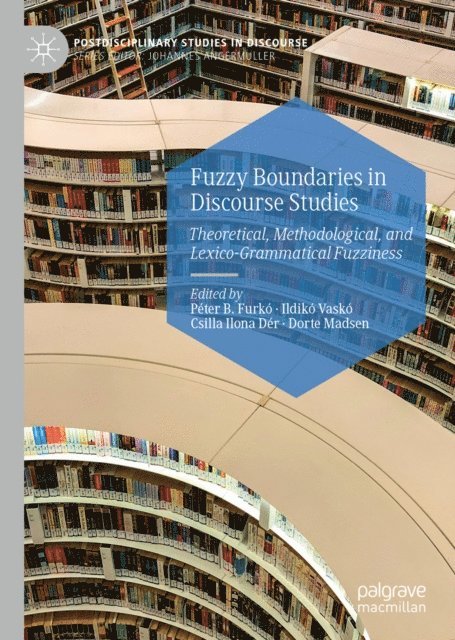
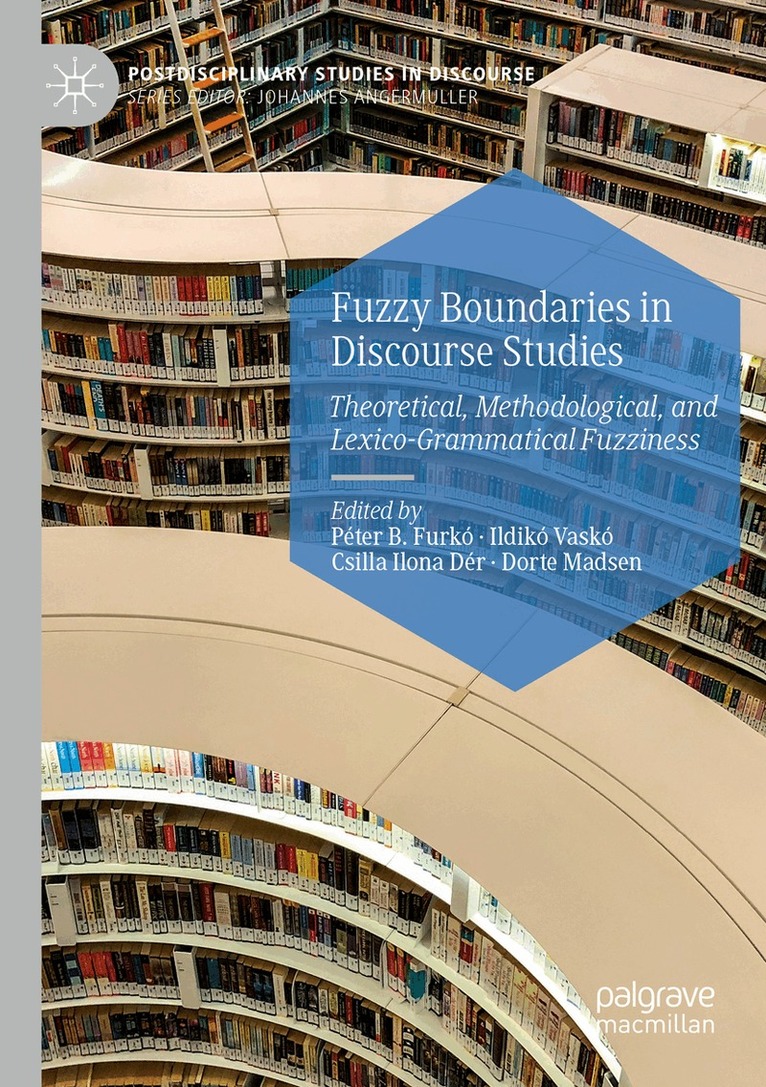
    Fuzzy Boundaries in Discourse Studies

    Theoretical, Methodological, and Lexico-Grammatical Fuzziness

    AvPéter B. Furkó,Ildikó Vaskó

    Inbunden, Engelska, 2020

    Del i serien Postdisciplinary Studies in Discourse

    1 118 kr

    Beställningsvara. Skickas inom 10-15 vardagar. Fri frakt över 249 kr.

    Beskrivning

    This book focuses on the multifarious aspects of ‘fuzzy boundaries’ in the field of discourse studies, a field that is marked by complex boundary work and a great degree of fuzziness regarding theoretical frameworks, methodologies, and the use of linguistic categories. Discourse studies is characterised by a variety of theoretical frameworks and disciplinary fields, research methodologies, and lexico-grammatical categories. The contributions in this book explore some of the nuances and implications of the fuzzy boundaries in these areas, resulting in a wide-reaching volume which will be of interest to students and scholars of discourse studies in fields including sociology, linguistics, international relations, philosophy, literary criticism and anthropology.

    Produktinformation

    • Utgivningsdatum:2020-01-02
    • Mått:148 x 210 x 23 mm
    • Vikt:548 g
    • Format:Inbunden
    • Språk:Engelska
    • Serie:Postdisciplinary Studies in Discourse
    • Antal sidor:318
    • Förlag:Springer Nature Switzerland AG
    • ISBN:9783030275723

    Utforska kategorier

    • Språkvetenskap och lingvistik inom Språk och ordböcker

    Mer om författaren

    Péter B. Furkó is Associate Professor in English Applied Linguistics and Vice Dean for Science and Research at the Department of English Linguistics at Károli Gáspár University of the Reformed Church, Hungary.Ildikó Vaskó is Associate Professor at the Department of Scandinavian Studies at Eötvös Loránd University of Budapest, Hungary.Csilla Ilona Dér is Associate Professor at the Department of Hungarian Linguistics, Károli Gáspár University of the Reformed Church, Hungary.Dorte Madsen is Associate Professor at the Department of Management, Society and Communication at Copenhagen Business School, Denmark.

    Innehållsförteckning

    • Chapter 1: Introduction (Péter B. Furkó, Ildikó Vaskó, Csilla Dér and Dorte Madsen).- Section One.- Chapter 2: Exploring the Non-Discursive: A Three Layered Approach to Discourse and its Boundaries (Juan Roch).- Chapter 3: Crossing the Boundaries of Epistemic Communities within and Beyond Discourse Studies (Dorte Madsen).- Chapter 4: Fuzzy Identities in (Dis)integrating Europe: Discursive Identifications of Poles in Britain Following Brexit (Katarzyna Molek-Kozakowska).- Chapter 5: Urban Wall Monologues: A Critical Discourse Analysis of Graffiti in Granada (Carmen Aguilera-Carnerero).- Section Two.- Chapter 6: Fuzzy Boundaries in the Research into Talk-in-Interaction (Zsuzsanna Németh, Katalin Nagy C. and Enikő Németh T.).- Chapter 7: Emotion and Physicality in Sylvia Plath's Late Poems (Edit Gálla).- Chapter 8: Fuzzy Boundaries in Interpretation: Empirical Study on the Common Traits and Differences of Irony and Metaphor as the Hypothesized Infringements of the Maxim of Quality(Zsuzsanna Schnell).- Chapter 9: Fuzzy Boundaries and Fuzzy Minds: Interpretation Strategies and Discourse Processing in Schizophrenia (Zsuzsanna Schnell, Róbert Herold, Tamás Tényi and Eszter Varga).- Section Three.- Chapter 10: Exploring the Fuzzy Boundaries of Discourse Markers through Manual and Automatic Annotation (Péter B. Furkó).- Chapter 11: Fuzzy Boundaries in the Different Functions and Translations of the Discourse Marker and (Annotated in TED Talks) (Giedré Valūnaitė Oleškevičienė, Sigita Rackevičienė, Jolita Šliogerienė, Nijolė Burkšaitienė, Viktorija  Mažeikienė, Liudmila Mockienė, Ludivine Crible, Ágnes Abuczki, Šárka Zikánová, Péter B. Furkó).- Chapter 12: On the Apparent Transitivity of Auxiliary Do: a Case Study (Saghie Sharifzadeh).- Chapter 12: The Use of Altminteri 'Otherwise' in Romanian: From Adverb to Textual Connector (Ariadna Ştefănescu).