• Fri frakt över 249 kr
  • •
  • Snabba leveranser
  • •
  • Billiga böcker
Kundservice

Du är på sajten för privatpersoner.

Företag, bibliotek eller offentlig verksamhet?

Du handlar på classic.bokus.com, där alla dina funktioner finns intakta.
Till classic.bokus.com
Bokus logotyp. Gå till startsidan.
  • Erbjudanden
  • Nyheter
  • Student
  • Topplistor
  • Barn & ungdom
  • Bokus Play
  • E-böcker
  • Pocketböcker
  • Spel & pussel

10% rabatt på allt med kod NYSTART10 →

Sidfot

Mina sidor

    Hjälp

    • Kundservice
    • Vanliga frågor och svar
    • Frakt och leverans
    • Retur vid ångerrätt
    • Reklamera vara
    • Betalning
    • Köpvillkor
    • Allmänna villkor
    • Information om webbplatsens tillgänglighet

    Om Bokus

    • Om oss
    • Pressrum
    • För studenter
    • För företag
    • För bibliotek och offentlig verksamhet
    • För leverantörer
    • Hållbarhet

    Populärt

    • Aktuella erbjudanden
    • Presentkort
    • Studentlitteratur
    • Nya böcker
    • Topplistor
    • Signerade böcker
    • Engelska böcker

    Inspiration

    • Boktips
    • BookTok
    • Populära bokserier
    • Barnbokskaraktärer
    • Populära författare
    Logotyp för Bokus
    Följ oss på Facebook (extern länk)Följ oss på Instagram (extern länk)Följ oss på YouTube (extern länk)Följ oss på TikTok (extern länk)
    bokus @ CookiesAnpassa cookiesIntegritetspolicyKöpvillkor
    Till Citymail hemsida (extern länk)Till Budbee hemsida (extern länk)Till Postnord hemsida (extern länk)Till Schenker hemsida (extern länk)Till Early Bird hemsida (extern länk)Till Walleys hemsida (extern länk)
    1. Naturvetenskap och teknik
    2. Teknik och industri
    3. Elektronik och kommunikationer

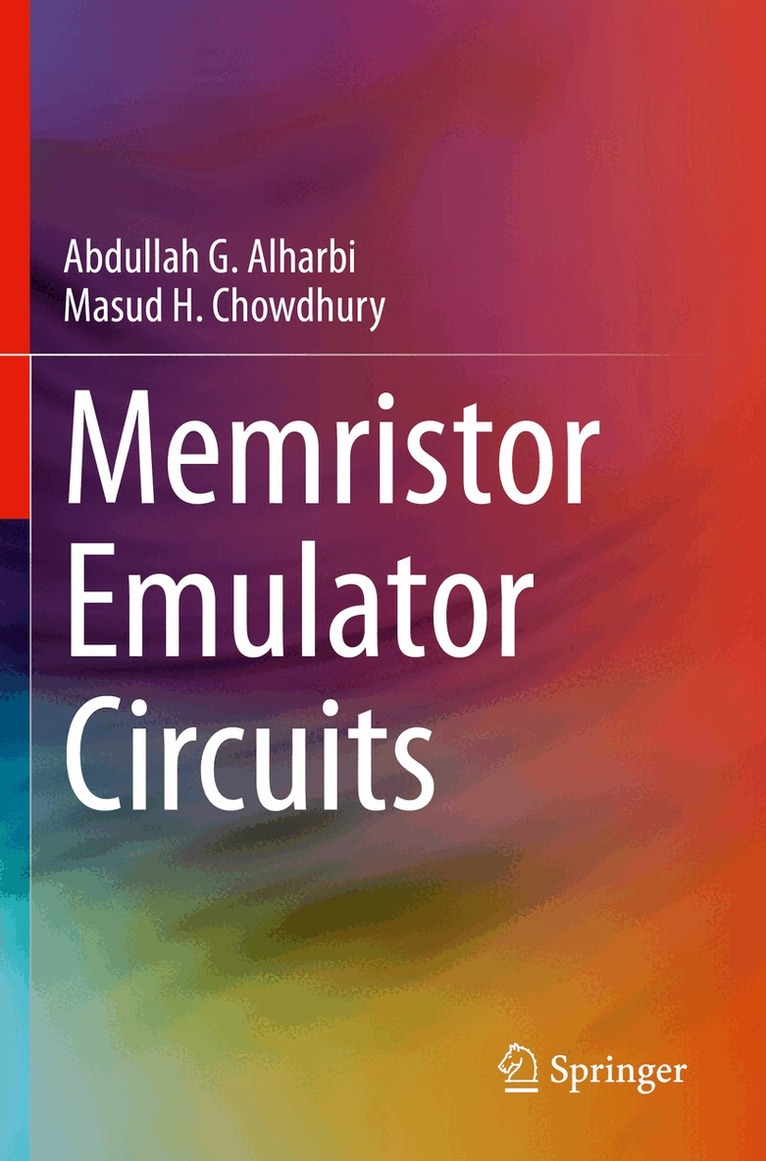
    Memristor Emulator Circuits

    AvAbdullah G. Alharbi,Masud H. Chowdhury

    Inbunden, Engelska, 2020

    1 085 kr

    Beställningsvara. Skickas inom 10-15 vardagar. Fri frakt över 249 kr.

    Fler format och utgåvor

    Häftad

    1 085 kr

    Beskrivning

    This book provides a comprehensive study of the research outcomes on memristor emulator circuits and includes various analog applications as examples. The authors describe in detail how to design different types of memristor emulators, using active and passive components for different applications. Most of the emulator circuits presented in this book are new and are the outcomes of the authors’ recent research. Coverage also includes the latest technological advances in memristor and memristor emulators. Readers will benefit from an understanding of the fundamental concepts and potential applications related to memristors, since these emulator circuits can be built in the laboratory using inexpensive, off-the-shelf circuit components.Introduces readers to memristor emulator circuit design, using regular off-the-shelf circuit components;Describes analog applications of memristors that can be verified by the proposed emulator circuits;Includesa brief overview of the updated mathematical models of the memristor device, with different material implementations;Equips readers to understand the three fingerprints of memristors, which make them unique, compared to the three known, passive elements (resistor, inductor and capacitor).

    Produktinformation

    • Utgivningsdatum:2020-09-02
    • Mått:155 x 235 x 13 mm
    • Vikt:371 g
    • Format:Inbunden
    • Språk:Engelska
    • Antal sidor:103
    • Förlag:Springer Nature Switzerland AG
    • ISBN:9783030518813

    Utforska kategorier

    • Elektronik och kommunikationer inom Naturvetenskap och teknik
    • Övrig teknik och tillämpad vetenskap inom Naturvetenskap och teknik
    • Systemvetenskap och AI inom Data och IT

    Mer om författaren

    Dr. Abdullah G. Alharbi received the B.Sc. degree in electronics and communications engineering in 2010 from Qassim University, Saudi Arabia. He got his MS and Ph.D. degrees in Electrical and Computer Engineering in 2014 and 2017, respectively, from the University of Missouri - Kansas City (UMKC). Currently, he is an Assistant Professor in the Department of Electrical Engineering at Al Jouf University of Saudi Arabia. From 2010 to 2012, he worked in Saudi Aramco Company as an Electrical Engineer. He authored ~15 journal and conference papers and book chapters. He is a member of IEEE, IEEE Circuits and Systems Society, IEEE Young Professionals, IEEE Signal Processing Society, IEEE Instrumentation and Measurement Society, ACM, and Gulf Engineering Union. His research interests include digital IC design, memristor, and emerging memory devices.Dr. Masud H Chowdhury received the B.Sc. degree in electrical and electronic engineering from Bangladesh University of Engineering and Technology (BUET), Dhaka in 1998 and the Ph.D. degree in computer engineering from Northwestern University, Evanston, Illinois, USA in 2004. Currently, he is the Associate Dean of the School of Computing and Engineering and a Professor in the Department of Computer Science Electrical Engineering at UMKC. He has published more than 170 articles in various journals and conferences in the fields of microelectronics and nanotechnology. Dr. Chowdhury has served as the Chair of the IEEE VLSI Systems and Applications Technical Committee from 2014 to 2016. He has been serving in the Editorial Boards of IEEE TCAS II, IEEE TVLSI, IEEE JETCAS, Springer Journal of Circuit, Systems, and Signal Processing, and Elsevier Microelectronics Journal. He has also been serving the professional community as the symposium chair, conference track chair, special session organizer, review committee chair, session chair, and many other roles for the last 15 years. He has supervised more than 60 Ph.D. and MS students and a couple of postdoctoral fellows. Dr. Chowdhury received the Leadership Excellence Achievement Program (LEAP) Award 2017 from the Missouri Society of Professional Engineers (MSPE) for demonstrated mentoring abilities that encourage students to seek leadership excellence in the engineering profession.

    Innehållsförteckning

    • Memristor Theory And Concepts.- Memresistive  Devices.- Spin Based And Magnetic Memristive Systems.- Memristor Spice Model.- Current-Controlled Memristor Emulations.- Simple Current–Controlled Memristive Emulators.- Voltage-Controlled Memristor Emulations.- Simple Flux–Controlled Memristive Emulators.- Analog And Digital Modulation Using Memristor.- Conclusion and Future Work.