• Fri frakt över 249 kr
  • •
  • Snabba leveranser
  • •
  • Billiga böcker
Kundservice

Du är på sajten för privatpersoner.

Företag, bibliotek eller offentlig verksamhet?

Du handlar på classic.bokus.com, där alla dina funktioner finns intakta.
Till classic.bokus.com
Bokus logotyp. Gå till startsidan.
  • Erbjudanden
  • Nyheter
  • Student
  • Topplistor
  • Barn & ungdom
  • Bokus Play
  • E-böcker
  • Pocketböcker
  • Spel & pussel

10% rabatt på allt med kod: NYSTART10 →

Sidfot

Mina sidor

    Hjälp

    • Kundservice
    • Vanliga frågor och svar
    • Frakt och leverans
    • Retur vid ångerrätt
    • Reklamera vara
    • Betalning
    • Köpvillkor
    • Allmänna villkor
    • Information om webbplatsens tillgänglighet

    Om Bokus

    • Om oss
    • Pressrum
    • För studenter
    • För företag
    • För bibliotek och offentlig verksamhet
    • För leverantörer
    • Hållbarhet

    Populärt

    • Aktuella erbjudanden
    • Presentkort
    • Studentlitteratur
    • Nya böcker
    • Topplistor
    • Signerade böcker
    • Engelska böcker

    Inspiration

    • Boktips
    • BookTok
    • Populära bokserier
    • Barnbokskaraktärer
    • Populära författare
    Logotyp för Bokus
    Följ oss på Facebook (extern länk)Följ oss på Instagram (extern länk)Följ oss på YouTube (extern länk)Följ oss på TikTok (extern länk)
    bokus @ CookiesAnpassa cookiesIntegritetspolicyKöpvillkor
    Till Citymail hemsida (extern länk)Till Budbee hemsida (extern länk)Till Postnord hemsida (extern länk)Till Schenker hemsida (extern länk)Till Early Bird hemsida (extern länk)Till Walleys hemsida (extern länk)
    1. Juridik
    2. Rättsvetenskap
    3. Juridik: metod och teori

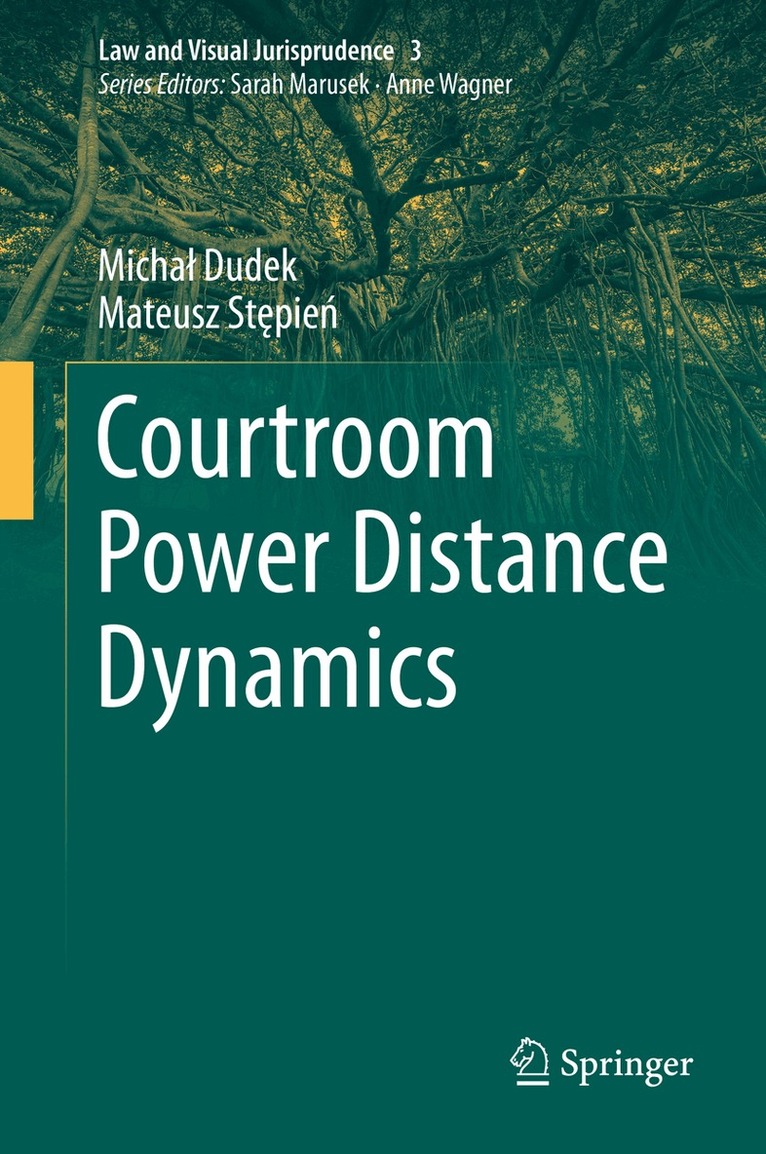
    Courtroom Power Distance Dynamics

    AvMichał Dudek,Mateusz Stępień

    Inbunden, Engelska, 2021

    Del 3 i serien Law and Visual Jurisprudence

    1 396 kr

    Beställningsvara. Skickas inom 10-15 vardagar. Fri frakt över 249 kr.

    Fler format och utgåvor

    Häftad

    1 396 kr

    Beskrivning

    The book presents a comprehensive reconceptualization of Geert Hofstede’s well-known concept of power distance, applying the theory to the specific case of judge–witness courtroom interactions in Polish regional courts. In the light of the detailed critique of Hofstede’s original approach to power distance, the book first carefully develops a three-level concept of power distance, including personal preferences concerning the realization of power relations (subjective level); rules, practices and spatio-architectural arrangements  underlying power relations (organizational level); and individual demeanors that can, in practice, increase or decrease the asymmetry between parties to a power relation (interactional level). This reconceptualization provides a universal conceptual apparatus that is applicable to various social settings, but the authors have used it in extensive qualitative and quantitative research focused on courtroom interactions.After laying the theoretical foundations, the book details the elements of judge–witness courtroom interactions (both verbal and non-verbal) that contribute to establishing power distance between judge and witness. These were identified over 6 months of observational research conducted in 2018 in the Kraków regional courts. Lastly, the book addresses the issue of the relationship between the subjective level of power distance and opinions that laypeople can have concerning a judge’s demeanor in the courtroom environment. To do so, it describes specific quantitative research that involved the creation of original film clips depicting witness questioning by the judge in a courtroom in three power distance situations. Offering a coherent framework for examining various interpersonal relations in legal contexts and illustrating how the framework can be applied on the courtroom interactions example, the book will appeal to a wide range of legal practitioners and academics. It also allows scientists outside the legal field to gain a new and broad understanding of power distance that they can easily apply in their respective fields. Furthermore, it provides non-academics with insights into courtroom interactional dynamics, as exemplified by the discussion of Polish judicial practice.

    Produktinformation

    • Utgivningsdatum:2021-03-29
    • Mått:155 x 235 x 23 mm
    • Vikt:629 g
    • Format:Inbunden
    • Språk:Engelska
    • Serie:Law and Visual Jurisprudence
    • Antal sidor:295
    • Förlag:Springer Nature Switzerland AG
    • ISBN:9783030669836

    Utforska kategorier

    • Juridik: metod och teori inom Juridik

    Mer om författaren

    Michał Dudek is Assistant Professor of Sociology of Law in the Faculty of Law and Administration at the Jagiellonian University in Krakow (Poland). His previous research concerned mainly communication of law, multiculturalism’s influence on law and axiology of law. Most recently he published on selected instances of law’s visuality and spatiality. He is currently working on legal application of flat ontologies.Mateusz Stępień is Professor of Sociology of Law in the Faculty of Law and Administration at the Jagiellonian University in Krakow (Poland). His research interests focus on exploring the cultural dimension of law. He published papers on Bronislaw Malinowski’s concept of law, Confucianism, images in judicial opinions and representative bureaucracy. He is currently working on the subject of judicial empathy.

    Recensioner i media

    “This book serves as a compelling demonstration of theoretical evolution. The authors provide a detailed explanation of Hofstede and Pałecki’s concept of power, critically evaluate their advantages and disadvantages, and propose their three-level model of power distance. This not only showcases their theoretical contribution but also offers fascinating reading for legal sociologists, legal semioticians, legal linguists, and students who focus on courtroom studies in inquisitorial legal systems.” (Wei Yu, International Journal for the Semiotics of Law, Vol. 37 (2), 2024)

    Innehållsförteckning

    • 1 Introduction.- 2 Courts, Courtrooms and Power Distance.- 3 Judge-Witness Courtroom Power Distance Dynamics.- 4 Subjective Power Distance and Opinions on Judges.- 5 Conclusion.