• Fri frakt över 249 kr
  • •
  • Snabba leveranser
  • •
  • Billiga böcker
Kundservice

Du är på sajten för privatpersoner.

Företag, bibliotek eller offentlig verksamhet?

Du handlar på classic.bokus.com, där alla dina funktioner finns intakta.
Till classic.bokus.com
Bokus logotyp. Gå till startsidan.
  • Erbjudanden
  • Student
  • Topplistor
  • Barn & ungdom
  • Bokus Play
  • E-böcker
  • Ljudböcker
  • Pocketböcker
  • Spel och pussel

5% studentrabatt – använd koden KURSBOK27 →

Sidfot

Mina sidor

    Hjälp

    • Kundservice
    • Vanliga frågor och svar
    • Frakt och leverans
    • Retur vid ångerrätt
    • Reklamera vara
    • Betalning
    • Köpvillkor
    • Allmänna villkor
    • Information om webbplatsens tillgänglighet

    Om Bokus

    • Om oss
    • Pressrum
    • För studenter
    • För företag
    • För bibliotek och offentlig verksamhet
    • För leverantörer
    • Hållbarhet

    Populärt

    • Aktuella erbjudanden
    • Presentkort
    • Studentlitteratur
    • Nya böcker
    • Topplistor
    • Signerade böcker
    • Engelska böcker

    Inspiration

    • Boktips
    • BookTok
    • Barnbokskaraktärer
    • Populära författare
    Logotyp för Bokus
    Följ oss på Facebook (extern länk)Följ oss på Instagram (extern länk)Följ oss på YouTube (extern länk)Följ oss på TikTok (extern länk)
    bokus @ CookiesAnpassa cookiesIntegritetspolicyKöpvillkor
    Till Citymail hemsida (extern länk)Till Budbee hemsida (extern länk)Till Postnord hemsida (extern länk)Till Schenker hemsida (extern länk)Till Early Bird hemsida (extern länk)Till Walleys hemsida (extern länk)
    1. Data och IT
    2. Människa – datorinteraktion

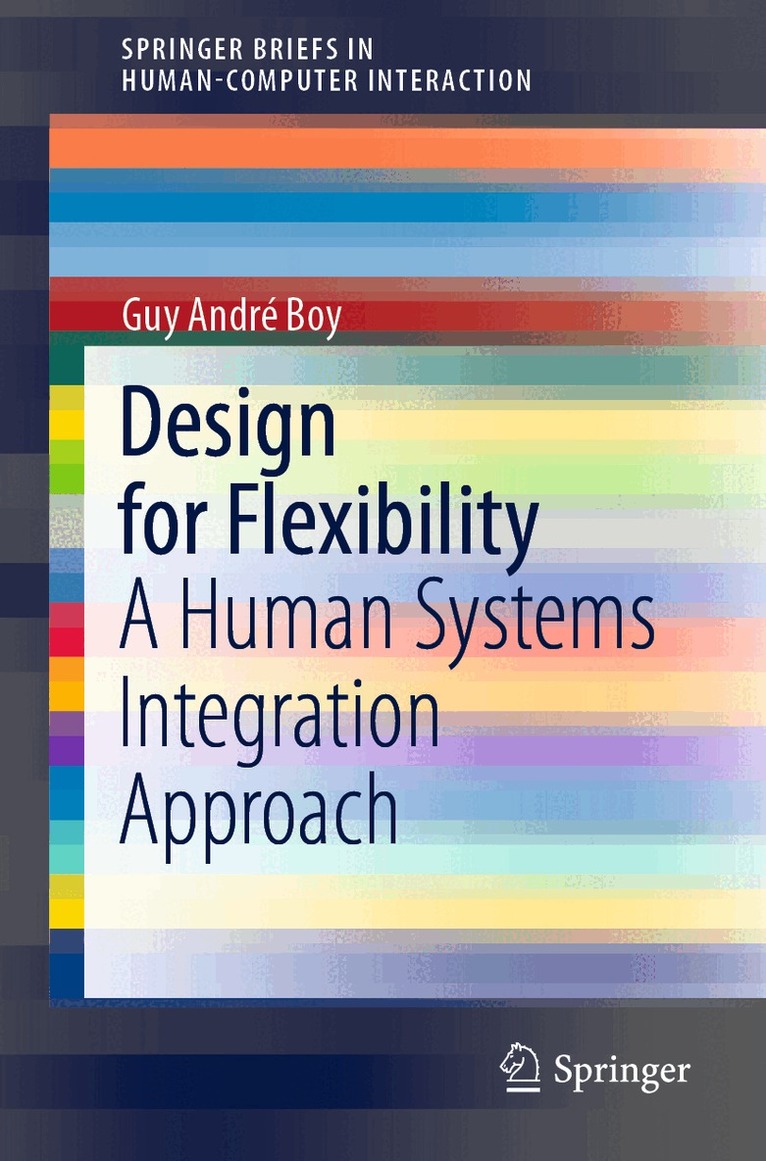
    Design for Flexibility

    A Human Systems Integration Approach

    AvGuy André Boy

    Häftad, Engelska, 2021

    Del i serien Human–Computer Interaction Series

    782 kr

    Beställningsvara. Skickas inom 10-15 vardagar. Fri frakt över 249 kr.

    Fler format och utgåvor

    E-bok

    947 kr

    Beskrivning

    Design for flexibility requires anticipation, preparation, creativity and experience. Future highly digital sociotechnical systems should contrast with those stemming from technology-centered engineering that produces objects and machines with the immensely codified and rigid practices we know today. Most of the time, current technologies are designed and developed for normal situations, leaving users to manage abnormal and emergency situations themselves, sometimes under unforeseen, extreme and/or dangerous conditions. Putting humans at the center of the design of flexible sociotechnical systems means visualizing possible futures, modeling them, simulating them and leading them down the right paths. This book is for the engineering designers, who seek to better understand the roles of humans and organizations developing complex life-critical systems. It is also for those who train future designers who will have to take into account the well-being, safety, sustainability and efficiency of the actors of future sociotechnical systems. It is about an emergent discipline, human systems integration (HSI). The aim of the flexibility challenge is to put the artificial at the service of the natural, and not the other way around.The author, an aerospace engineering designer, has worked for 40 years in the field of human-centered design (HCD) of complex systems, discovering repeatedly that automation leads to rigidity, especially when things go wrong. It is urgent we had a new paradigm where flexibility is a major asset in human systems integration. HCD is seen here as the combination of practices and technologies to come.

    Produktinformation

    • Utgivningsdatum:2021-06-20
    • Mått:155 x 235 x 10 mm
    • Vikt:214 g
    • Format:Häftad
    • Språk:Engelska
    • Serie:Human–Computer Interaction Series
    • Antal sidor:111
    • Förlag:Springer Nature Switzerland AG
    • ISBN:9783030763909

    Utforska kategorier

    • Människa – datorinteraktion inom Data och IT
    • Informationsteknik: allmänt inom Data och IT

    Innehållsförteckning

    • Introduction.- A framework for flexibility analysis in sociotechnical systems.- A few methodological clarifications.- Articulating human systems integration.- Activity-based design: Scenarios, HSI evolution and innovation.- Model-based human systems integration flexibility.- The unavoidable issue of tangibility.- Conclusion.