• Fri frakt över 249 kr
  • •
  • Snabba leveranser
  • •
  • Billiga böcker
Kundservice

Du är på sajten för privatpersoner.

Företag, bibliotek eller offentlig verksamhet?

Du handlar på classic.bokus.com, där alla dina funktioner finns intakta.
Till classic.bokus.com
Bokus logotyp. Gå till startsidan.
  • Erbjudanden
  • Nyheter
  • Student
  • Topplistor
  • Barn & ungdom
  • Bokus Play
  • E-böcker
  • Pocketböcker
  • Spel & pussel

10% rabatt på allt med kod: NYSTART10 →

Sidfot

Mina sidor

    Hjälp

    • Kundservice
    • Vanliga frågor och svar
    • Frakt och leverans
    • Retur vid ångerrätt
    • Reklamera vara
    • Betalning
    • Köpvillkor
    • Allmänna villkor
    • Information om webbplatsens tillgänglighet

    Om Bokus

    • Om oss
    • Pressrum
    • För studenter
    • För företag
    • För bibliotek och offentlig verksamhet
    • För leverantörer
    • Hållbarhet

    Populärt

    • Aktuella erbjudanden
    • Presentkort
    • Studentlitteratur
    • Nya böcker
    • Topplistor
    • Signerade böcker
    • Engelska böcker

    Inspiration

    • Boktips
    • BookTok
    • Populära bokserier
    • Barnbokskaraktärer
    • Populära författare
    Logotyp för Bokus
    Följ oss på Facebook (extern länk)Följ oss på Instagram (extern länk)Följ oss på YouTube (extern länk)Följ oss på TikTok (extern länk)
    bokus @ CookiesAnpassa cookiesIntegritetspolicyKöpvillkor
    Till Citymail hemsida (extern länk)Till Budbee hemsida (extern länk)Till Postnord hemsida (extern länk)Till Schenker hemsida (extern länk)Till Early Bird hemsida (extern länk)Till Walleys hemsida (extern länk)
    1. Naturvetenskap och teknik
    2. Geovetenskap
    3. Miljövetenskap och miljöpolitik

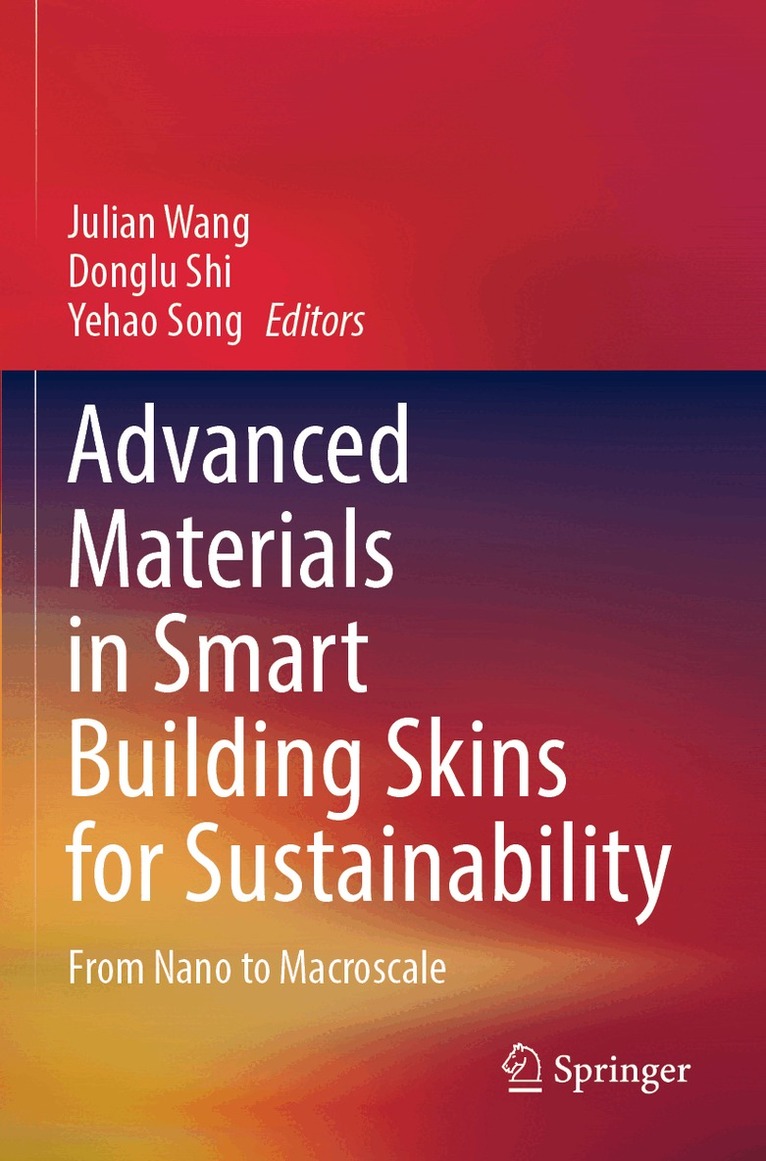
    Advanced Materials in Smart Building Skins for Sustainability

    From Nano to Macroscale

    AvJulian Wang,Donglu Shi

    Häftad, Engelska, 2023

    1 626 kr

    Beställningsvara. Skickas inom 10-15 vardagar. Fri frakt över 249 kr.

    Beskrivning

    Conventional building skins are constructed as static structures upon the typical design conditions in terms of external climate and internal occupant activities. This generates dissociation between the envelope structure and its environment. With the emerging advanced materials, such as chromic-based materials, spectrally selective coatings, and transparent photovoltaic, more dynamic and smarter building skins are now achievable and constructible. This book updates readers on the key areas of smart building skins embodied in the novel advanced materials with unique structures and smart properties that enable multiple functions in energy efficiency, solar harvesting, and environmental greenness. It synergistically integrates the topics and knowledge of material design and experimental studies, theoretical analyses of building energy-saving mechanisms and solar energy utilization, and new design methodologies and processes taking advanced materials into account at different scales - from nano to the macroscale.

    Produktinformation

    • Utgivningsdatum:2023-10-30
    • Mått:155 x 235 x 15 mm
    • Vikt:493 g
    • Format:Häftad
    • Språk:Engelska
    • Antal sidor:278
    • Förlag:Springer International Publishing AG
    • ISBN:9783031096976

    Utforska kategorier

    • Miljövetenskap och miljöpolitik inom Naturvetenskap och teknik
    • Byggnadsteknik inom Naturvetenskap och teknik

    Mer om författaren

    Dr. Julian Wang is an Associate Professor and Graduate Program Officer in the Department of Architectural Engineering at Pennsylvania State University, U.S. He also has affiliated appointment with the Department of Architecture and Materials Research Institute at Penn State. He received his Ph.D. from Texas A&M University in 2014 and Doctor of Engineering from Tianjin University, China in 2011. Before joining Penn State University, he has previously worked at the University of Cincinnati, Tsinghua University, and Lawrence Berkeley National Laboratory. He has been continuously involved in the research on sustainable building engineering and design, focusing on the fundamental topics of thermal and optical behaviors of building façades (especially windows and glazing systems) and the design integration of emerging functional materials for building energy efficiency, environmental sustainability, and indoor visual and thermal comfort, health, and well-being. He is also a recipient of the National Science Foundation CAREER Award and Illuminating Engineering Society Richard Kelly Award. He currently serves as Associate Editor of the journal of TAD (Technology, Architecture, and Design) published by Association of Collegiate Schools of Architecture and Taylor & Francis, and the Chairperson of the Solar Buildings Division in the American Solar Energy Society.Dr. Donglu Shi is currently the Chair and Graduate Director of the Materials Science and Engineering Program in the Department of Mechanical and Materials Engineering, College of Engineering and Applied Science, University of Cincinnati, U.S. Dr. Shi’s research focuses on design and development of new nanostructures for novel properties and applications in energy and environment. These include National Science Foundation funded research in spectral selective solar harvest and energy generation via bio-inspired transparent thin films, photothermal-photovoltaic dual modality smart building skins, andoptical thermal insulation by porphyrin-based photothermal coatings. His research interests also include developing green nanobiohybrids for an advanced living system that is energy neutral, zero emission, and climate positive with environmental resilient and biosafety. Dr. Donglu Shi has published 300 peer-reviewed journal papers including ones in Nature, Physical Review Letters, Advanced Materials, Biomaterials, and ACS Nano. Donglu Shi has been elected as a Graduate Fellow at the University of Cincinnati. He has received the SIGMA XI Research Recognition Award, Distinguished Researcher Award, and Neil Wandmecher Teaching Award. He is a Fellow of American Society for Materials International and Editor-in-Chief of Nano LIFE.Dr. Song is currently the Director of Building & Technology Research Institute and Tenue Professor at School of Architecture, Tsinghua University. He is also National First Class Registered Architect, Deputy Chief Architect of THAD (Architectural Design & Research Institute of Tsinghua University Co., LTD), and Co-founder and Principal Architect of SUP Atelier. He has been working as a visiting scholar at Technology University of Munich. Dr. Song’s main research is about sustainable building design theory and method, sustainable urban design and research, and technology integration in architecture. Dr. Song’s practice portfolio includes many high-profile projects such as Chang Shu Library, Deyang Surface Engineering Research Institute, Post 512 Earthquake Reconstruction of Tumen Primary School and Nursery, Waterfowl Pavilion of Beijing Zoo, Central Canteen & Student Center of Tsinghua University, and THE-Studio (Tsinghua Eco Studio). He has also received many national and international awards including ARCASIA awards. Dr. Song serves as a Secretary-general of the Green Building’s Theoretical and Practical Group of Chinese Green Building Committee, Deputy Director of the Committee of Architectural Technology in the National Steering Committee of Architectural Education, and Deputy Director of Active House Academic Committee of Architectural Society of China.

    Innehållsförteckning

    • Chapter 1 - Spectral Selective Solar harvesting and Energy Generation via Transparent Building Skin.- Chapter 2. Low Energy Adaptive Biological Material Skins from Nature to Buildings.- Chapter 3. Dynamic Electro-, Mechanochromic Materials and Structures for Multifunctional Smart Windows.- Chapter 4. Material programming for Bio-Inspired and Bio-based Hygromorphic Building Envelops.- Chapter 5. Solar-Thermal Conversion in Envelope Materials for Energy Savings.- Chapter 6. Thermally Responsive Building Envelops from Materials to Engineering.- Chapter 7. Energy Performance Analysis of Kinetic Façades by Climate Zones.- Chapter 8. Integration of Solar Technologies in Facades: Performances and Applications for Curtain Walling.- Chapter 9. Interdependencies Between Photovoltaics and Thermal Microclimate.- Chapter 10. Material Driven Adaptive Design Model for Environmentally-Responsive Envelopes.- Chapter 11. Design Principles,Strategies, and Environmental Interactions of Dynamic Envelopes.- Chapter 12. Aesthetics and Perception Dynamic Facade Design with Programmable Materials.- Chapter 13. Design Research on Climate-Responsive Building Skins from Prototype and Case Study Perspectives.