• Fri frakt över 249 kr
  • •
  • Snabba leveranser
  • •
  • Billiga böcker
Kundservice

Du är på sajten för privatpersoner.

Företag, bibliotek eller offentlig verksamhet?

Du handlar på classic.bokus.com, där alla dina funktioner finns intakta.
Till classic.bokus.com
Bokus logotyp. Gå till startsidan.
  • Erbjudanden
  • Nyheter
  • Student
  • Topplistor
  • Barn & ungdom
  • Bokus Play
  • E-böcker
  • Pocketböcker
  • Spel & pussel

10% rabatt på allt med kod NYSTART10 →

Sidfot

Mina sidor

    Hjälp

    • Kundservice
    • Vanliga frågor och svar
    • Frakt och leverans
    • Retur vid ångerrätt
    • Reklamera vara
    • Betalning
    • Köpvillkor
    • Allmänna villkor
    • Information om webbplatsens tillgänglighet

    Om Bokus

    • Om oss
    • Pressrum
    • För studenter
    • För företag
    • För bibliotek och offentlig verksamhet
    • För leverantörer
    • Hållbarhet

    Populärt

    • Aktuella erbjudanden
    • Presentkort
    • Studentlitteratur
    • Nya böcker
    • Topplistor
    • Signerade böcker
    • Engelska böcker

    Inspiration

    • Boktips
    • BookTok
    • Populära bokserier
    • Barnbokskaraktärer
    • Populära författare
    Logotyp för Bokus
    Följ oss på Facebook (extern länk)Följ oss på Instagram (extern länk)Följ oss på YouTube (extern länk)Följ oss på TikTok (extern länk)
    bokus @ CookiesAnpassa cookiesIntegritetspolicyKöpvillkor
    Till Citymail hemsida (extern länk)Till Budbee hemsida (extern länk)Till Postnord hemsida (extern länk)Till Schenker hemsida (extern länk)Till Early Bird hemsida (extern länk)Till Walleys hemsida (extern länk)
    1. Språk och ordböcker
    2. Språkundervisning och språkinlärning

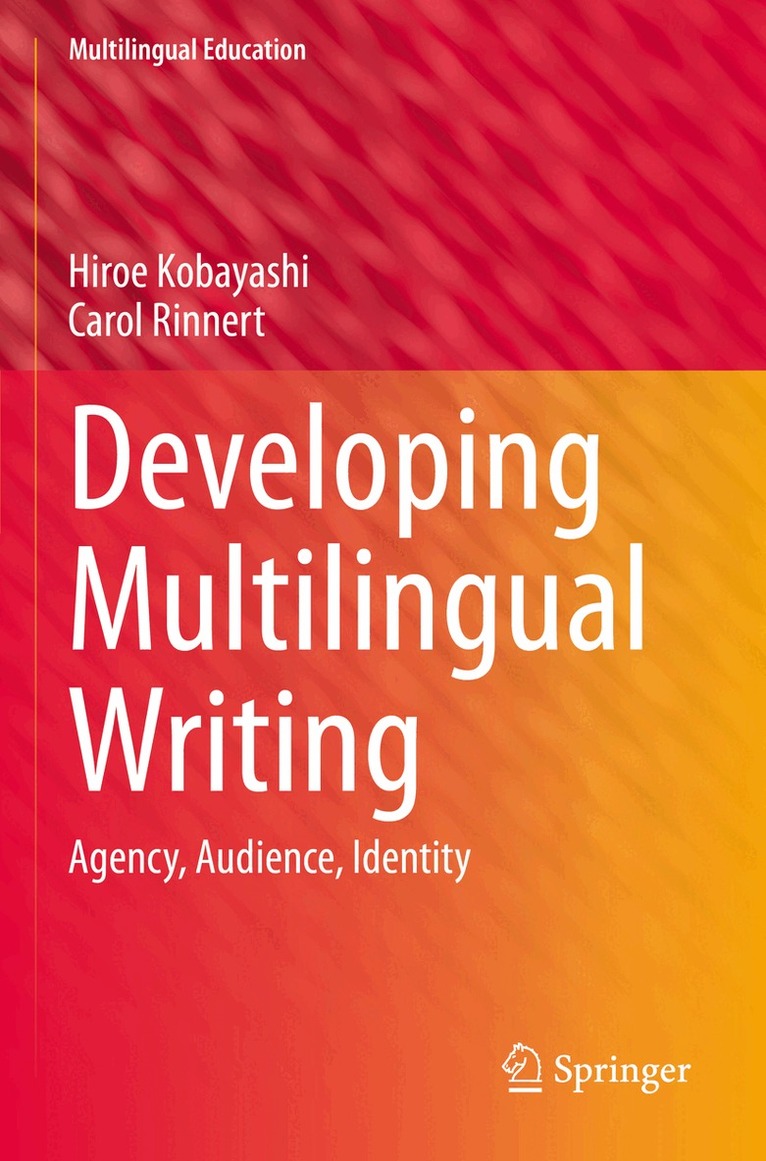
    Developing Multilingual Writing

    Agency, Audience, Identity

    AvHiroe Kobayashi,Carol Rinnert

    Häftad, Engelska, 2024

    Del 42 i serien Multilingual Education

    1 579 kr

    Beställningsvara. Skickas inom 10-15 vardagar. Fri frakt över 249 kr.

    Fler format och utgåvor

    Inbunden

    1 579 kr

    Beskrivning

    With millions of people becoming multilingual writers in the globalized digital world, this book helps to empower writers to connect with their readers and project their identities effectively across languages, social contexts, and genres. In a series of closely-related studies that build on each other, we look comprehensively at how writers develop their ability to construct meaning for different audiences in multiple languages. This book, which draws on various approaches (including a social view of writing, multicompetence, adaptive transfer, complex systems theory, motivation, and translanguaging), contributes to on-going efforts to integrate differing approaches to multilingual writing research. This book focusses on how writer agency (control over text construction), audience awareness (ability to meet expectations of prospective readers), and writer identity (projection of image of the writer in the text) progress as multilingual writers gain more experience across languages.The within-writer, cross-sectional text analysis (Chapters 2-5) examines 185 essays written in Japanese and English by eight groups of writers from novice to advanced (N=103), supplemented by insights from these writers’ reflections. We explore how they employ three kinds of text features (discourse types, metadiscourse, and self-representation), which relate to their developing agency, audience, and writer identity in their text construction, and propose a new model for writer voice construction based on those features. The four case studies (Chapters 6-9) focus on five university students and six professionals to examine closely how individual writers’ agency, audience, and identity are interrelated in their text construction in two or three languages and diverse genres, including academic and creative writing. The combined studies provide new insights into multilingual writing development by revealing the close interrelationship among these three principal aspects of writing across languages. They also demonstrate the writers’ multi-directional use of dynamic transfer (reuse and reshaping) for L1, L2, and L3 text construction, and the use of mixed languages L1/L2 or L1/L3 (translanguaging) for composing processes, in addition to the creative power of multilingual writers.One significant contribution of this book is to provide models of innovative ways to analyze text and new directions for writing research that go beyond complexity, accuracy, and fluency. Categories and detailed examples of text features used for writer voice construction (e.g., specific characteristics of Personal, Emergent, and Mature Voice) are helpful for writing teachers and for developing writers to improve ways of conveying their own intended writer identity to the reader. The studies break new ground by extending our analysis of L2 writing to the same writers’ L1 and L3 writing and multiple genres.

    Produktinformation

    • Utgivningsdatum:2024-02-15
    • Mått:155 x 235 x 20 mm
    • Vikt:638 g
    • Format:Häftad
    • Språk:Engelska
    • Serie:Multilingual Education
    • Antal sidor:360
    • Förlag:Springer International Publishing AG
    • ISBN:9783031120473

    Utforska kategorier

    • Språkundervisning och språkinlärning inom Språk och ordböcker
    • Språkvetenskap och lingvistik inom Språk och ordböcker
    • Studieteknik och inlärningsförmåga inom Psykologi och pedagogik

    Mer om författaren

    ​Hiroe Kobayashi (Ed.D., Teachers College, Columbia University), Professor Emeritus, Hiroshima University, taught advanced English writing and pragmatics in Japan, and ESL in New York and the Philippines. She has published numerous articles in international journals including Language Learning, Journal of Second Language Writing, and Modern Language Journal, co-authored with Carol Rinnert, two of which won awards for best JSLW article of the year.Carol Rinnert (Ph.D., SUNY/Buffalo), Professor Emeritus, Hiroshima City University, taught EFL/ESL, English writing, and linguistics in the US, Yemen (as senior Fulbright lecturer), and Japan. She has published numerous book chapters and articles, co-authored with Hiroe Kobayashi, in international journals including Language Learning, Journal of Second Language Writing, Modern Language Journal, and Journal of Pragmatics.

    Recensioner i media

    “Each part of the book builds on the previous section, helping the reader gain a deeper understanding of the prior discussion … . This volume gives teachers new means to assess the strengths and weaknesses of their students and do further research in this field by looking at their students’ writing using the same methods … . I plan to use it to inform my teaching and firmly believe it serves a valuable purpose for anyone involved in multilingual writing.” (Julia Christmas, JALT Journal, Vol. 46 (1), May, 2024)

    Innehållsförteckning

    • Chapter 1. Introduction.- Part I : Development of Multilingual Writing.- Chapter 2. Evolving Writer Agency: Discourse Types.- Chapter 3. Connecting with the Audience: Metadiscourse.- Chapter 4. Constructing Writer Identity: Self-Representation.- Chapter 5. Developing Writer Identity: Voice Construction.- Part II:  Interconnectedness of Agency, Audience, Identity Chapter 6. Natsu’s Challenges: Text Construction and Identities.- Chapter 7. L1/L2/L3 Writers’ Advantages: Text and Process.- Chapter 8. Multilingual Scholars: Audience and Expertise.- Chapter 9. Multilingual Artist and Poet: Unbounded Self-Expression.- Part III: Synthesis and  Implications.- Chapter 10. Integration, Theoretical Perspectives, Pedagogical Applications.